
By Chen Ming, Senior Fabrication Engineer · Updated August 31, 2026 · 9 min read
Most custom stainless steel fuel tanks ordered by machinery OEMs fall in the 50–5,000 L non-pressurized class: day tanks, generator sub-base tanks, and tanks welded into compressor or pump skids. Ordering one well means fixing five things before price talk: grade (304 or 316L by environment), wall thickness by capacity, every nozzle position, mounting loads, and the shipment proof you require: a leak test report plus an MTC per EN 10204 3.1. Here is each of the five, with the numbers our shop works to.
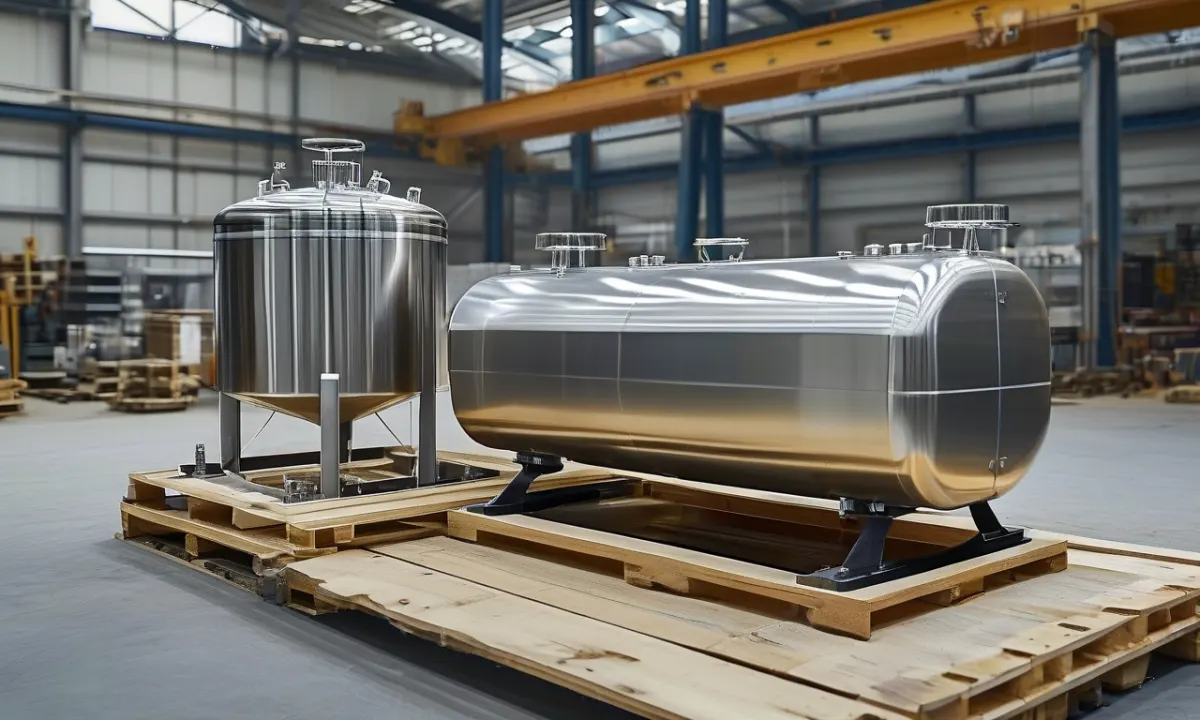
1. The Uncovered Niche: 50–5,000 L Tanks Built Into Machines
Below 50 L you buy catalog tanks off the shelf. Above 5,000 L you hire storage-tank contractors working to API 650-type codes, with foundations and fire-spacing permits. The middle, 50–5,000 L equipment-integrated tanks, is where machinery builders live and sourcing gets thin.
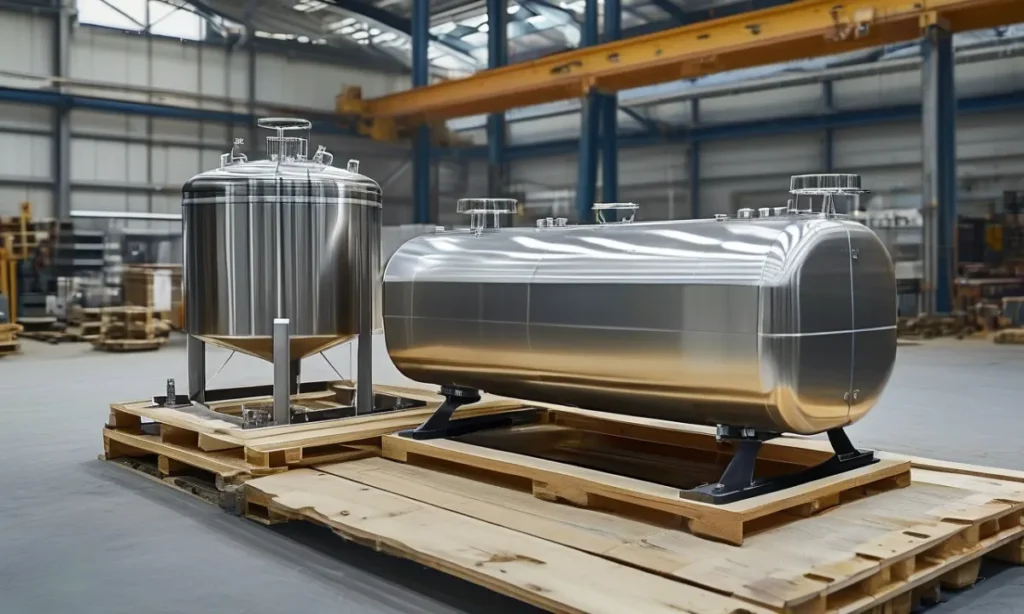
Three jobs make up that middle: day tanks of 200–2,000 L feeding gensets, boilers, and burners; sub-base tanks under skid-mounted generators, carrying fuel and part of the machine weight; and 50–500 L tanks welded into compressor and pump skids. None of these custom stainless steel fuel tanks is catalog work: fit a chassis envelope, survive transport vibration, meet fill, supply, return, and vent lines exactly where your plumbing team wants them. Standard work in our machinery and equipment fabrication program.
Two adjacent classes deserve contrast. Storage tanks from 5,000 to 200,000 L follow their own design codes, site erection, and permitting. UL-listed sub-base tanks are a separate class: the UL 142 listing is the deliverable, shipped only by listed shops. If your spec or authority demands UL 142, flag it early. We fabricate non-listed, non-pressurized equipment tanks, and we will say so.
| Tank type | Typical capacity | Typical use | Which spec matters most |
|---|---|---|---|
| Equipment-integrated day tank (non-pressurized) | 200–5,000 L | Indoor feed for genset, boiler, burner | Wall thickness, baffles, NFPA 30 vent sizing |
| Generator sub-base tank | 200–2,000 L | Ride-along fuel under a genset skid | Mounting loads, documented leak test, overfill protection |
| Compressor / pump skid tank | 50–1,000 L | Welded into a skid package | Envelope fit, nozzle positions, vibration-rated brackets |
| UL-listed sub-base tank | 200–10,000 L | Installations requiring third-party listing | UL 142 listing, only from a listed shop |
| Above-ground storage tank | 5,000–200,000 L | Fuel depots, tank farms | API 650-type code, site permits, bund sizing |
2. Stainless vs Carbon Steel: The Full Lifecycle View
An honest starting point: carbon steel with a fuel-rated epoxy lining is a good tank for many indoor diesel applications. It costs less up front. The question is what ten years of condensation do to that lining.
| Construction | Fabricated cost, 1,000 L reference | Expected service life | Maintenance | Lifecycle cost |
|---|---|---|---|---|
| Carbon steel + epoxy lining | $1,200–1,500 | 8–12 years, recoat at 5–7 | Recoat, downtime, spot repair | ≈ $0.14 per liter-year |
| 304 stainless | $2,300–2,900 | 20+ years | Inspection only | ≈ $0.13 per liter-year |
| 316L stainless | $3,000–3,700 | 25+ years, coastal | Inspection only | ≈ $0.14 per liter-year |
Two notes: prices are indicative shop ranges for a baffled 1,000 L tank, August 2026, with live metal prices in our stainless steel fabrication cost guide; and the column flatters carbon steel, pricing neither recoat downtime nor lining-derived contamination.
Carbon with lining is enough when the tank sits in a dry indoor plant room, runs standard diesel, and stays accessible for recoating. Stainless pays when any of these is true:
- Condensation cycling: day tanks breathe humid air and grow a water sump; carbon rusts there, stainless does not.
- Fuel cleanliness: common-rail systems want ISO 4406 18/16/13 or better at the dispenser; rust flakes eat that budget.
- Coastal installs: salt mist eats external paint first, then the shell.
- Biodiesel blends: B20–B100 service, detailed below.
- Sealed-for-life locations a recoat crew can never reach.
304 vs 316L. 304 is the default for indoor machinery. 316L earns its premium around chlorides: coastal air, salt-laden dust, washdown zones. Working line: 304 is comfortable below about 200 ppm chloride in standing water, 316L to about 1,000 ppm at ambient. Full trade-offs, including PREN and weld behavior, are in our 304 vs 316L comparison guide. Plate arrives to ASTM A240, grade confirmed heat by heat on the MTC.
Biodiesel B20–B100. Both grades tolerate biodiesel blends; keep copper, brass, and zinc off wetted parts. The failure mode is biological. Biodiesel is hygroscopic, holds water in the sump, and that water grows bacteria and fungi whose acids drive microbiologically influenced corrosion (MIC), pitting under biofilm. Design answers: slope the bottom at least 1:40 to a drain at the true low point, fit a dry or desiccant vent, include an inspection opening. Most RFQs skip all three.
3. Standards Translated to Plain Language (Non-Pressurized Only)
An atmospheric equipment tank is not a pressure vessel; ASME BPVC Section VIII does not govern it. If yours will ever see more than about 15 psi design pressure, read our pressure vessel fabrication standards guide instead. For non-pressurized tanks, these requirements actually shape the build.
Wall thickness minimums. Shop defaults sized for transport rigidity and hydrostatic head: 3 mm shell and bottom up to 1,000 L, 4 mm to 3,000 L, 5–6 mm ribbed to 5,000 L, with 3 mm tops. Heavy bracket loads or the 5 psi test below add plate or stiffening.
Baffles, venting, openings. Tanks above about 800 L, or more than twice as long as tall, get one or two baffles with flow openings, plus a manway of at least DN400. Vents must pass the maximum fill rate: a 50 L/min fill wants a DN50 vent minimum, at the highest point. NFPA 30, the Flammable and Combustible Liquids Code, governs vent sizing, spacing, and containment on the installation side. It is an installation code, not a fabrication certification: reference it in your spec, and we deliver matching nozzles.
Leak and 5 psi tests. Every seam gets 100% visual inspection plus dye penetrant per your acceptance spec. Standard leak proof is a full water stand of at least 4 hours or air-under-water at 0.2–0.3 bar. Some buyers borrow the 5 psi (34 kPa) hydrostatic test from the UL 142 playbook; for an atmospheric tank that is an over-test, so specify it at RFQ and we reinforce accordingly.
Documents to demand. At shipment: an MTC per EN 10204 3.1 tied to the plate heat number (see how to verify a material test report), a weld map with seam ID, WPS, and welder per seam, a leak test report with method and hold time, and a dimensional report. PMI on request; SGS or BV inspection welcomed.
| Your tank scenario | What governs it | Documents to demand |
|---|---|---|
| Indoor day tank feeding a genset or boiler | NFPA 30 installation rules on site; atmospheric shop build | MTC EN 10204 3.1, weld map, leak report |
| Sub-base tank where the AHJ requires a listing | UL 142 listing path, via a listed shop | Listing evidence; we ship non-listed and flag early |
| Tank holding more than ~15 psi | ASME BPVC Section VIII | See the pressure vessel guide |
| Machine exported to the EU | Machinery Directive 2006/42/EC technical file | MTC and test reports for your file |
| Diesel service with B20–B100 | ASTM A240 304/316L, no copper alloys wetted | Grade on MTC, wetted-materials declaration |
4. Custom Integration Features Worth Specifying
A catalog tank is a rectangle. A machine-integrated tank is a rectangle with pieces removed to clear an axle, a frame rail, or a manifold. Every feature below is cheap on the drawing, expensive welded on later.
| Feature | Purpose | Spec note |
|---|---|---|
| Chassis-fit shape: rectangular, U-profile, saddle, tapered | Clears frame rails and skid members | Send envelope as DXF/STEP; state transport weight limit |
| Mounting brackets and lifting lugs | Carries static weight plus transport and vibration loads | State loads in G; brackets welded in fixtures |
| Return-line provisions | Handles hot fuel returning from the engine | State return temperature and flow; optional diffuser or cooling loop |
| Dip pipe and sample valve | Manual level check and fuel sampling | Place away from fill turbulence |
| Sight glass or level gauge | Visual level indication | Magnetic gauges for enclosed or insulated tanks |
| Level switches, low and high | Alarm and shutdown signals | State signal type: reed, capacitive, ultrasonic |
| Overfill protection | Prevents spills during filling | 90–95% alarm plus shutoff; align with NFPA 30 site rules |
| Heater provisions | Cold starting on high-paraffin fuels | Welded boss for element; state watts and voltage |
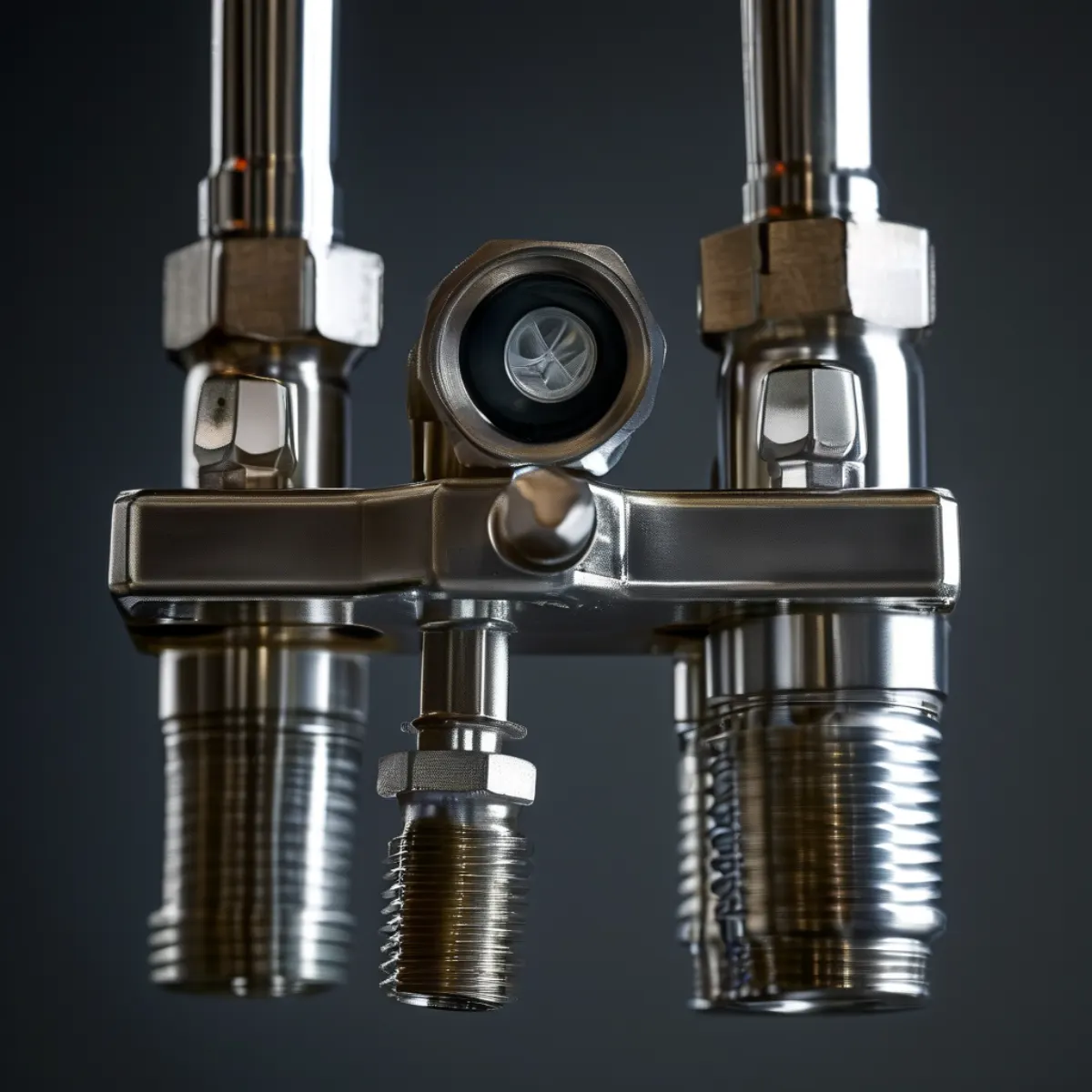
| Fill, vent, drain positions | Plumbing and service access | Dimension from one datum; drain at the true low point |
For bracket work in 8–20 mm plate, the discipline from our heavy-plate stainless steel fabrication for mining machinery carries straight over: load-rated welds, lug pull tests on request.
5. Welding and Leak-Test Proof: How You Know It Will Not Leak
A leaking fuel tank inside a machine is the worst kind of warranty claim: contaminated oil, field downtime, a customer who stops answering emails. So do not ask whether the tank will leak; ask how the shop will prove it will not.
Our proof chain starts at the weld. Seams on 3–6 mm shells are TIG (GTAW) welded with argon back purge, leaving the inside face oxide-free and fuel-clean. Weld sequences control distortion; a warped top plate telegraphs into the gasketed fittings. The full process-choice logic is in our welding process selection guide.
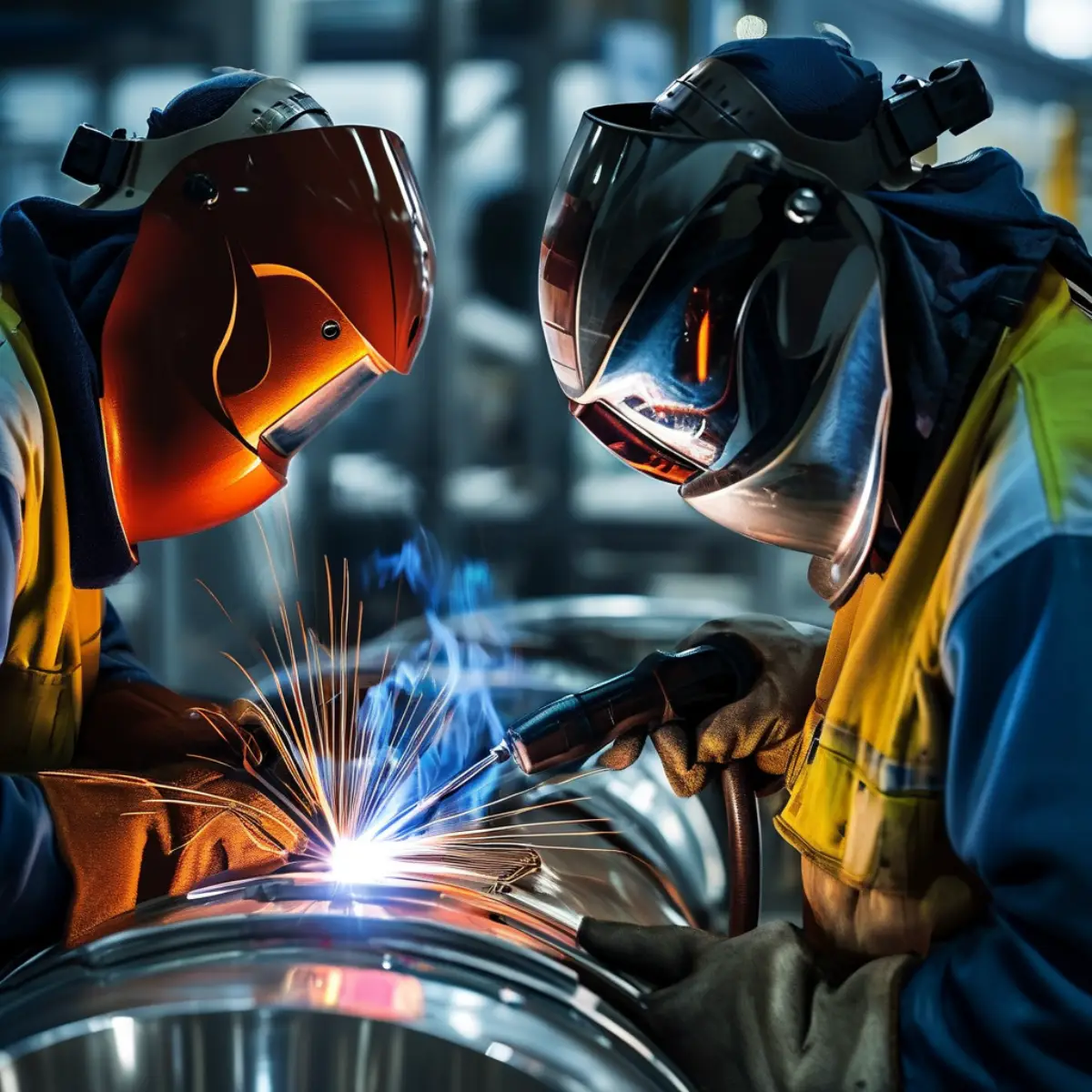
QC runs in four documented steps: 100% visual on every seam, dye penetrant per your spec; PMI on incoming plate, so tank grade matches MTC; the leak test, a water stand of at least 4 hours or air-under-water at 0.2–0.3 bar, photographed, logged, witnessable over video; then passivation per ASTM A967 citric procedure, degrease, flush, caps on every opening.
Every fuel tank we ship sits in the test bay a minimum of 4 hours with a signed leak report before packing. If it is not documented, in our QA system it did not happen. Targeting a particulate class? State an ISO 4406 code at RFQ; we flush and sample to it.
6. RFQ Template and Sourcing from China, Transparently
Send these ten points for your custom stainless steel fuel tank; you get a firm quote, not a volley of questions:
- Fuel and flash point: diesel (≥52 °C) is the easy case; kerosene or gasoline changes venting and EX hardware.
- Capacity and duty: ride-along, day tank, or buffer; fill cycles per week.
- Envelope: length, width, height, dry weight limit, center of gravity if lift-sensitive.
- Mounting interface: bracket positions, hole pattern, load rating in G.
- Fill, drain, vent, return: positions, sizes, thread or flange standard.
- Grade and finish: 304 or 316L per ASTM A240; mill 2B standard; Ra ≤0.8 µm only for polished internals.
- Tests: leak method; the 5 psi hydro if required.
- Documents: MTC per EN 10204 3.1, weld map, leak report, dimensional report, PMI if needed.
- Exterior: passivated bare, painted, or insulated.
- Quantity and schedule: prototype first, then series.
Realistic lead time is 15–30 days after drawing approval: cutting and forming 3–5 days, welding and QC 5–10, testing and finishing 3–5, documentation and crating 2–4. Prototype MOQ is one tank, shipped with a first-article report of dimensions and photos; repeat orders run against that frozen spec.
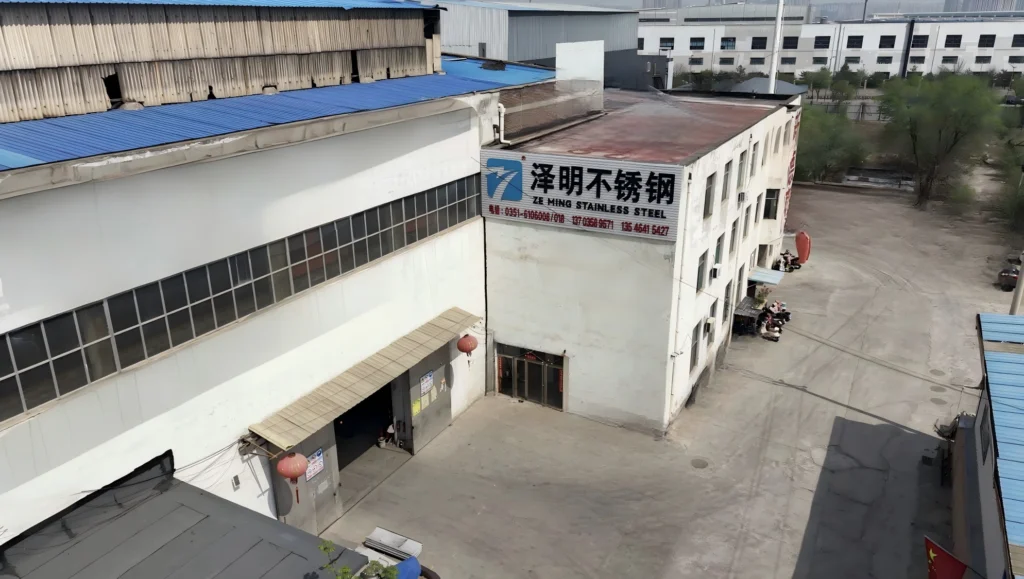
On transparency: you deal with the shop that welds the tank. PMI at plate receiving, welder logged on every seam, SGS or BV inspection welcomed at any hold point including final. If the build deviates from your spec, you hear it from us before shipment, not after arrival.
Tanks travel empty, drained, capped; prototypes in ISPM-15 heat-treated crates, repeat orders palletized to fill the container. We issue commercial invoice, packing list, and certificate of origin; FOB, CIF, or EXW via Tianjin port, port-to-door on request.
Frequently Asked Questions
What is the best steel grade for a stainless fuel tank?
For indoor machinery service, 304 is the default: it handles diesel and biodiesel blends at lower cost. Choose 316L when the tank lives outdoors, in coastal salt air, or anywhere chlorides exceed roughly 200 ppm in standing water. Either way, demand an MTC per EN 10204 3.1 so heat chemistry is traceable.
How thick should the plate be for a non-pressurized 1,000–3,000 L tank?
Typical practice is 4 mm shell and bottom with a 3 mm top, plus stiffeners on flat panels wider than 600 mm. Move to 5–6 mm for 3,000–5,000 L tanks, heavy bracket point loads, or if your spec borrows the 5 psi (34 kPa) hydro test from UL 142 practice. State loads and tests at RFQ.
What documents should I demand from a fuel tank fabricator in China?
Ask for five: an MTC per EN 10204 3.1 tied to the heat number, a weld map with WPS and welder IDs, a leak test report stating method and hold time, a dimensional report, and PMI on request. Verify the MTC against the mill record; SGS or BV inspection is welcomed before shipment.
How long does a custom fuel tank take to fabricate in China?
Plan for 15–30 days after drawing approval, depending on size, fittings, and test scope. Prototype MOQ starts at one tank, and a first-article report with photos and dimensions ships with it. Add 5–7 days for documentation and ISPM-15 crating before FOB Tianjin loading.
Can stainless fuel tanks handle B20 or B100 biodiesel?
Yes. 304 and 316L are chemically compatible with biodiesel up to B100; keep copper, brass, and zinc off wetted parts. The real risk is microbiologically influenced corrosion: biodiesel absorbs water, and the sump grows bacteria. Specify a sloped bottom with the drain at the lowest point, a dry vent, and an inspection opening for cleaning.
Ready to spec your custom stainless steel fuel tank? Send the envelope drawing, fuel spec, and document list; within 24 hours you have a line-item quote with wall thickness, test plan, and packing. What ships is a leak-tested, passivated tank with weld map and MTC per EN 10204 3.1, crated to ISPM-15 at Tianjin. Request your quote here.
Pingback: Custom Stainless Steel Fabrication: China Guide — ZEMSS