

By Chen Ming, Senior Fabrication Engineer · Updated August 24, 2026 · 9 min read
Match the alloy to the chloride limit of the stored water, the shell thickness to the filled height, and write the hydrostatic test and the mill certificate into the purchase order, because those decisions determine whether a custom stainless steel water tank gives thirty years of service or a leak claim in year three.
I have watched both outcomes cross our shop floor, so this guide states the numbers we use when we price and build tanks, and the checks we run when plate arrives at our receiving bay.
Everything below applies to atmospheric or low-head storage. Anything above roughly 0.1 MPa gauge is a pressure vessel and moves into ASME territory, covered in Section 3.
1. Tank Construction Types: A Decision Matrix
Four constructions dominate water storage projects: shop-welded stainless, bolted sectional pressed panels, GRP sectional, and hot-dip galvanized steel. Each one solves a different logistics problem.
We fabricate both welded and sectional stainless tanks, so here is the split exactly as we quote it: choose on site access and water chemistry, not on habit.

| Construction | Typical range | Site requirement | Best fit | Reference |
|---|---|---|---|---|
| Shop-welded stainless (304/316L) | 1 to 2,000 m³ | Transport plus crane, or site welding | Potable, food, chloride-bearing water | ASTM A240 plate, AWS D1.6 |
| Bolted sectional pressed stainless panels | 10 to 5,000 m³ | No crane, panel-by-panel erection | Large volume, tight access, plant rooms | ASTM A240 / EN 10088 panels |
| GRP sectional | 1 to 1,000 m³ | Light manual assembly | Cold water cisterns, lightweight roofs | EN 13280 |
| Hot-dip galvanized steel | 10 to 3,000 m³ | Standard access | Irrigation, fire water in mild climates | AWWA D100 family |
Welded stainless wins where water purity, cleanability and chloride resistance matter. Sectional wins on logistics: a 500 m³ tank walks through a doorway as 1,220 x 1,220 mm pressed panels. Our weld process selection guide explains when we switch from TIG to plasma as plate thickens.
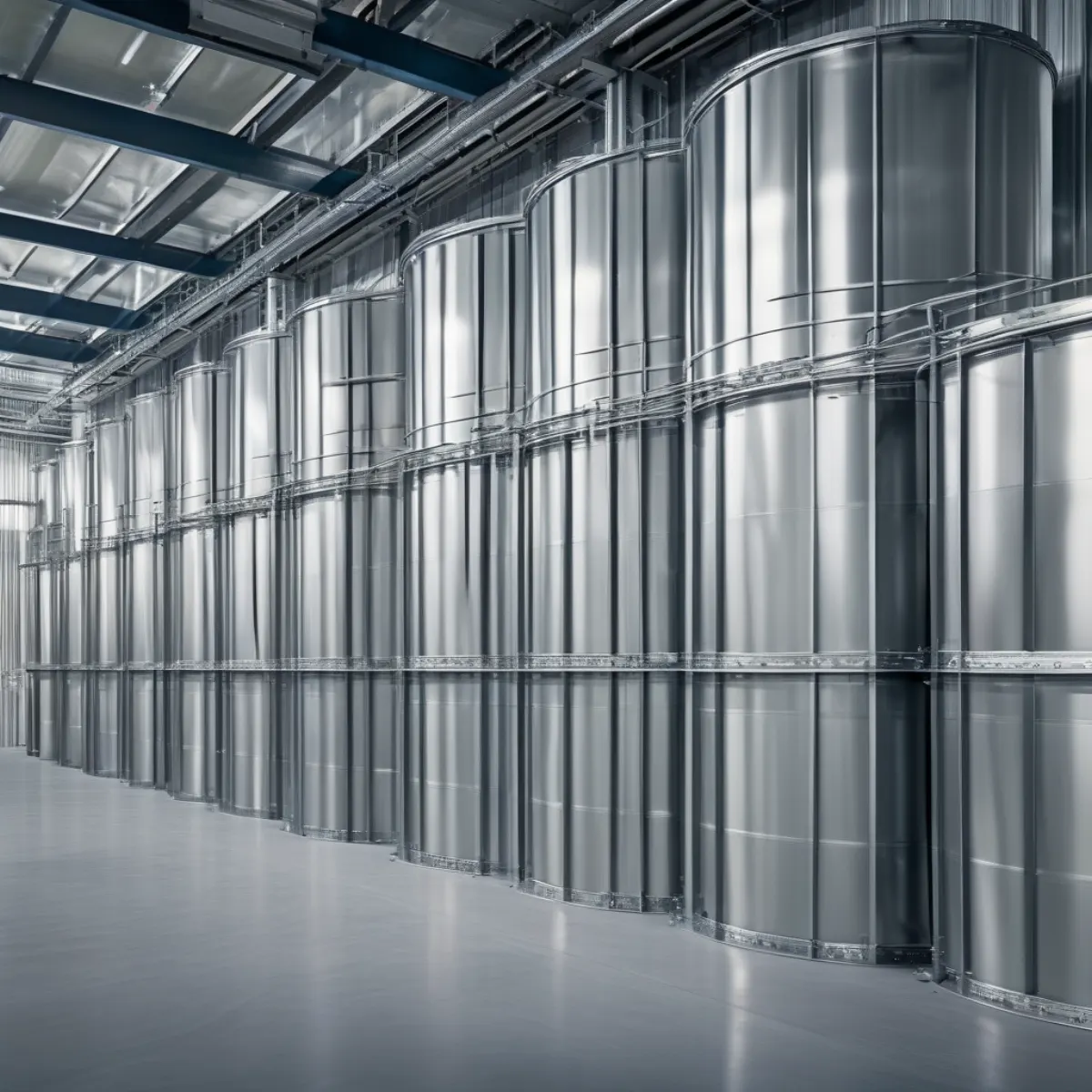
Bolted sectional tanks live or die by their gaskets. Potable service wants EPDM with its own potable-water certificate, and the gasket data sheet deserves the same scrutiny as the plate certificate.
For lifecycle cost against coated steel and GRP, our storage tank buyer’s guide walks through the twenty-year math.
2. Engineering Selection Tables: Grade, Thickness, Height
Plate chemistry and mechanical properties come from ASTM A240/A240M. Two loads drive thickness: hydrostatic head on the bottom course, and panel stiffness between stiffeners.
| Capacity | Shell at typical 3 m height | Bottom | Roof | Basis |
|---|---|---|---|---|
| 10 m³ | 3 mm | 4 mm | 2 mm | ASTM A240, stiffness-governed |
| 50 m³ | 4 mm | 5 mm | 2 mm | ASTM A240 |
| 100 m³ | 4 to 5 mm | 5 to 6 mm | 3 mm | ASTM A240 |
| 500 m³ | 6 mm | 8 mm | 4 mm | ASTM A240, head-governed |
| 1,000 m³ | 8 mm, course-tapered | 10 mm | 5 mm | ASTM A240, head-governed |
Height matters more than volume. Water exerts about 9.81 kPa per metre of head, so a tall narrow tank needs a thicker bottom course than a squat tank of the same capacity.
| Filled height | Bottom pressure (about 9.81 kPa per m) | Minimum shell, 304/316L | Governing check |
|---|---|---|---|
| Up to 2 m | 19.6 kPa | 3 mm | Stiffness and welding distortion |
| 3 m | 29.4 kPa | 4 mm | Stiffness |
| 4 m | 39.2 kPa | 5 mm | Head plus stiffness |
| 5 m | 49.1 kPa | 6 mm | Head |
| 6 m | 58.9 kPa | 8 mm | Head, course-tapered shell |
Unlike carbon steel, stainless needs no corrosion allowance. The thickness you calculate is the thickness you keep, which is most of the lifecycle cost story.
Grade selection is a chloride decision. The limits below are the working numbers we apply to cold water; warm or stagnant water tightens them.
| Grade (UNS) | Max chloride, cold water | PREN | Specification | Use when |
|---|---|---|---|---|
| 304 (S30400) | 200 ppm | About 19 | ASTM A240 | Municipal mains, rainwater, low-chloride process |
| 316L (S31603) | 1,000 ppm | About 25 | ASTM A240 | Coastal, dosed chlorinated, mildly brackish |
| 2205 (S32205) | Case review above 5,000 ppm | About 35 | ASTM A240 | Brackish, hot chlorinated, splash zones |
The molybdenum difference behind these limits is unpacked in our 304L versus 316L comparison, which is the first document we send buyers who are torn between the two grades.
3. Standards Map by Market: Demand Certificates, Verify Scope
| Market / service | Standard | What it governs |
|---|---|---|
| US potable contact | NSF/ANSI 61 | Materials in contact with drinking water |
| UK potable | WRAS | Fittings and materials under UK water regulations |
| US welded water storage | AWWA D100 | Design and fabrication of welded steel tanks |
| Coated steel alternatives | AWWA D103 | Factory-applied coatings on steel water tanks |
| US private fire water | NFPA 22 | Reserve volume, anti-vortex plates, levels and alarms |
| Pressure service above 0.1 MPa gauge | ASME VIII Div. 1 | Design, welding and stamping of pressure vessels |
| EU GRP cisterns | EN 13280 | Sectional GRP cold-water cisterns, the baseline stainless replaces |
For the primary sources, AWWA maintains D100 and D103, NSF administers NSF/ANSI 61, and NFPA publishes NFPA 22. Cite the edition your engineer of record specifies.
WRAS deserves a specific note: approval attaches to a product, not to a factory, so check the reference number against the exact material and fitting you are buying.
Here is the honest part. A standard named on a quotation is not a certificate. Compliance must be verified with your supply chain: ask the supplier for the certificate number, its scope and the issuing body, and confirm with the issuer for critical service. We state plainly which documents we hold in-house and which we obtain from accredited labs for your specific order.
4. Application Briefs and Sizing Rules of Thumb
Municipal potable storage
Size for one to two days of peak demand, not average demand. Keep turnover high enough to hold a chlorine residual, and specify 316L where chloramination or coastal air pushes chlorides past 200 ppm.
Fire protection
Reserve volume follows the hazard: 30 to 120 minutes of system demand under NFPA 22. A 1,500 L/min sprinkler demand with a 90-minute reserve is 135 m³ of dedicated volume, plus anti-vortex plates and supervised level alarms.
Industrial process
Buffer four to twelve hours of process draw, and match the grade to the worst water in the cycle, including blowdown and CIP returns. Our industrial process tank guide covers nozzles, baffles and agitation loads.
Food and beverage
Interior Ra at or below 0.8 μm, pickled and passivated, fully drainable shells, no dead legs. That is hygienic fabrication, a different discipline from water storage, and our hygienic fabrication guide sets out the rules we build to.
5. Ordering Pitfalls: What Goes Wrong, and How PMI and MTC Catch It
201 sold as 304. Type 201 swaps nickel for manganese and costs roughly 30 percent less. XRF PMI reads it in ten seconds: 201 shows about 1 to 5 percent nickel and 4 to 7 percent manganese, against 8 to 10.5 percent nickel for 304. A handheld PMI check at receiving inspection ends that argument.
Thickness understatement. A 4 mm plate arriving at 3.2 mm is a 20 percent structural discount. Require actual measured thickness with the ASTM A480 minus tolerance, about 0.25 to 0.30 mm at these gauges, not theoretical weight, plus ultrasonic spot checks at the factory acceptance test.
Capacity fraud. Nominal volume is not usable volume. Freeboard of 200 to 300 mm, dished head shape and internal baffles can shave 8 to 12 percent off a quoted figure. Require usable volume at overflow level on the GA drawing, in writing.
Wrong filler metal. A 316L shell welded with 308L filler leaves every seam less corrosion-resistant than the parent plate, and the pitting starts in the weld, not the sheet. Specify the wire grade on the purchase order and include weld metal in the PMI sampling plan, not just parent plate.
Paper without traceability. A mill certificate is only as good as its heat number match to the plate stencil. EN 10204 3.1 means the mill’s own inspection department confirms tested values, and our walkthrough of how to verify a material test report shows the three cross-checks.
6. A Transparent RFQ Checklist
Nobody publishes their own receiving criteria. Here are ours, line by line, so your enquiry can simply reference them.
| RFQ line | Standard ZEMSS offer | Proof with order |
|---|---|---|
| Lead time | 15 to 30 days ex-works | Production slot confirmed with PO |
| MOQ | 1 tank | Pilot orders welcome |
| Interior finish | 2B, pickled and passivated per ASTM A380; Ra 0.8 μm on request | Ra readings on request |
| Hydrostatic test | 1.5x working pressure, witnessed on request | Test record signed at FAT |
| Material certificate | EN 10204 3.1 per heat | Certificates bound to heat numbers |
| Third-party inspection | SGS / BV welcomed | FAT invitation issued |
| Export packing | ISPM-15 crating with VCI protection | Packing list with photos |
| Incoterms | FOB / CIF / EXW, Tianjin port | Itemised freight on CIF quotes |
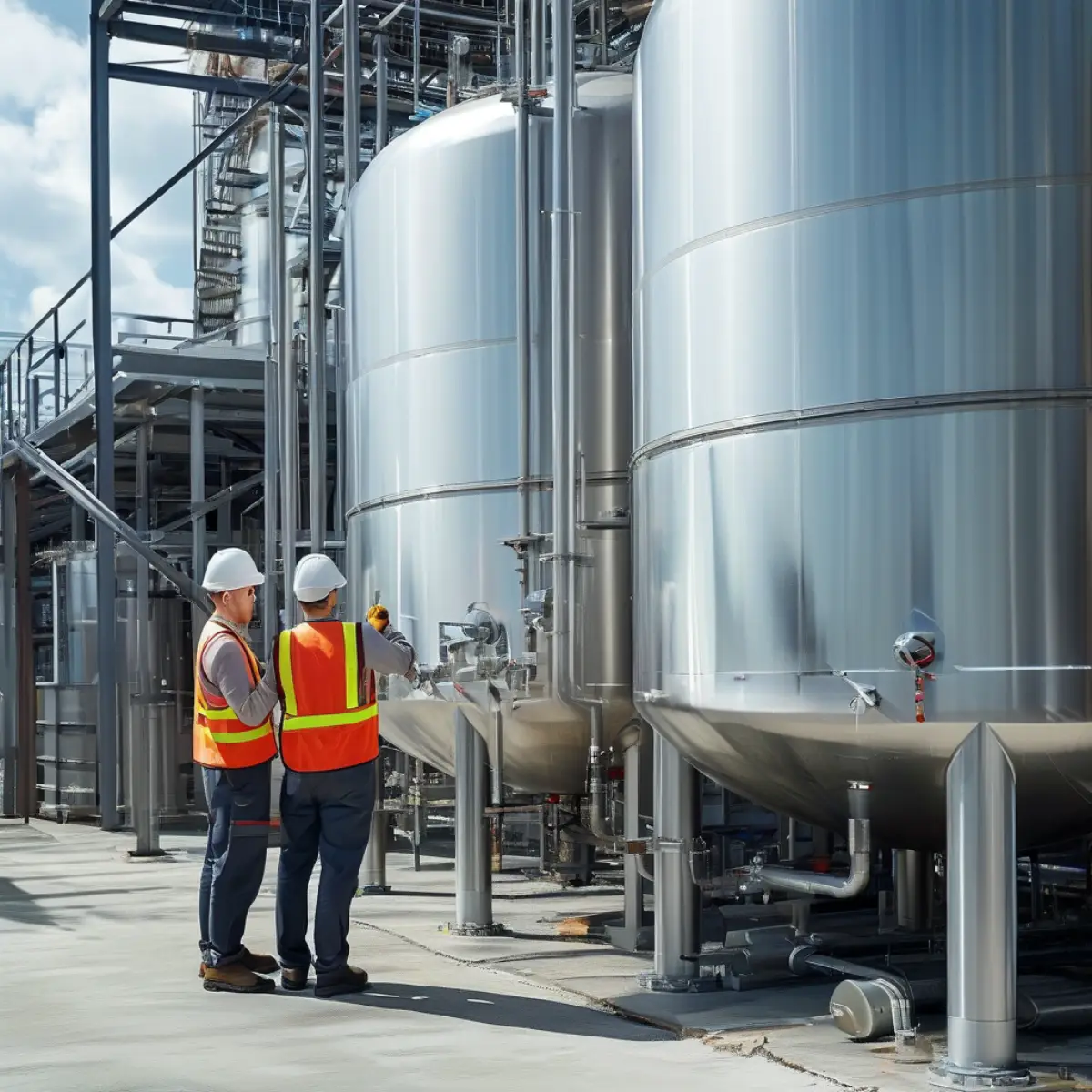
Finish language deserves care: 2B, No. 4 and Ra values are not interchangeable, and the conversion is where disputes breed. Our surface finishing guide publishes the table we quote against.
7. Frequently Asked Questions
What plate thickness do I need for a 100 m³ stainless steel water tank?
For 100 m³ at roughly 3 m filled height we quote a 4 to 5 mm shell in ASTM A240 plate, a 5 to 6 mm bottom and a 3 mm roof. Height drives thickness more than volume does: the same 100 m³ at 5 m height needs a 6 mm lower shell course. Send the filled height and we return the plate map.
Is 304 or 316L better for a stainless steel water tank?
Chloride decides. 304 handles water up to about 200 ppm chloride, while 316L extends to roughly 1,000 ppm thanks to 2 to 3 percent molybdenum. Municipal mains and rainwater are fine in 304. Coastal splash, chlorinated dosing or brackish boreholes push you to 316L. Get a water analysis first; the premium is cheap insurance only when chemistry demands it.
How do I verify my tank is genuine 304 and not 201?
Two documents and one instrument. Require an EN 10204 3.1 mill certificate whose heat numbers match the plate stencil, then run XRF PMI on received plate: 201 reads about 1 to 5 percent nickel and 4 to 7 percent manganese, while 304 reads 8 to 10.5 percent nickel and under 2 percent manganese. PMI takes ten seconds and has ended every grade dispute we have seen.
What lead time should I budget for a custom stainless steel water tank from China?
Plan on 15 to 30 days ex-works for a fabricated atmospheric tank, plus ocean freight of about 30 to 40 days to US West Coast or European base ports. One tank is a normal MOQ, so pilot orders are practical. Third-party inspection adds 2 to 3 days. Lock the hydro test and documentation requirements at PO stage, not at loading.
Do potable water tanks need NSF or WRAS approval?
In the US, materials in contact with drinking water should be certified to NSF/ANSI 61; in the UK, WRAS approval applies. These are product-level certifications, so verify the certificate scope covers the exact grade and product form you are buying, and confirm with the issuing body. Ask any supplier, including us, for the certificate number before you commit.
Get a Quotation You Can Verify
Send capacity in m³, filled height, and a water analysis with chloride ppm. Within two working days you receive a plate thickness calculation, a GA drawing, the hydrostatic test procedure at 1.5x working pressure, and a sample EN 10204 3.1 certificate pack: a hydro-tested tank with full documentation, MOQ one unit, FOB or CIF Tianjin. Request the quotation here.