
2205 vs 316L Stainless Steel: When Duplex Is the Smarter Buy
The short answer: 316L is the easy, versatile default; 2205 is the upgrade when chlorides, pressure, or strength start governing your design. If your part sees chlorides above about 60°C, carries pressure where wall thickness matters, or simply needs to be lighter and stronger, 2205 duplex outperforms 316L and often costs less in total. If your part needs deep forming, cryogenic toughness, high-temperature service, or trivially easy welding and sourcing, 316L stays the right choice.
This guide compares the chemistry, corrosion resistance, strength, fabrication, and real cost picture between 2205 vs 316L stainless steel — duplex against austenitic, then gives you an application-by-application way to decide. For the broader austenitic picture, see our 304 vs 316L comparison; for background on the duplex family, our 2205 fabrication guide.
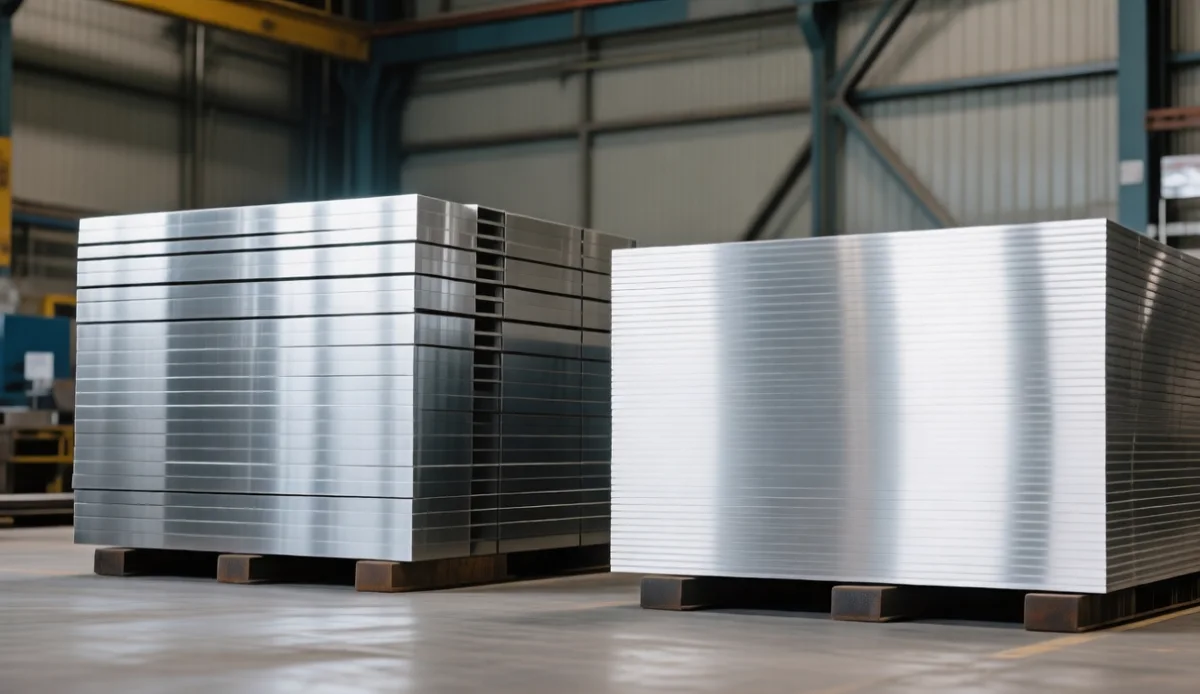
Two Different Families, One Decision
316L and 2205 belong to different stainless families, which is why the comparison is more interesting than a simple grade swap.
316L (UNS S31603, 1.4404) is a low-carbon austenitic stainless — the molybdenum-bearing sibling of 304, fully austenitic, soft, ductile, non-magnetic, easy to weld and form, and stocked everywhere on earth in every product form. It is the world’s default “corrosion-resistant stainless.”
2205 (UNS S32205, 1.4462) is a duplex stainless — a roughly 50/50 mix of ferrite and austenite. That mixed microstructure gives it about two and a half times the yield strength of 316L plus much stronger resistance to chlorides. The trade-off is stricter fabrication rules and some temperature limits.
Chemical Composition Compared
| Element | 316L (S31603) | 2205 (S32205) | Why it matters |
|---|---|---|---|
| Chromium (Cr) | 16.0–18.0% | 22.0–23.0% | Base corrosion resistance |
| Nickel (Ni) | 10.0–14.0% | 4.5–6.5% | 316L leans on Ni; 2205 is leaner |
| Molybdenum (Mo) | 2.0–3.0% | 3.0–3.5% | Pitting resistance in chlorides |
| Nitrogen (N) | 0.10% max | 0.14–0.20% | Strength + pitting resistance in 2205 |
| Carbon (C) | 0.03% max | 0.03% max | Both low-carbon |
The standard way to rank pitting resistance is PREN = %Cr + 3.3×%Mo + 16×%N. On that scale, 316L lands around 24–26; 2205 reaches about 35. That gap is large — it is the difference between “fine in marine atmosphere” and “fine in sea water itself.”
Corrosion Resistance: The Real Reason Buyers Switch
In plain atmospheres, fresh water, and food service, both grades perform well — you would be overthinking things to specify 2205 for a kitchen or an indoor handrail. The decision bites in chloride-containing service:
- Pitting and crevice corrosion — 2205’s higher PREN gives it a significantly higher critical pitting temperature. Where 316L can pit in warm sea water or concentrated brines, 2205 typically holds.
- Chloride stress corrosion cracking (CSCC) — this is the big one. Austenitic grades like 316L are vulnerable to CSCC in chlorides above roughly 60°C — a classic, sudden, cracking failure in hot chloride process streams. Duplex grades are highly resistant, which is exactly why the chemical industry adopted 2205.
- Acid service — comparable in many organic acids; 2205 stronger where chlorides contaminate the acid.
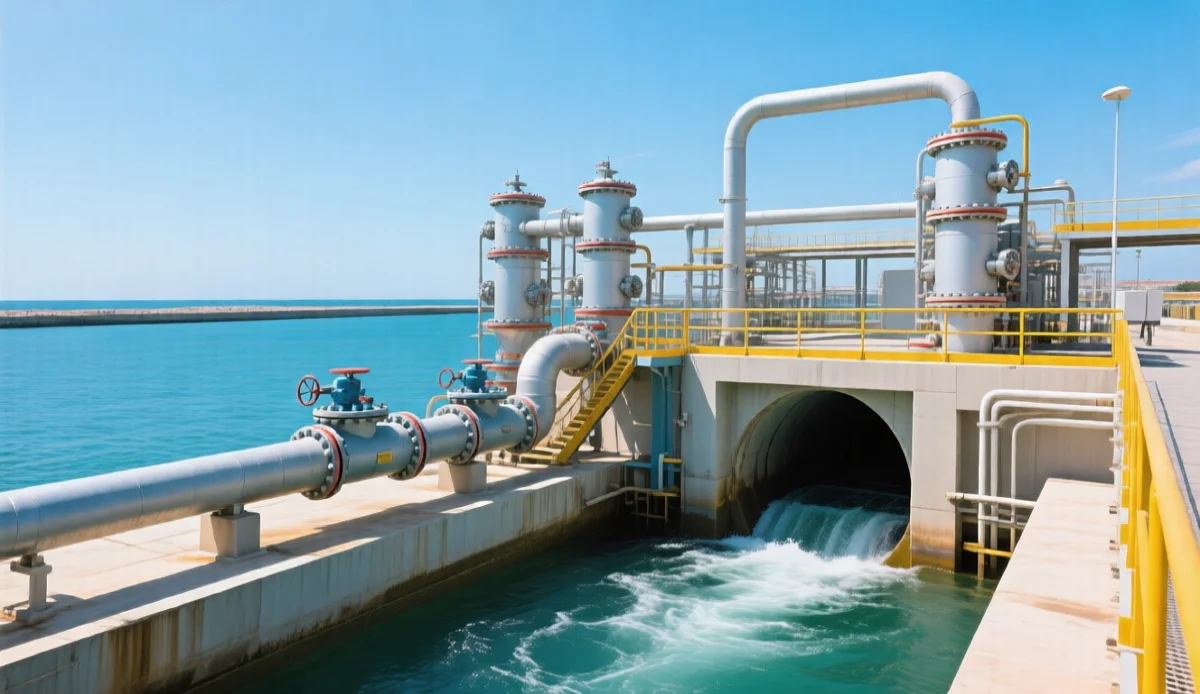
By environment: marine atmospheres and coastal architecture are fine on either (316L is the usual pick on availability and cost); sea-water piping, desalination, brine, and hot chloride process streams point firmly to 2205.
Strength: Where 2205 Changes the Economics
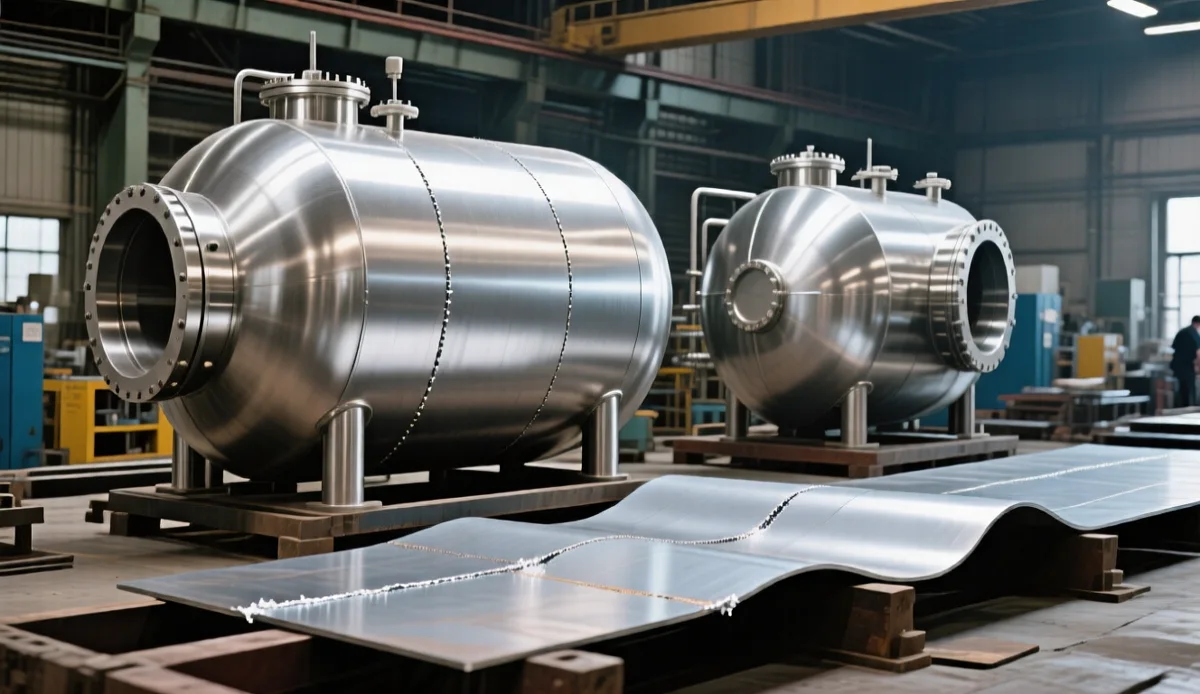
Here 2205 surprises people. Yield strength, minimum specified:
| Property | 316L | 2205 |
|---|---|---|
| Yield strength | ~170 MPa | ~450 MPa |
| Tensile strength | ~485 MPa | ~620 MPa |
| Elongation | ~40% | ~25% |
| Max continuous service temp | ~450–800°C depending on service | ~250–300°C |
| Cryogenic toughness | Excellent | Limited below ~-50°C |
Because 2205 is about 2.5× stronger, pressure-rated components — vessels, tanks, pipe walls — can run noticeably thinner at the same design pressure, sometimes 30–40% less wall. On large projects that saves material, weight, and supports, which can outweigh everything else in this comparison. It is also why 2205 appears in bridges, structural members, and offshore decks where strength-to-corrosion matters.
The temperature rows are the honest counterweight: 2205 embrittles above about 300°C (the duplex 475°C problem) and loses toughness at deep cryogenic temperatures, while 316L covers hot and cold extremes far better. Match the grade to the temperature window, not just the chemistry.
Welding and Fabrication: 316L Is the Easy One
If fabrication simplicity matters — one-off repairs, field welding, inexperienced shops — 316L is the forgiving grade. Standard 316L filler, ordinary austenitic technique, no special controls.
2205 welds readily too, but with discipline:
- Matching filler — 2209 duplex filler keeps the weld zone at duplex corrosion levels.
- Heat input window — typically 0.5–2.5 kJ/mm with interpass temperature below about 100–150°C, so the weld solidifies with the right ferrite/austenite balance.
- No post-weld heat treatment — PWHT is not used and can damage the microstructure.
- Forming — 2205 needs more force than 316L (remember the yield strength) and springs back more. Deep drawing and spinning favour 316L. (Our welding process guide covers TIG/MIG options for both.)
For a fabricator bidding both materials, the right question is not “can we weld 2205” — any competent shop can — but whether they will run a qualified duplex procedure with heat-input records. Ask before awarding the job.
Cost: Closer Than Most Buyers Expect
316L contains more nickel (10–14%) than 2205 (4.5–6.5%), and nickel is the expensive element. The result: per tonne, 2205 and 316L are often surprisingly close in price — sometimes 2205 is even cheaper, depending on product form and nickel prices. Then add the strength effect: because 2205 parts can run 30–40% thinner under pressure, the installed cost of a 2205 vessel or pipe run can be lower than the 316L version even at equal price per tonne.
A worked example. A 20 m³ chloride-process tank designed at the same pressure: in 316L the wall might be 12 mm; in 2205 roughly 8 mm is enough. That is about a third less material — plus less weight to ship, lift, and support. Meanwhile a 316L tank carries real CSCC risk if the stream runs hot. So the “premium” duplex reputation is often backwards: in pressure and chloride duty, 2205 is frequently the cheaper total solution. The cost argument for 316L is strongest in thin sheet, fittings, and small sections where 316L’s universal availability beats duplex’s narrower stocking range.
Availability is part of the cost story too. 316L is stocked everywhere on earth in every form — thin coil, sanitary tube, polished sheet, thousands of fitting sizes — usually off the shelf. 2205 is widely held in plate, pipe, tube, bar, and forgings, but thin sheet, ornamental finishes, and small fittings take longer to source. For a one-off architectural detail in 2 mm sheet, 316L wins on lead time alone; for structural plate and process pipe, 2205 availability is rarely the constraint.
Application-by-Application Selection Guide
| Application | Recommended | Why |
|---|---|---|
| Food, beverage, pharma equipment | 316L | Hygienic standards, easy polish, formability |
| Architectural / coastal trim | 316L | Availability, forming, adequate for atmosphere |
| Sea-water piping & desalination | 2205 | Pitting + SCC resistance in real sea water |
| Chemical process, hot chlorides | 2205 | CSCC immunity where 316L cracks |
| Oil & gas process piping | 2205 | Strength + sour/chloride tolerance |
| Pressure vessels & tanks | 2205 (316L if very hot) | Thinner walls, same pressure |
| Cryogenic service | 316L | Duplex loses toughness below ~-50°C |
| High-temperature service (>300°C) | 316L or higher grade | Duplex embrittles above ~300°C |
| Deep-drawn / spun components | 316L | Austenitic ductility wins |
| Bridges, coastal structures | 2205 | Strength + salt tolerance; see pressure & structural standards |
Common Misconceptions
“Duplex is exotic and expensive.” Relative to 316L, not really — per-tonne prices are often comparable, and thinner walls can make duplex cheaper installed. Duplex is standard practice in oil & gas, chemical, and desalination industries, not an exotic choice.
“316L is corrosion-proof because it’s molybdenum stainless.” 316L resists pitting much better than 304, but in warm chlorides it still pits and still stress-corrosion cracks. If the service is hot sea water or hot chloride process, 316L is not the safe default — 2205 is.
“2205 welds like 316L.” Close, but no. It welds well with a qualified duplex procedure (matching 2209 filler, controlled heat input), but sloppy austenitic habits produce brittle, corrosion-weak duplex welds. The procedure matters.
“If 2205 is stronger, always use it.” Strength does not help a deep-drawn pan, a cryogenic tank, or a 400°C duct. Match the grade to forming, temperature, and fabrication reality — not just the datasheet strength line.
How to Verify the Grade You Received
Because 2205 and 316L can be close in price, mix-ups (or deliberate substitution with cheaper 304/316) do happen. Protections:
- Mill test certificate — check actual chemistry against the spec: 2205 should show ~22% Cr, ~3% Mo, nitrogen 0.14–0.20%. Our MTR verification guide walks through it line by line.
- PMI (portable XRF) — chromium content separates them instantly: ~17% for 316L vs ~22% for 2205. Thirty seconds per piece.
- Ferrite measurement — duplex reads high ferrite; austenitic 316L reads near zero. A ferrite scope confirms the family immediately.
We supply both grades with full mill certification and can review your service conditions — chlorides, temperature, pressure — before you commit to a grade. One extra habit worth adopting: when you receive 2205 material, do not file the MTR unopened — the nitrogen and ferrite balance on that sheet are what your weld procedures depend on, and checking them on arrival costs five minutes.
Frequently Asked Questions
The most common questions about 2205 vs 316L stainless steel, answered directly.
What is the main difference between 2205 and 316L?
Family and microstructure. 316L is a low-carbon austenitic stainless — ductile, easy to fabricate, general-purpose. 2205 is a duplex grade — about 2.5× the yield strength, PREN ~35 vs ~25, and highly resistant to chloride stress corrosion cracking. 2205 has stricter welding rules and a lower temperature ceiling (~300°C).
Is 2205 better than 316L?
Better in chlorides, better in strength, often better in total cost for pressure equipment. Not better for deep forming, cryogenic service, high temperatures, or jobs needing the widest availability. “Better” depends on the service.
Can 2205 replace 316L in sea water service?
Yes — that is one of its core jobs. In actual sea water (not just marine air), 2205’s pitting and SCC resistance make it the safer grade, while 316L is better kept to marine atmospheres and cooler, clean duties.
Is 2205 more expensive than 316L?
Per tonne they are often close — 316L carries more nickel, which offsets duplex’s alloying premium. And because 2205 parts can run thinner under pressure, duplex can be cheaper installed. Compare installed cost, not just per-tonne price.
What filler do I use to weld 2205?
2209 duplex filler, with heat input typically 0.5–2.5 kJ/mm and interpass temperature under about 100–150°C. No post-weld heat treatment. For 316L, use 316L filler with ordinary austenitic technique.
Can 2205 be used at high temperature?
Not continuously above about 300°C — duplex microstructures embrittle above that (the 475°C problem). For hotter corrosive service, use 316L, a higher austenitic grade, or a nickel alloy. And below about -50°C, 316L (or other austenitics) is the right family too.
Which grade for a pressure vessel in chloride service?
Usually 2205: thinner walls at the same pressure rating, and immunity to the chloride stress corrosion cracking that threatens 316L in hot streams. Check the design code allowances for duplex when sizing.
Conclusion: Strength and Chlorides Point to 2205; Everything Else Points to 316L
Ask three questions. First: does the service involve real chlorides, especially above 60°C? If yes, 2205. Second: is strength or pressure driving the design? If yes, 2205’s thin-wall savings often make it cheaper overall. Third: does the part need deep forming, cryogenic toughness, temperatures above 300°C, or dead-simple fabrication? If yes, 316L. Verify the MTR on delivery either way, and you have a decision that holds up for decades of service. If you would like a grade recommendation for your specific service conditions, contact us with the chemistry, temperature, and pressure — we will answer with the material and the certificate.
References: ASTM A240 / A240M — Standard Specification for Chromium and Chromium-Nickel Stainless Steel Plate, Sheet, and Strip (ASTM). 1 Nickel Institute — duplex stainless steel selection and fabrication guidance (nickelinstitute.org). 2 ASME Boiler & Pressure Vessel Code, Section VIII — design allowable stresses for austenitic and duplex grades (ASME). 3