
By Chen Ming, Senior Fabrication Engineer · Updated September 17, 2026 · 10 min read
Cryogenic tanks store liquids below −150 °C — liquid nitrogen (−196 °C), oxygen, argon, CO₂, and LNG fractions. At these temperatures ordinary engineering assumptions stop working: carbon steel goes brittle, heat leak becomes the operating cost, and a weld defect is a safety event, not a repair ticket. That is why the purchase conversation should center on verification documents rather than catalog capacity.
This guide is written for procurement and engineering teams comparing quotations — what to demand in writing, what each document proves, and where suppliers quietly cut corners.
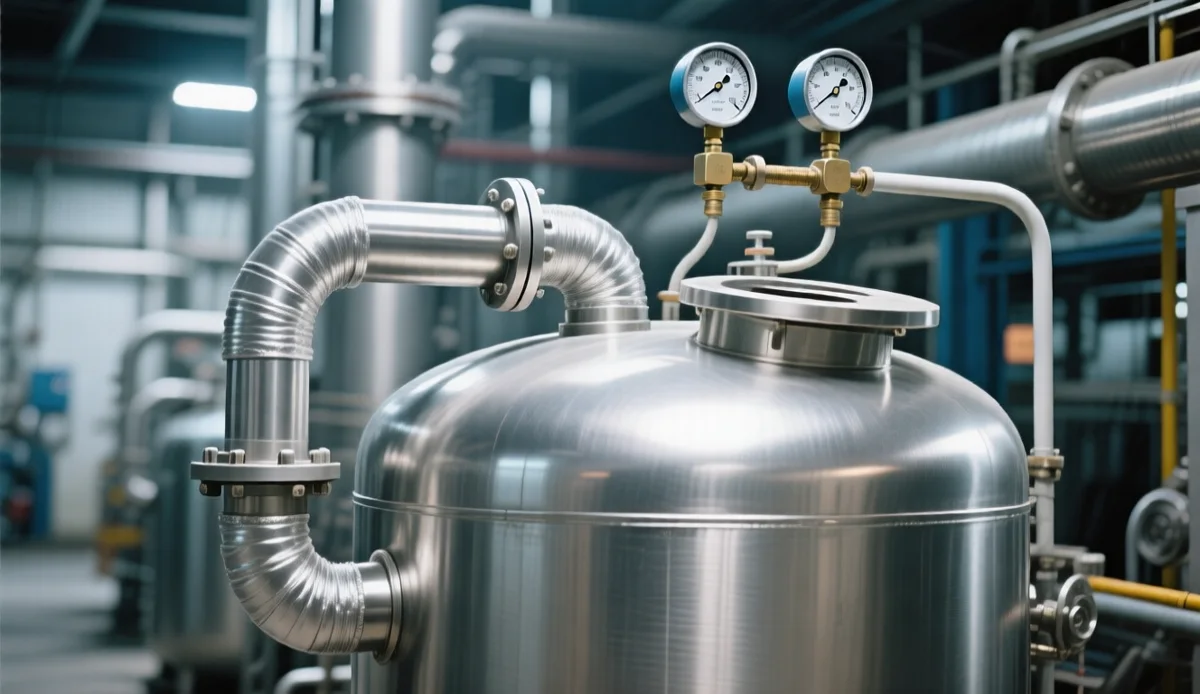
1. Match the Tank to the Liquid First
| Liquid | Boiling point | Typical tank style | Key caution |
|---|---|---|---|
| Liquid nitrogen (LIN) | −196 °C | Vacuum-jacketed vessel or dewar | Asphyxiation in confined spaces |
| Liquid oxygen (LOX) | −183 °C | Vacuum-jacketed, oxygen-cleaned | Oil/grease prohibition — oxygen-clean assembly |
| Liquid argon (LAR) | −186 °C | Vacuum-jacketed | Same as LIN, plus density layering in large tanks |
| Liquid CO₂ | −57 °C (at 5.2 bar) | Pressurized insulated vessel | Stored under pressure — relief valve sizing is critical |
| LNG | −162 °C | Large field-erected or transport tanks | Roll-over management in bulk storage |
Oxygen service deserves its own sentence: every component in LOX contact must be degreased and assembled under oxygen-clean discipline, and reputable manufacturers document this procedure. If a quotation for an oxygen tank does not mention oxygen cleaning, it is not a serious quotation.
2. Materials: Low-Temperature Toughness Is Paperwork, Not a Promise
Austenitic stainless steels — 304L and 316L — are the standard inner-shell materials because they retain toughness at cryogenic temperature instead of undergoing the ductile-to-brittle transition that kills carbon steel (for the low-carbon grade logic, see our 304L vs 316L guide). The verification is the Charpy V-notch impact test (per ASTM E23) record at service temperature, traceable by heat number through the mill certificate (EN 10204 3.1 — how to read one is in our MTR verification guide).
| Item | What to ask for | Why |
|---|---|---|
| Inner shell plate | 304L/316L MTR + Charpy impact values at ≤ service temperature | Brittle fracture resistance is the core safety property |
| Weld metal | WPS/PQR covering the low-temperature service | The weld must match parent-metal toughness |
| Outer jacket | Carbon steel acceptable | Jacket stays near ambient |
| Piping/neck | Stainless with matching toughness records | Neck is the thermal and structural weak point |
“304L” on a data sheet means nothing without the impact test record attached. This is the single most common gap in low-cost quotations.
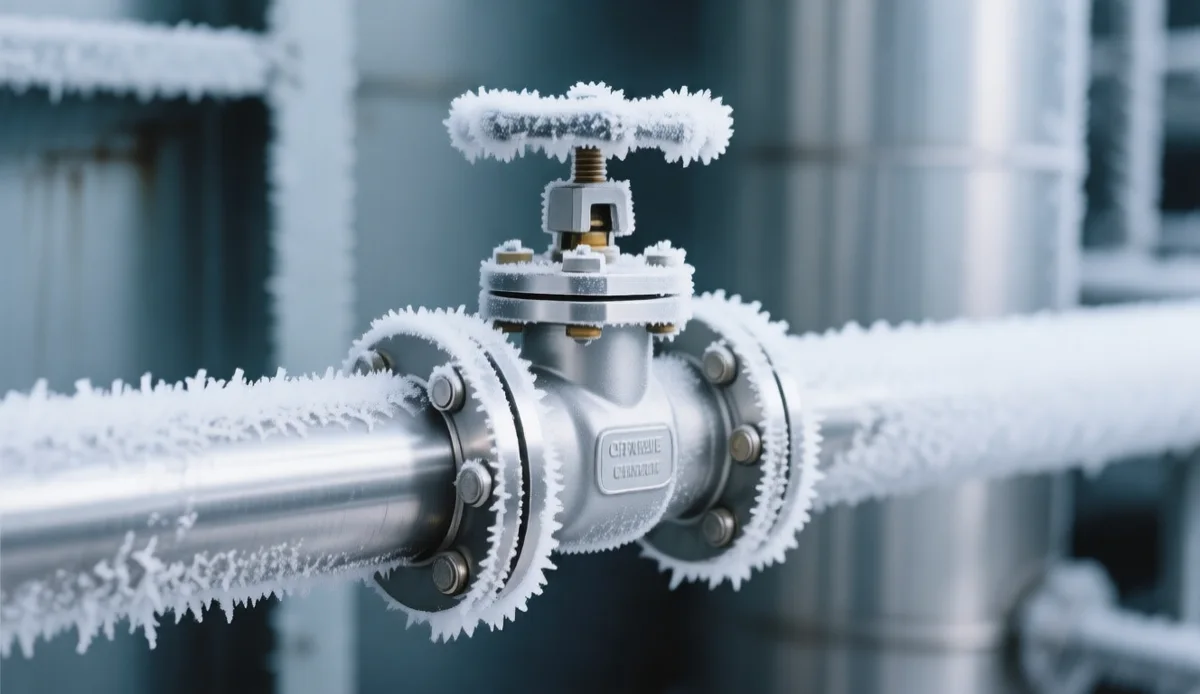
3. Insulation: The Item That Sets Your Operating Cost
| System | Typical boil-off behavior | Best for |
|---|---|---|
| High-vacuum (vacuum jacket) | Lowest heat leak; boil-off fractions of a % per day | LN₂/LOX/LAR vessels, mobile and shop tanks |
| Vacuum + multilayer (superinsulation) | Even lower heat leak | Transport tanks, long-hold storage |
| Perlite-filled (powder insulation) | Moderate heat leak | Large fixed vessels where jacket cost dominates |
| Foam insulation | Highest heat leak | Non-critical cold service, chilled (not cryogenic) duty |
Ask for the rated boil-off rate (e.g., % of capacity per day at stated ambient) and the test basis. Vacuum integrity is the life-limited property of the jacket — ask whether the supplier provides a vacuum port for future re-evacuation and how vacuum level is checked.
4. Design Code and Pressure Documentation
- ASME Section VIII (Div. 1 or 2) is the common international basis; PED 2014/68/EU applies into the EU; GB 150 governs Chinese domestic pressure vessels. A tank built for export should state which code it was designed and stamped to.
- Pressure relief: the relief valve sizing calculation should be available for review — undersized relief on a cryogenic vessel is the classic silent defect.
- Test records: hydrostatic (or, where water is prohibited, pneumatic with documented precautions) test at code multiplier, plus leak testing of the jacket.
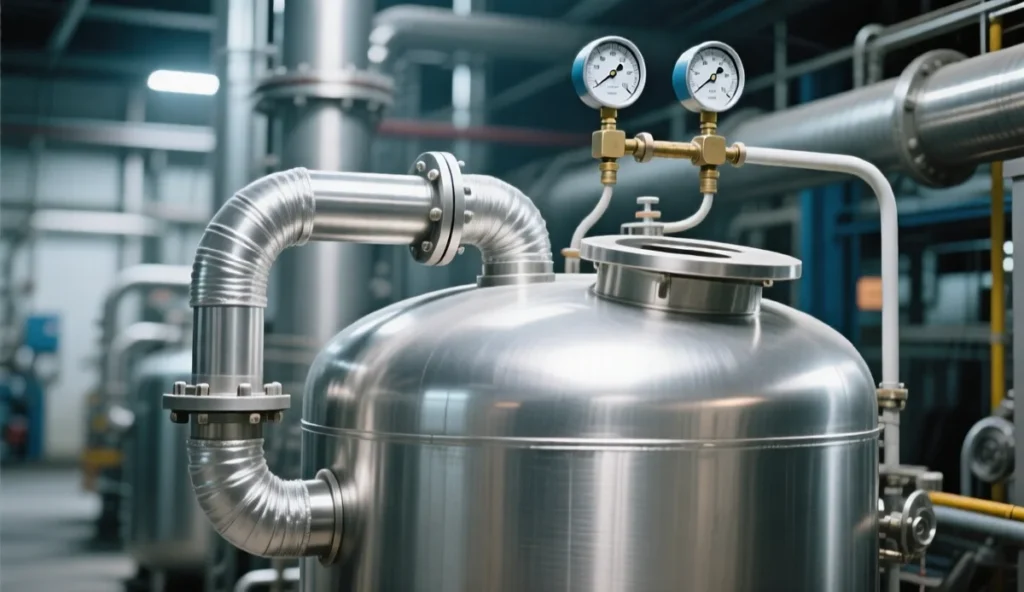
- Gauge and valve package: pressure gauge, level gauge type (differential-pressure or capacitance), and valve material list should be itemized — valves are where low-budget builds substitute brass where stainless is needed (cryogenic valve practice follows standards such as ISO 21008).
For the broader process of vetting fabrication suppliers in China, our sourcing guide walks through verification step by step.
5. Supplier Verification Checklist
| # | Question | Good answer looks like |
|---|---|---|
| 1 | Can you provide Charpy impact records for the inner shell heat numbers? | Yes, per heat, at or below service temperature |
| 2 | Which design code and which edition? | Named code + year, stamp/certificate available |
| 3 | Rated boil-off and test basis? | Number with test conditions, not “very low” |
| 4 | Relief valve sizing calculation available? | Yes, shareable before shipment |
| 5 | Oxygen-clean procedure for LOX units? | Documented procedure and declaration |
| 6 | Vacuum maintenance provisions? | Port provided, check method described |
| 7 | Weld NDE extent? | Stated % radiography or dye-penetrant scope |
FAQ
What does a cryogenic storage tank cost?
Shop-sized vacuum-jacketed vessels (500–5,000 L LIN class) commonly range from a few thousand to tens of thousands of dollars depending on capacity, insulation level, and valve package; large bulk tanks are engineered per project. Compare quotations on the verification list above — identical capacities can differ 2–3× in price because of insulation and documentation quality.
How long does vacuum insulation last?
With a sound jacket and getter material, high vacuum holds for many years; degradation shows up as rising boil-off. That is why a re-evacuation port and periodic vacuum measurement are worth specifying.
Can stainless tanks store liquid CO₂?
Yes, but CO₂ is stored under pressure (typically 16–22 bar), so the vessel is a pressure tank with insulation rather than an atmospheric dewar — design code, relief sizing and filling procedures all differ from LIN service.
What is the typical lead time?
Standard shop vessels run 6–10 weeks including testing; custom capacities, PED certification, or special valve packages extend that. Ask for the test schedule inside the quotation, not just the delivery date.
Do we need special operator training?
Yes — cryogenic burns, pressure excursion, and (for LIN/LAR/LOX) oxygen deficiency are real hazards. Reputable suppliers provide an operation manual with relief and venting diagrams; ask for it in English before awarding.
Get a Quotation You Can Verify
Send the liquid, capacity, working pressure, and site conditions. Within two working days you receive the material specification with impact-test documentation scope, insulation options with rated boil-off, the applicable design code, and a line-item price — request a quote. For the general tank ordering process see our water tank guide and pressure vessel standards guide.