
How to Source Stainless Steel Fabrication from China: A Complete Guide for International Buyers
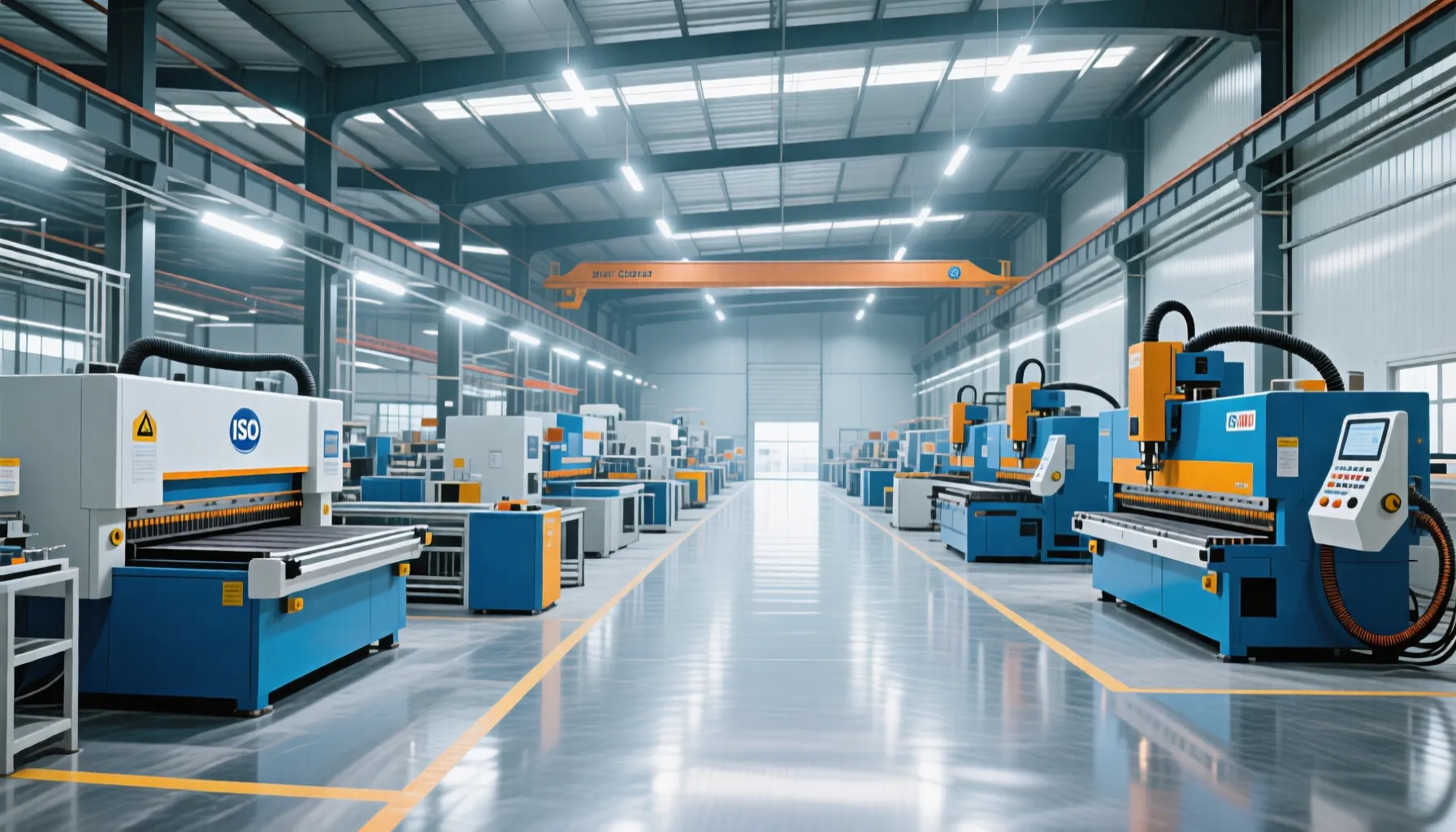
China produces over 63% of the world’s stainless steel — 39.4 million metric tons in 2024, per the World Stainless Association. For procurement managers and OEM buyers, partnering with the right stainless steel fabrication China supplier unlocks advanced manufacturing at 30-50% lower total cost compared to Western fabricators — provided you know how to identify, evaluate, and manage that supplier.
The challenge: for every ISO-certified factory with 60,000W laser cutting and 12-meter press brakes, dozens of trading companies pose as manufacturers. Unclear specifications lead to costly rework. Hidden logistics costs erase apparent savings. This guide provides a practical, factory-informed framework — from supplier verification and structured audits to negotiating terms and managing logistics — so you can build a supply chain that delivers consistent quality at predictable costs.
Factory vs Trading Company: How to Tell the Difference
The most consequential decision in sourcing is whether you are dealing with a factory or a trading company. A factory owns its equipment, employs its operators, maintains raw material inventory, and controls quality at the source. A trading company brokers orders to third-party factories, adding 10-25% markup while introducing communication layers that increase specification risk.
| Dimension | Direct Factory | Trading Company |
|---|---|---|
| Business License | Includes “生产/制造” (manufacturing); registered at an industrial address | Scope lists “贸易” (trading) or “销售” (sales); commercial office address |
| Production Equipment | Owns laser cutters, press brakes, welding stations, finishing lines on-site | No production equipment; may share third-party factory photos |
| Raw Material Stock | Maintains 300-500+ tons of stainless steel plate, pipe, and profiles | No material stock; relies on third-party availability |
| Quality Control | In-house QC team with spectrometer, CMM, and documented procedures | Relies on third-party factory QC; limited direct oversight |
| Pricing | Direct ex-works pricing; 10-25% lower than trading company equivalents | Factory price plus 10-25% coordination margin |
| Technical Communication | Engineers discuss directly; faster DFM feedback and problem resolution | Acts as translator layer; slows technical clarification cycles |
| Production Flexibility | Can adjust schedules, prioritize urgent orders, accommodate mid-run changes | Limited influence over factory scheduling and change management |
| Risk Exposure | Single-factory dependency; capacity constraints during peak seasons | Can shift between factories but with less quality consistency |
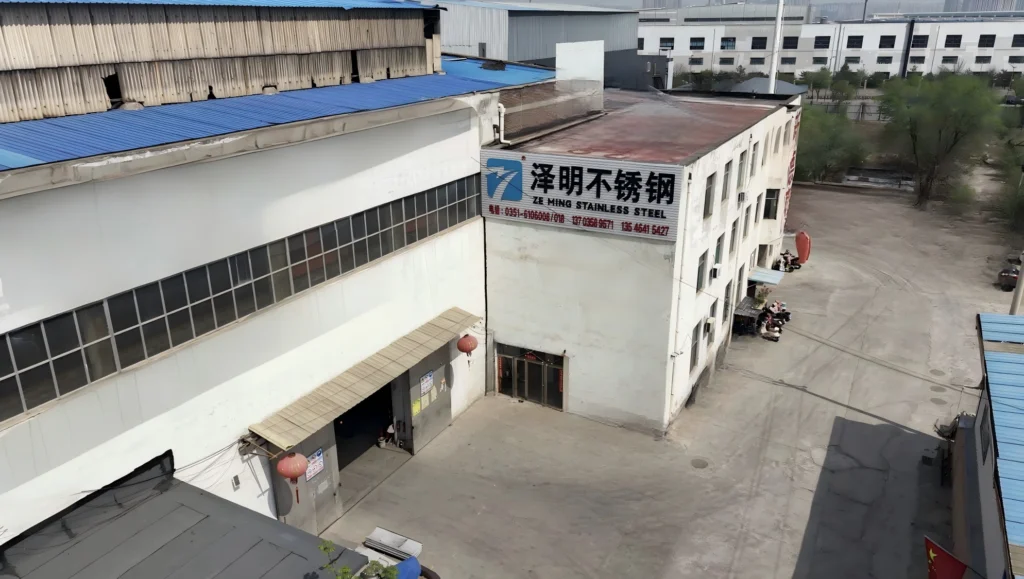
How to verify: Request the business license (营业执照) and check for “生产” in the scope. Conduct a live video tour — a real factory has noise, material flow, and operators at workstations. Commission an independent audit through SGS, Bureau Veritas, or TÜV. Visit our factory page to see real workshop imagery with equipment specifications, not stock photography.
How to Evaluate a Chinese Stainless Steel Fabricator
Once factory status is confirmed, evaluate across five dimensions: facility scale, equipment, certifications, material management, and client references.
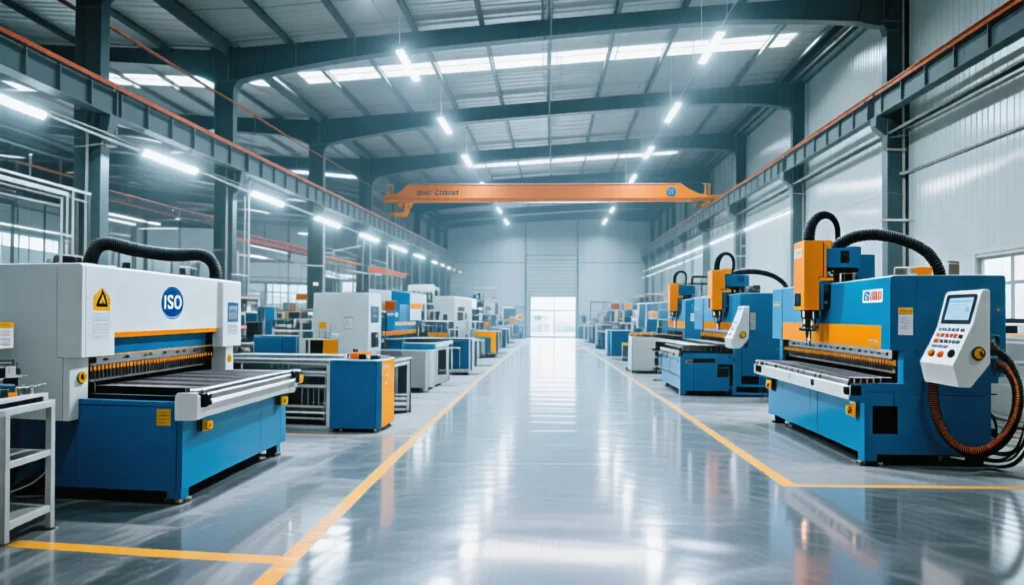
Facility scale: Export-oriented fabricators operate 8,000-15,000 m² workshops with segregated zones for storage, cutting, forming, welding, finishing, QC, and warehousing. ZEMSS’s 12,000 m² facility maintains separated stainless and carbon steel workflows — critical for corrosion-sensitive applications.
Equipment capability: Request a list with brand, model, and year. Key indicators: fiber lasers at 12,000W+ for plate up to 50 mm, CNC press brakes with 6-meter+ beds at 300T+, TIG/MIG stations with qualified WPS documentation, and in-house finishing (pickling, passivation, polishing).
Certifications: ISO 9001:2015 is baseline. For pressure equipment, verify ASME or PED scope. ISO 14001 and ISO 45001 signal management maturity. For specialty grades like 316L, 2205, or 904L, confirm material certification workflow.
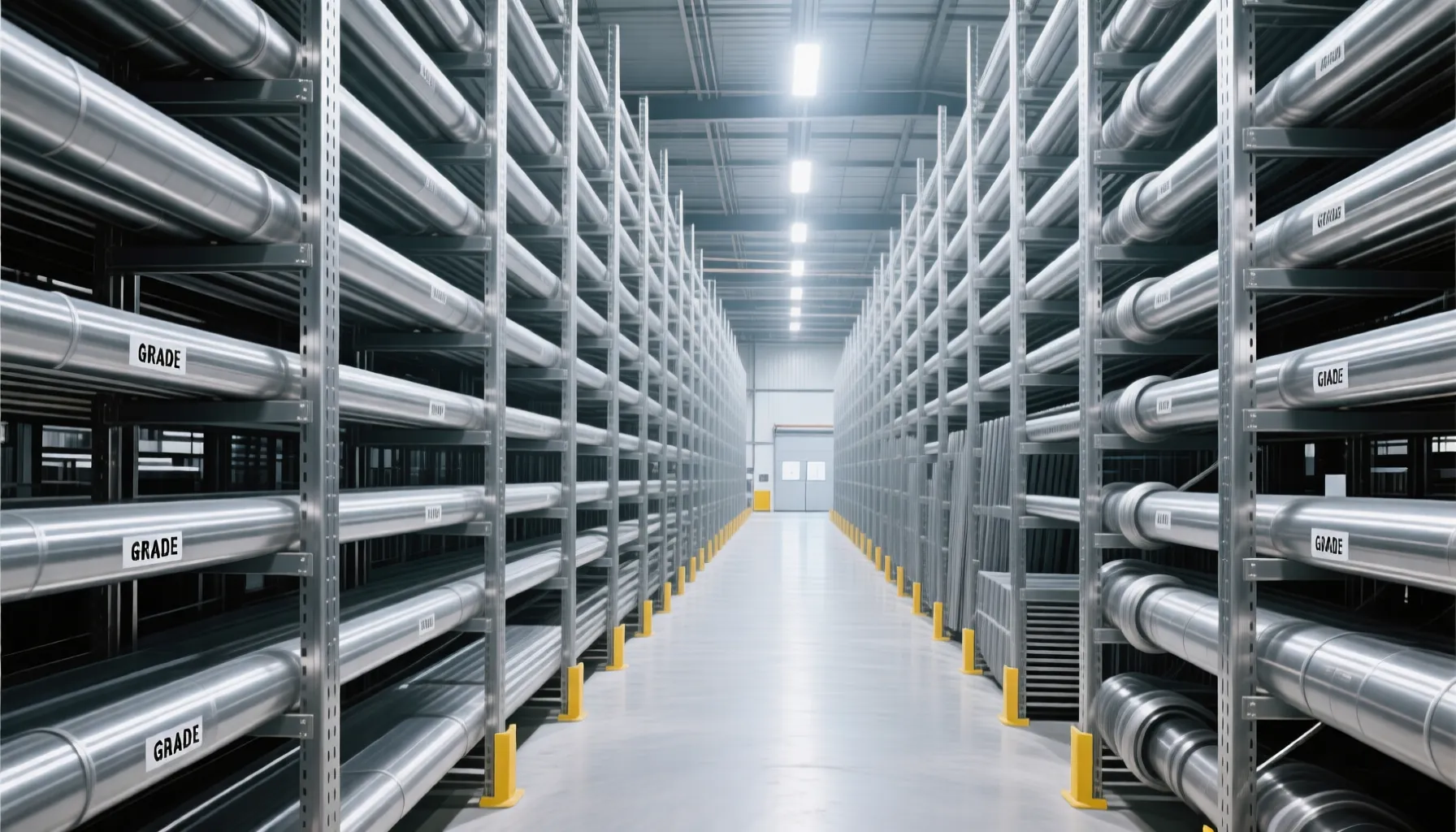
Material management: A capable fabricator holds 300-500+ tons of common grades (304/304L, 316/316L) from mills like TISCO, Baosteel, or POSCO. Every incoming batch undergoes spectrometer verification with full heat-number traceability to EN 10204 3.1 MTR.
Client references: Request references in your industry vertical. Ask about on-time delivery (target: 95%+), defect rates (target: under 1%), and how non-conformances were resolved. For deeper criteria, see our guide on choosing the right stainless steel fabrication manufacturer.
20-Point Factory Audit Checklist
A structured audit separates capable suppliers from underperformers before you commit. Conduct it yourself, send a representative, or commission a third party. Each item reflects a real failure mode observed across two decades of manufacturing and supply chain due diligence with stainless steel fabrication in China.
- Business license verification — Confirm “生产” in scope, registered capital, and establishment date.
- Factory ownership vs lease — Owned facilities signal commitment; leased sites may relocate.
- Workshop area — Under 3,000 m² limits volume-order capacity.
- Material storage — Indoor, grade-segregated, elevated off floor, moisture-protected.
- Incoming material inspection — XRF or OES spectrometer verification against mill certificates per batch.
- Laser cutting equipment — Record brand, power (kW), max bed size, and maintenance logs.
- CNC press brake capability — Maximum tonnage, bed length, crowning system, tooling inventory.
- Welder qualification — Count certified welders; verify WPS/WPQR per ASME Section IX or ISO 15614.
- Welding equipment — TIG, MIG, SAW stations with gas supply; check calibration stickers.
- Surface finishing — In-house pickling, passivation, polishing, or documented subcontractor qualification.
- Dimensional inspection — Calibrated calipers, micrometers, height gauges, CMM or laser scanning.
- Calibration program — All instruments with valid certificates traceable to national standards.
- ISO 9001 implementation — Not just the certificate; verify procedures, audit records, management reviews.
- Non-conformance handling — Documented CAPA system with real examples.
- Production planning — ERP/MRP or visible scheduling; ask how urgent orders are accommodated.
- Capacity utilization — Above 85% means your order risks delays during peak seasons.
- Subcontractor management — If processes are outsourced, verify qualification and quality oversight.
- Export packaging — Dedicated area with documented standards for ocean freight.
- Worker safety compliance — PPE, welding screens, ventilation, fire extinguishers present and in use.
- Export documentation experience — Familiarity with your destination’s import requirements, COO, FTA docs.
Score each item pass/fail. Below 15 warrants deeper investigation. For third-party audit recommendations, contact our team — we work with inspection partners experienced across China’s stainless steel fabrication sector.
Understanding Pricing and Payment Terms
Stainless steel fabrication pricing comprises four components: raw material (typically 50-65%), processing labour, consumables and tooling, and margin. Raw material follows LME nickel trends and mill list prices, updated monthly. Processing cost scales with complexity — a laser-cut blank costs far less than a welded assembly with tight tolerances.
Incoterms Quick Reference
| Term | Factory-to-Port | Ocean Freight | Insurance | Import Duties | Best For |
|---|---|---|---|---|---|
| EXW | Buyer | Buyer | Buyer | Buyer | Buyers with China logistics partners |
| FOB | Seller | Buyer | Buyer | Buyer | First-time buyers; balanced risk and control |
| CIF | Seller | Seller | Seller (min) | Buyer | Trial orders wanting simplified freight |
| DAP | Seller | Seller | Seller | Buyer | Door-to-door except duties |
| DDP | Seller | Seller | Seller | Seller | Maximum convenience; highest cost |
Refer to the ICC Incoterms 2020 rules for official definitions. For first-time buyers, FOB offers the best balance: the supplier handles export clearance to the port, while you control ocean freight through your forwarder.
Payment Terms
T/T (Telegraphic Transfer): The standard in Chinese fabrication. Typical structure: 30% deposit with PO, 70% balance before shipment — confirmed by photos of completed goods — or against shipping documents. First orders often use 50/50. L/C (Letter of Credit): Bank-guaranteed payment; irrevocable L/C at sight is preferred. Reserve for orders above USD 50,000 where the 0.5-1.5% bank charge is justified.
Key Definitions
MOQ (Minimum Order Quantity): The smallest production run a fabricator accepts. Laser-cut parts: 50-100 pieces. Welded assemblies: 10-50 units. Prototypes of 1-5 pieces available at higher unit pricing.
OEM vs ODM: OEM means the fabricator builds to your exact drawings — you own the design and IP. ODM means the fabricator offers an existing design you can brand — faster but you do not own the core IP. For custom fabrication, OEM is the standard model.
Avoiding Hidden Costs
Request a cost breakdown separating material, processing, tooling, packaging, and inland transport. Watch for: tooling amortization buried in unit pricing, packaging added after quotation, inland trucking quoted separately from FOB, and bank charges on transfers. A transparent stainless steel fabrication China supplier itemizes every cost category.
Quality Assurance and Documentation
Quality in stainless steel fabrication is documented before it is demonstrated. The paper trail — MTRs, inspection reports, weld procedure qualifications — is your primary assurance that delivered parts match approved specifications.
MTR (Mill Test Report) per EN 10204 3.1: Certifies chemical composition and mechanical properties of the specific heat of material used. Verify heat numbers on the MTR match markings on received components. Specify EN 10204 3.2 (third-party witnessed testing) for critical applications.
Inspection and Test Plan (ITP): For complex welded assemblies, an ITP defines inspection hold points at each stage — ensuring checks happen when they matter, not only at final QC when rework costs most.
Third-Party Inspection: Commission SGS, Bureau Veritas, TÜV, or Intertek for first orders or critical components. Typical scope: pre-production material verification, in-process inspection, and pre-shipment final inspection. Cost: USD 500-1,500 depending on scope.
Specifying requirements clearly: Ambiguous specs are the leading cause of quality disputes. Provide 2D drawings (PDF with embedded dimensions), 3D models (STEP/IGES), written surface finish values (e.g., “Ra ≤ 0.8 μm, #4 brush, uniform grain along length”), and weld acceptance criteria per AWS D1.6 or ISO 5817. A quality-oriented fabricator will raise technical queries before quoting — a positive signal that engineers have studied your drawings.
Logistics and Shipping
Moving parts from a Chinese factory to your dock involves four legs: inland trucking, ocean freight, destination port handling, and final-mile delivery. Plan logistics upfront — last-minute expediting erases your sourcing savings.
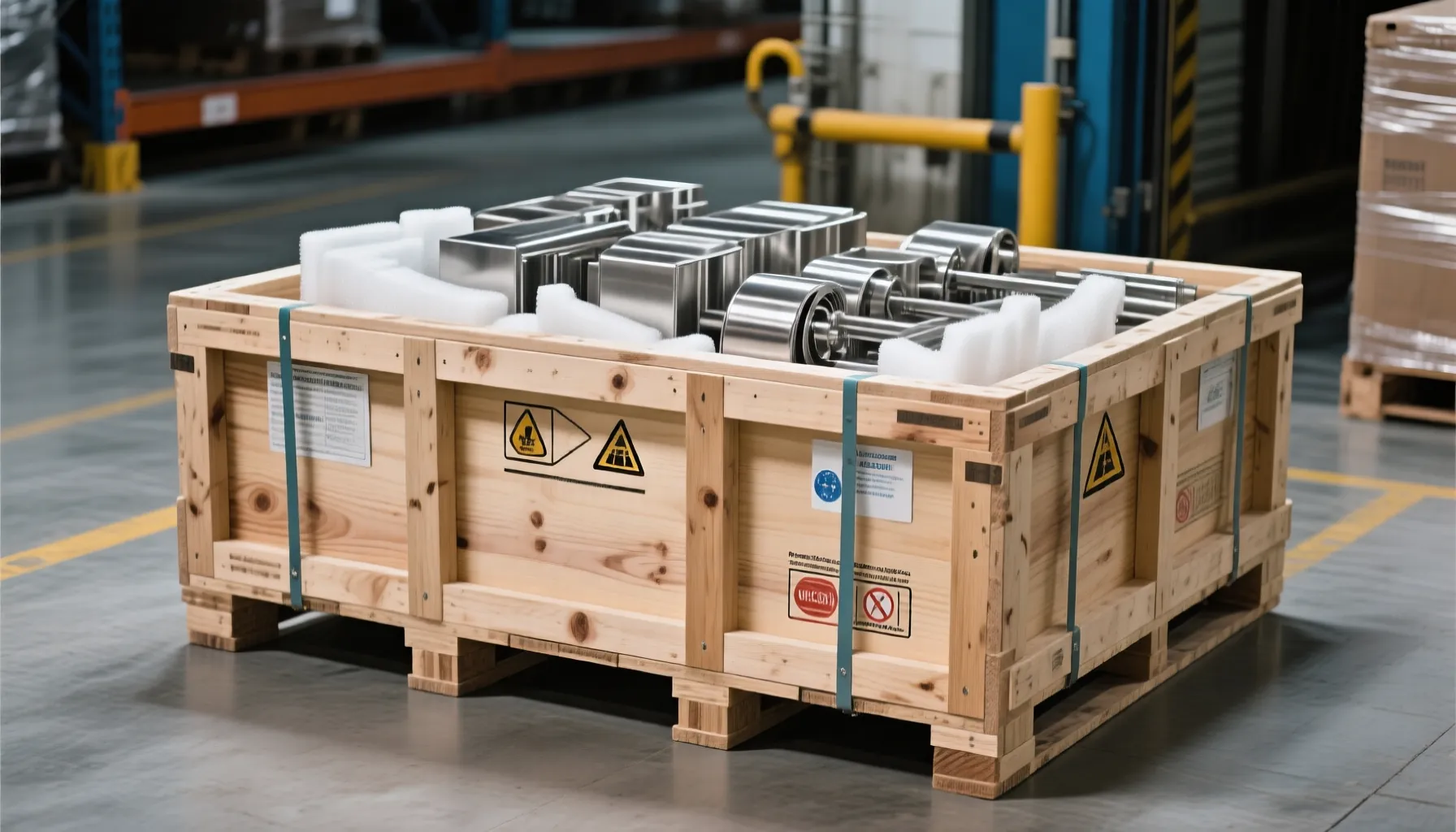
Packaging for ocean freight: Stainless steel components need salt-spray corrosion protection during 3-6 weeks at sea. Standard export packaging: VCI paper wrapping, desiccant packs in sealed polyethylene, and plywood crating for precision surfaces. Large fabrications require custom steel cradles with edge protection. Confirm your stainless steel fabrication China supplier’s packaging standard before production, and request photos of packaged goods before factory release.
Customs documentation: Required: commercial invoice, packing list, bill of lading, certificate of origin, and MTRs. Wood packaging must comply with ISPM 15. Your freight forwarder should provide a destination-specific checklist before shipment.
Transit times from major Chinese ports: West Coast North America — 14-18 days; East Coast North America — 28-35 days; Northern Europe — 28-32 days; Middle East — 16-20 days; Southeast Asia — 5-10 days; Australia — 14-20 days. Add 3-5 days for inland transport to port and 3-7 days for destination clearance. Air freight: 3-7 days at 5-8x ocean cost — viable for urgent orders under 200 kg.
Communication and Cultural Tips
Engineering communication across languages requires deliberate habits. Chinese fabricators who export regularly are accustomed to international buyers, but proactive communication on your side dramatically improves outcomes.
Time zones: China operates on UTC+8. Factory hours: 08:30-18:00, Monday-Saturday. North American buyers face a 12-15 hour offset. Most export-oriented fabricators, including our sales engineering team, maintain evening availability to overlap with Western business hours. Confirm your contact’s WeChat ID — it remains the dominant business communication platform in Chinese manufacturing.
Drawing formats: Submit 2D as PDF with embedded dimensions, 3D as STEP or IGES. Avoid proprietary CAD formats unless compatibility is confirmed. Include a separate written specification sheet repeating critical dimensions, tolerances, material grade, and finish requirements — do not rely solely on drawing notes. Use metric units as primary; Chinese fabrication equipment is calibrated in metric.
Building relationships: The most successful international partnerships with a stainless steel fabrication China supplier are built on repeat business, not transactional orders. Invest in a factory visit — face-to-face time builds trust that email cannot. Respect Chinese public holidays (Chinese New Year in January/February, Golden Week in October) when planning schedules. Provide feedback — both positive and corrective — to help the supplier refine processes for your requirements.
Common Pitfalls and How to Avoid Them
After two decades manufacturing for international clients, here are the recurring problems first-time buyers encounter — and how to avoid them.
Chasing the lowest price: A quote 20-30% below market average signals non-conforming material, skipped QC, or planned change orders. Request a cost breakdown. If material cost falls below the prevailing market price for the specified grade, investigate. Remember: price, quality, speed — pick two.
Skipping the factory audit: A website and convincing sales call do not substitute for physical verification. An independent audit costs USD 500-1,500 — a fraction of a failed shipment’s cost. Even a live video tour with specific requests (“show me your spectrometer running,” “walk to the material store”) provides valuable verification before placing an order with a stainless steel fabrication China supplier.
Inadequate specifications: The single most expensive mistake: assuming the supplier will “figure it out.” Undefined dimensions, unspecified tolerances, and verbal descriptions like “smooth” or “clean” invite expensive interpretation. Over-specify: provide tolerance standards (ISO 2768-m), welding standards (AWS D1.6), and surface finish Ra values numerically.
Ignoring total landed cost: The FOB price is not your final cost. Build a model: FOB + ocean freight + insurance + destination port charges + customs brokerage + import duties + final-mile delivery. Stainless steel fabricated products typically carry 0-6% duty. Budget 12-18% above FOB for total landed cost to North America or Europe.
Treating all fabricators as interchangeable: A shop optimized for thin-gauge laser cutting may struggle with heavy-plate welding. A fabricator serving architectural clients may lack process controls for pressure components. Match demonstrated expertise to your application. Review our guide on matching fabricator capability to your project requirements before final selection.
Frequently Asked Questions
How do I verify whether a Chinese supplier is a real stainless steel fabrication factory or a trading company?
Check the business license for “生产” (manufacturing). Request a live video tour showing active production — date-stamped photos are insufficient. Ask for the equipment list with brand and model numbers. A genuine stainless steel fabrication China supplier operates from an industrial address with visible inventory and in-house QC. For high-value orders, commission an independent audit through SGS, Bureau Veritas, or TÜV.
What is the typical MOQ for stainless steel fabrication from China?
MOQ depends on process complexity. Laser-cut and bent parts: 50-100 pieces. Welded assemblies: 10-50 units. Simple brackets: 100-500 pieces. Most fabricators accept 1-5 piece prototype orders at a higher unit price. Confirm MOQ when submitting your RFQ to a stainless steel fabrication China supplier.
Which Incoterm is best for first-time stainless steel imports from China?
FOB (Free on Board) is recommended for first-time buyers. The supplier handles export clearance and inland delivery to the port, while you control ocean freight through your forwarder — giving cost transparency and schedule control. CIF is more convenient but less transparent. See the ICC Incoterms 2020 reference for complete definitions.
What certifications should a qualified stainless steel fabricator hold?
ISO 9001:2015 is baseline. For pressure equipment, verify ASME U/R/S stamps or EN 13445/PED compliance. For European structural work, EN 1090-1 CE marking. ISO 14001 and ISO 45001 indicate management maturity. Material certifications should follow EN 10204 3.1 with 3.2 available for critical applications. Always verify the certifying body, scope, and expiry date.
Build a Reliable Stainless Steel Supply Chain from China
Sourcing stainless steel fabrication from China is about building a supply chain that delivers consistent quality, predictable lead times, and transparent costs — not about finding the cheapest quote. The framework above — verify factory status, audit systematically, specify completely, price realistically, and communicate proactively — equips you to identify capable partners and avoid costly first-time buyer mistakes.
At ZEMSS, our 12,000 m² facility integrates 60,000W laser cutting, 12-meter CNC press brakes, TIG/MIG/SAW welding, and in-house surface finishing under ISO 9001/14001/45001 certified management. We stock over 500 tons of 304/304L, 316/316L, 2205, and specialty-grade stainless steel with full heat-number traceability from mill certificate to finished component.
Whether you need prototypes, production-volume laser-cut blanks, or fully fabricated welded assemblies, contact our engineering team with your drawings — we provide technical review and quotation within 24 hours. Visit our processing capabilities page for detailed equipment specs and tolerances. Your next reliable manufacturing partnership starts with a factory you can verify.