
By Chen Ming, Senior Fabrication Engineer · Updated September 10, 2026 · 9 min read
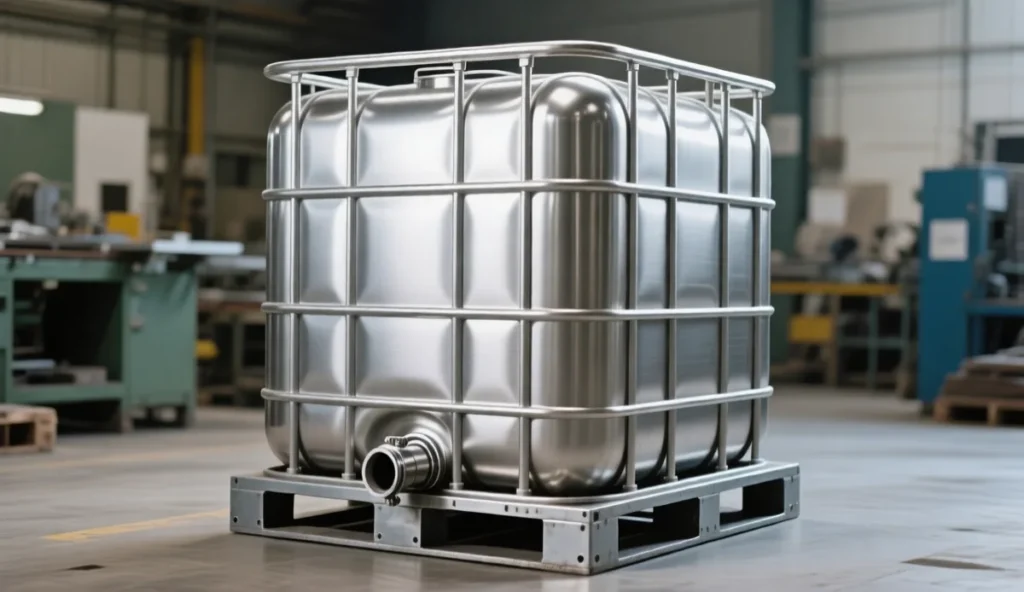
An IBC — intermediate bulk container — is the workhorse between a drum and a fixed tank: forklift-movable, stackable, and sized so one unit equals one production batch or one shipping lot. The plastic composite version dominates on price, but the stainless version dominates everywhere the process is demanding: hot filling above 60 °C, solvent or caustic contents, sanitary duty, outdoor UV exposure, or a service life measured in decades instead of seasons.
This guide is for buyers specifying stainless IBC totes and tanks — what the standard sizes are, how to choose grade and thickness, and which certifications actually matter.
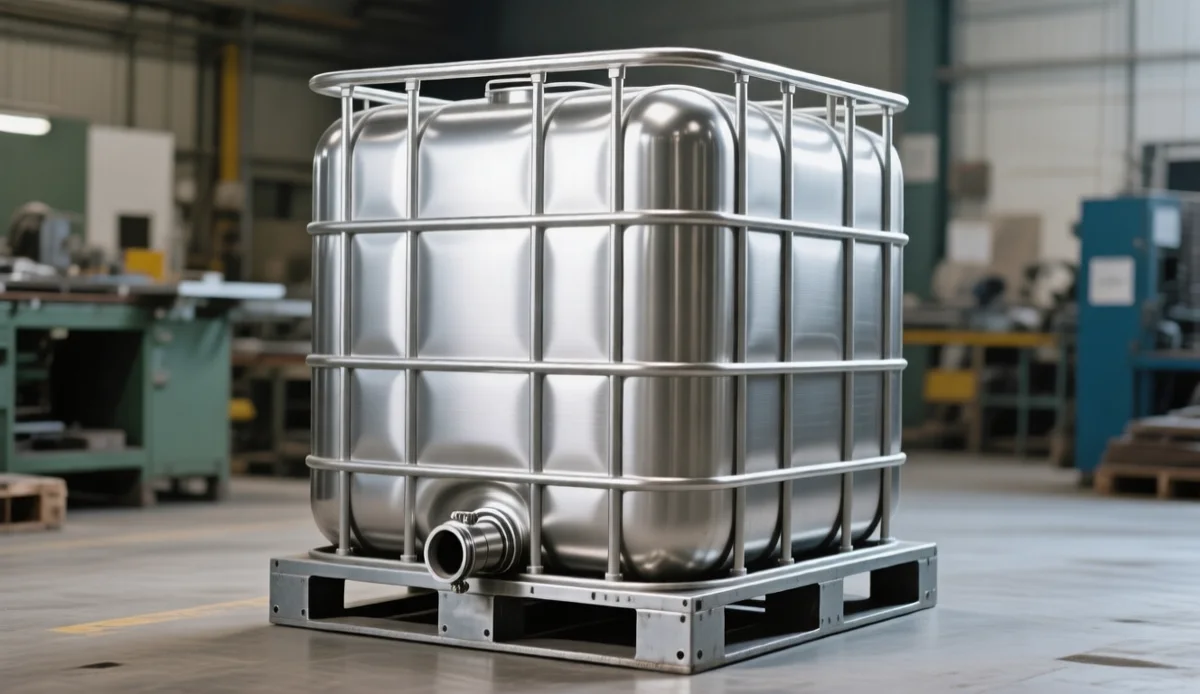
1. Standard Sizes and What Actually Fits Your Logistics
| Capacity | Typical footprint | Payload @ SG 1.0 | Common use |
|---|---|---|---|
| 275 gal / 1,040 L | 1,200 × 1,000 mm | ~1,040 kg | US-standard rack fit, chemical transfer |
| 330 gal / 1,250 L | 1,200 × 1,000 mm | ~1,250 kg | Export standard, food & beverage batches |
| 500–800 L | 1,200 × 800 mm (euro pallet) | 500–800 kg | Pharma intermediates, smaller batches |
| Custom 2,000–5,000 L | Flatrack or skid-mounted | By design | Process buffer totes, mobile day tanks |
Two logistics checks before ordering: the container’s gross weight must match your forklift and racking ratings (a full 1,250 L tote approaches 1.4 t gross), and if it travels by sea as packaging rather than as a fixed tank, regulated liquids require a UN-certified design — the certification covers the design type test (drop, stacking, pressure), not the individual weld, so ask for the UN mark documentation on the design you are buying. For larger fixed storage, see our storage tank buyer’s guide.
2. Grade Selection: 304 vs 316L by Contents
| Contents | Grade | Why |
|---|---|---|
| Drinking water, juices, edible oils, dry food powders | 304, food polish | No chlorides; 304 is the food-industry baseline |
| Salt-containing sauces, brines, dairy | 316L | Molybdenum resists chloride pitting |
| Detergents, mild caustics, water treatment chemicals | 316L | Alkaline + chloride combinations pit 304 |
| Solvents, fuels, oils | 304 acceptable | Corrosion load low; check seals instead |
| Pharma intermediates, CIP/SIP duty | 316L, electropolished Ra ≤ 0.8 µm | Cleanability and surface passivity are the spec |
When in doubt about chlorides, get the concentration and temperature and check against a pitting-resistance chart — “it’s only a little salt” is the most common root cause of tote failures we repair. The full grade trade-off is in our 304 vs 316L comparison; for pharma and CIP duty, the surface expectations are covered in our hygienic fabrication guide.
3. Wall Thickness: One Line That Saves the Order
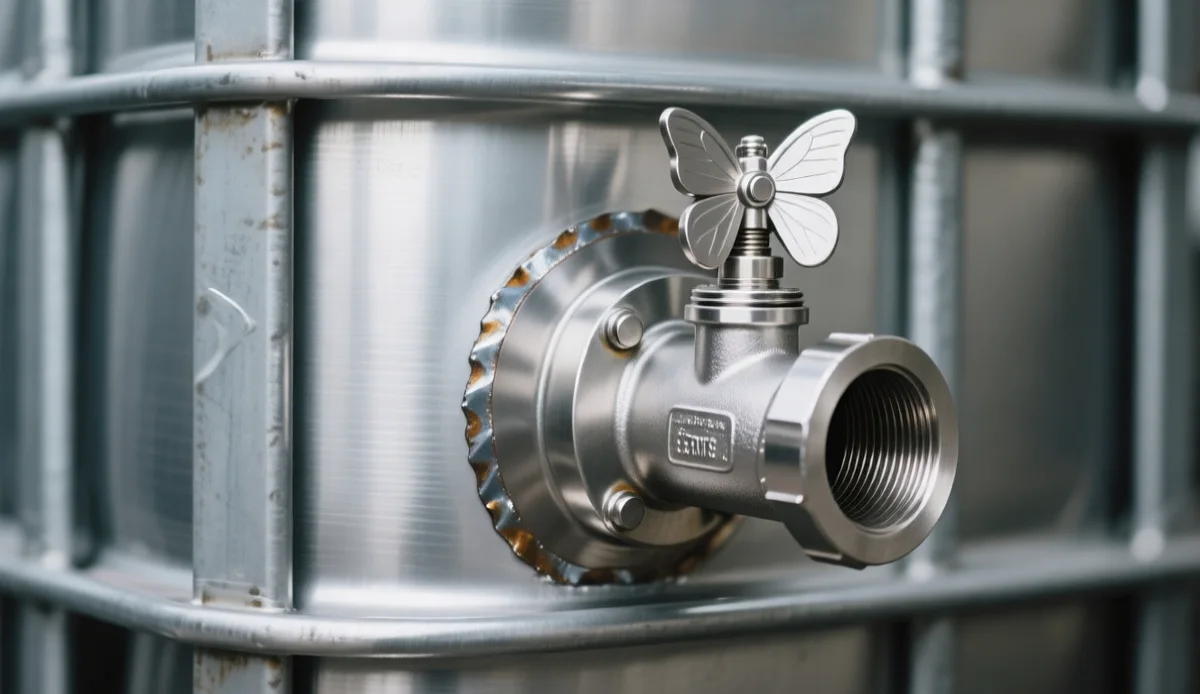
Shell thickness scales with liquid height and specific gravity, not with capacity. For atmospheric stainless IBCs we use plate of 2–4 mm for water-equivalent duty on standard footprints (plate per ASTM A240), stepping up for SG > 1.3 contents or stacking loads above two high. The rule to put in your RFQ is simple: “state shell and bottom plate thickness, and the calculation basis (liquid height × specific gravity), in the quotation.” Suppliers who quote a tote without stating plate thickness are quoting a guess.
4. Fittings and Features Worth Specifying
- Discharge valve: 2″ butterfly valve is the default; DIN/SMS tri-clamp ends for sanitary lines; air vent on the lid to prevent vacuum collapse during fast drain.
- Top opening: 400–500 mm manway for cleaning access; hinged and lockable lid for transport.
- Level indication: sight glass or level gauge strip; load-cell feet if the tote doubles as a batching vessel.
- Heating/cooling: half-pipe or dimple jacket options for viscosity-sensitive contents — adds cost, only specify if the process needs it.
- Cleaning: internal spray ball port for CIP; sloped bottom (≥ 2°) toward the valve for full drainout.
- Handling: four-way forklift pockets rated for the full gross weight, plus top lift lugs if crane handling is planned.
5. The Documents That Prove What You Bought
| Document | What it proves | Ask for it? |
|---|---|---|
| EN 10204 3.1 mill certificate | Plate grade and chemistry match 304/316L claims | Always |
| Hydrostatic or pressure test record | Weld integrity at 1.3–1.5× working load | Always |
| UN design-type certificate | Legal to ship regulated liquids as packaging | Only if shipping regulated goods |
| Surface finish report (Ra, per ISO 4287) | Sanitary/polish claims are measured, not claimed | For food/pharma duty |
| Weld procedure / NDE record | Seams inspected (dye-penetrant at minimum) | For critical contents |
FAQ
What does a stainless steel IBC tote cost?
A standard 1,000 L 304 tote with frame and butterfly valve typically lands between $800 and $1,800 ex-works depending on plate thickness and fittings; 316L adds roughly 20–30%; UN certification and jackets add more. Plastic composite IBCs cost a fifth of that and last a few years — stainless lasts decades and survives hot caustic washes.
Can stainless IBCs be stacked?
Yes, two and sometimes three high if the frame and corner posts are rated for it — the stacking load belongs in the RFQ. Never stack totes with frames not designed for it; shell buckling is the failure mode.
304 or 316L for drinking water?
304 is standard and sufficient for potable water. Choose 316L only if the water carries chlorination above ~1 ppm at elevated temperature, or if the tote alternates with brine or CIP chemicals.
Do you supply used or reconditioned IBCs?
We fabricate new totes; buyers of reconditioned units should re-verify plate thickness, valve seat condition, and the UN mark validity (a reconditioned packaging IBC must carry reconditioner marking per the regulations).
What is the lead time for a custom IBC?
Standard sizes ship in 3–4 weeks; custom dimensions, jackets, or UN design-type testing add 3–6 weeks. For UN certification the design test happens once per design, so repeat orders return to standard lead time.
Get a Quotation You Can Verify
Send capacity, contents (with chloride content and temperature), required fittings, and whether UN certification applies. Within two working days you receive plate thickness with calculation basis, a GA drawing, the document list above, and a line-item price — request a quote, or read our water tank ordering guide for the sister process on larger fixed tanks.