
Stainless Steel Chemical Processing: Material Selection, Equipment Design & Corrosion Prevention
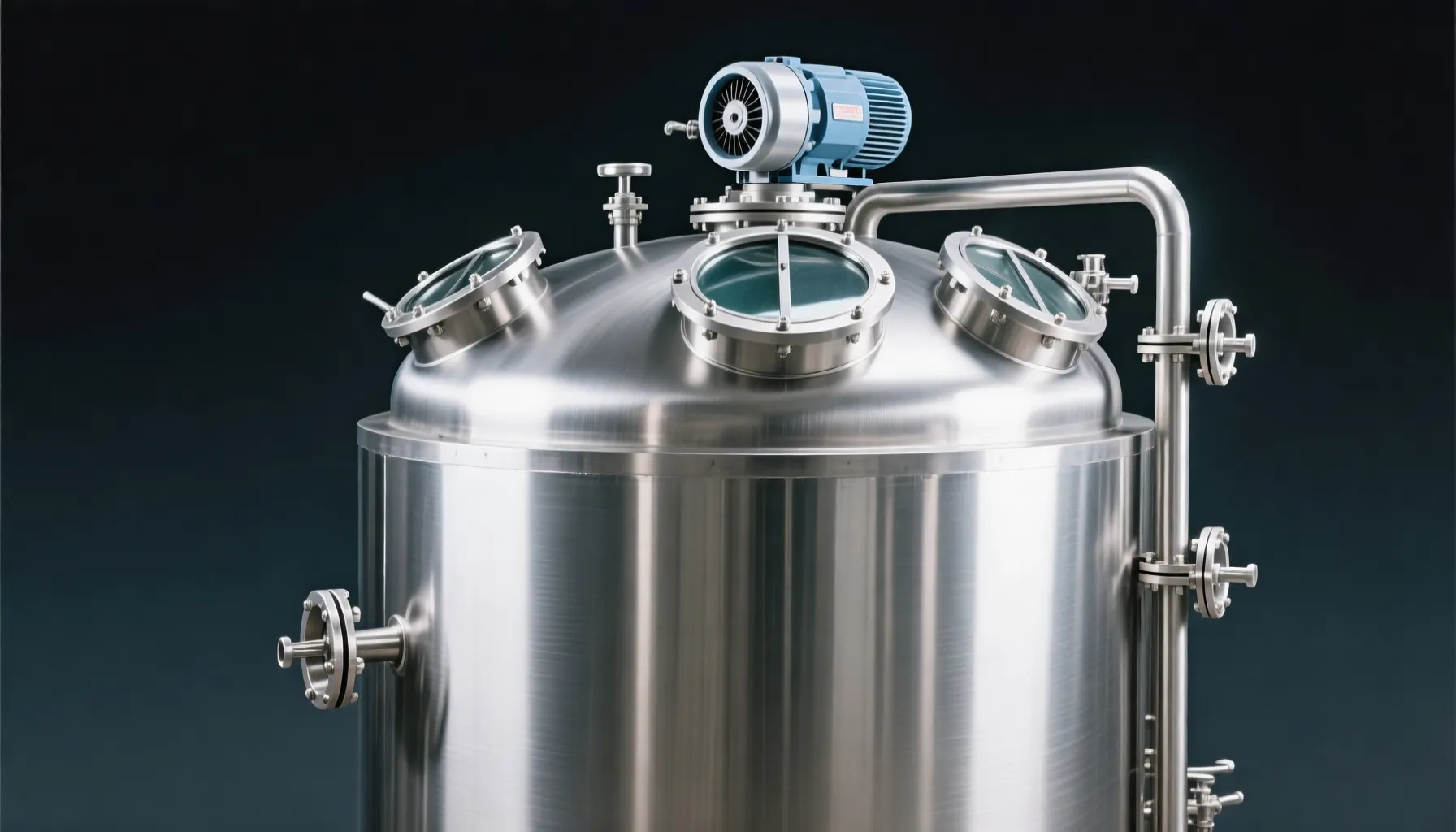
Specifying stainless steel chemical processing equipment is among the highest-stakes decisions an engineering team makes. Choose the wrong grade for a reactor or pipe spool, and consequences cascade: unplanned shutdowns, containment failures, environmental liability, and personnel injury. Chemical plants operate across an extreme range of corrosive media — concentrated mineral acids, high-temperature caustic, chloride-laden organic streams — and no single alloy covers every scenario. This article provides a systematic framework for grade selection, corrosion prevention, and code-compliant design of chemical processing equipment built from stainless steel and high-nickel alloys.
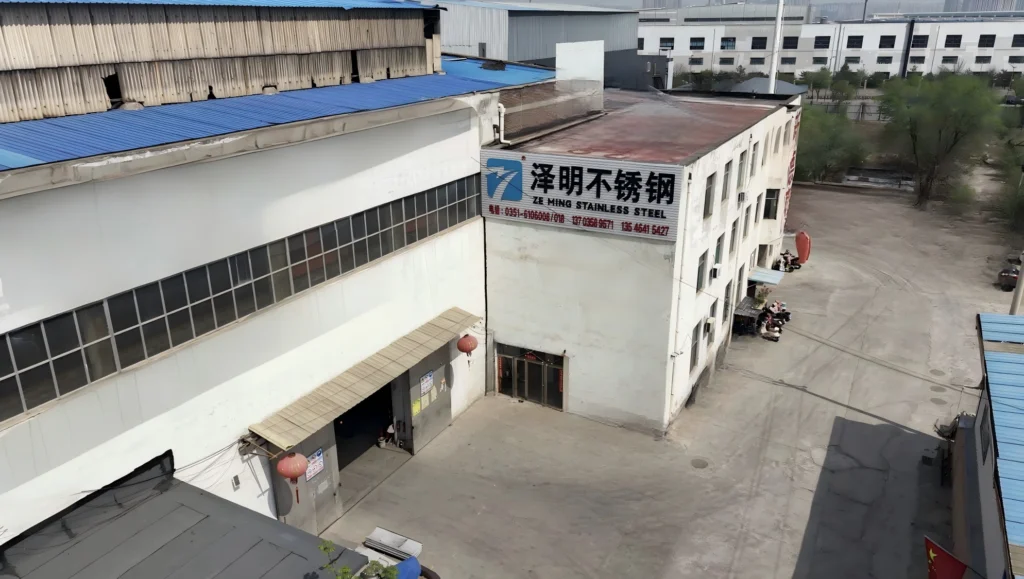
At Zeming Steel, we fabricate pressure vessels, stainless steel storage tanks, heat exchangers, and pipe spools for chemical plants worldwide. Every project undergoes material review cross-referencing operating media, temperature, pressure, and governing codes before a single plate is cut. For a broader view, see our chemical industry solutions page.
Common Chemical Environments & Compatible Stainless Steel Grades
Each chemical medium attacks stainless steel through a distinct mechanism: sulfuric acid drives general dissolution, chlorides trigger pitting and stress corrosion cracking (SCC), caustic soda induces caustic embrittlement above 120°C. The compatibility matrix below provides an engineering starting point — always validate against iso-corrosion curves for your exact concentration and temperature.
| Chemical Medium | Recommended Grade | Temperature Limit | Key Notes |
|---|---|---|---|
| Sulfuric Acid (H₂SO₄) <10% | 316L, 904L | 40°C (316L) / 70°C (904L) | Above 85% concentration, 304/316 may be usable at low temperature. Avoid 304 in dilute H₂SO₄ |
| Phosphoric Acid (H₃PO₄) | 316L, 904L, 2205 | 80°C (316L) / 120°C (904L) | Commercial acid often contains fluoride/chloride impurities — 2205 duplex preferred when halides present |
| Hydrochloric Acid (HCl) | Alloy 625, Titanium Gr.2 | Consult iso-corrosion data | Stainless steels generally unsuitable. 316L and 904L pit rapidly. Alloy 625: limited resistance at low concentration, ambient temperature only |
| Nitric Acid (HNO₃) | 304L, 310L | 80°C (304L) / 120°C (310L) | One of the few media where 304L outperforms 316L. Use L-grade exclusively to prevent intergranular attack from sensitization |
| Caustic Soda (NaOH) | 304L, 316L, Ni200 | 50°C (304L) / 80°C (316L) | Caustic SCC risk accelerates above 120°C for austenitic grades. Nickel alloys required for high-temperature, high-concentration caustic |
| Organic Acids (formic, acetic, citric) | 316L, 2205 | Boiling (316L for acetic); 90°C (formic) | Formic acid more aggressive than acetic. 2205 resists organic acid + chloride combinations common in pharma and food-grade processing |
| Chloride Process Streams | 2205, 2507, Alloy 625 | 150°C (2205) / 250°C (625) | PREN ≥ 35 is the typical threshold for chloride-bearing chemical service. 304L/316L not suitable above 60°C when Cl⁻ exceeds 1000 ppm |
Material Grade Deep-Dive for Chemical Service
316L — The General Chemical Workhorse
316L (UNS S31603) is the baseline grade for non-chloride chemical processing. Its 2.0-2.5% molybdenum provides meaningful improvement over 304L in reducing-acid environments, including dilute sulfuric and phosphoric acid. The low-carbon variant (≤0.03% C) is mandatory for welded chemical processing equipment: it suppresses chromium carbide precipitation, eliminating post-weld solution annealing on most thicknesses. PREN: 24-26. Service limits: avoid when chlorides exceed 200-500 ppm above 60°C (SCC risk), and when sulfuric acid falls in the 5-50% range at elevated temperature. See our materials specification guide for full 316L data.
2205 Duplex — Chloride + Acid Dual Resistance
2205 (UNS S32205) solves the fundamental limitation of 300-series austenitics: chloride SCC susceptibility. Its duplex microstructure delivers PREN 34-36 and roughly twice the yield strength of 316L (450 MPa vs. 220 MPa). For plants processing mixed chloride-acid streams — phosphoric acid production, FGD, organic chlorination — 2205 is becoming the standard for stainless steel chemical processing equipment. Welding requires controlled heat input and interpass ≤150°C to maintain phase balance; Zeming maintains qualified WPS for all duplex grades.
904L — Sulfuric & Phosphoric Acid Specialist
904L (UNS N08904) is a high-nickel (23-28% Ni), high-molybdenum (4-5% Mo) austenitic with deliberate copper addition (1.0-2.0% Cu). Copper imparts superior resistance to reducing acids, making 904L the material of choice for sulfuric acid coolers, phosphoric acid evaporators, and acid storage tanks at 30-85% concentration. PREN: 36-38.
310S — High-Temperature Chemical Service
310S (UNS S31008) is specified for equipment above 500°C: furnace tubes, reformers, thermal oxidizers. Its 24-26% Cr / 19-22% Ni provides cyclic oxidation resistance to 1100°C. PREN is low — unsuitable for wet corrosion; typically paired with a corrosion-resistant lining in chemical duty.
Alloy 625 — Extreme Environment Solution
Alloy 625 (UNS N06625) is deployed when standard grades reach their limits. With 58% Ni, 20-23% Cr, and 8-10% Mo, it delivers PREN 48-52 and exceptional resistance to pitting, crevice corrosion, SCC, and acid attack. Applications include HCl distillation columns and chlorine-containing high-temperature stainless steel chemical processing equipment. Zeming fabricates Alloy 625 pressure-boundary components with 100% PMI verification.
Equipment Types in Chemical Plants — Material Selection by Function
Different equipment types impose different material demands. Reactors see aggressive chemistry at high temperature and pressure; storage tanks must resist the medium for decades near ambient; heat exchangers face potentially different media on shell and tube sides. The table below provides a function-specific selection guide.
| Equipment | Typical Grades | Key Material Considerations |
|---|---|---|
| Reactors & Pressure Vessels | 316L, 2205, 904L, clad (CS+SS) | Full-penetration butt welds, weld overlay for nozzles, PMI on pressure-boundary welds. Clad construction (CS+SS) reduces cost for large vessels where only wetted surface needs corrosion resistance |
| Storage Tanks | 304L, 316L, 2205 | Atmospheric or low-pressure design. Avoid lap joints if crevice corrosion risk exists. For chloride media, specify 2205 shell and roof; a fully drainable 316L floor may be acceptable |
| Shell & Tube Heat Exchangers | 316L, 2205, 904L (tubes) | Tubesheet must be compatible with shell-side and tube-side media. Tube-to-tubesheet: strength-welded + expanded for lethal service. Analyze differential thermal expansion |
| Distillation Columns | 316L, 2205, 904L, Alloy 625 | Corrosion profile varies by tray elevation. Multi-grade fabrication (e.g., 2205 column + 316L internals) optimizes cost vs. resistance by zone |
| Pipe Spools (ASME B31.3) | 316L, 2205 | Full-penetration butt welds with argon back-purge. Corrosion allowance typically 1.5-3.0 mm. Flange material to match pipe with compatible gasket selection per fluid service category |
Corrosion Types & Prevention Strategies for Chemical Equipment
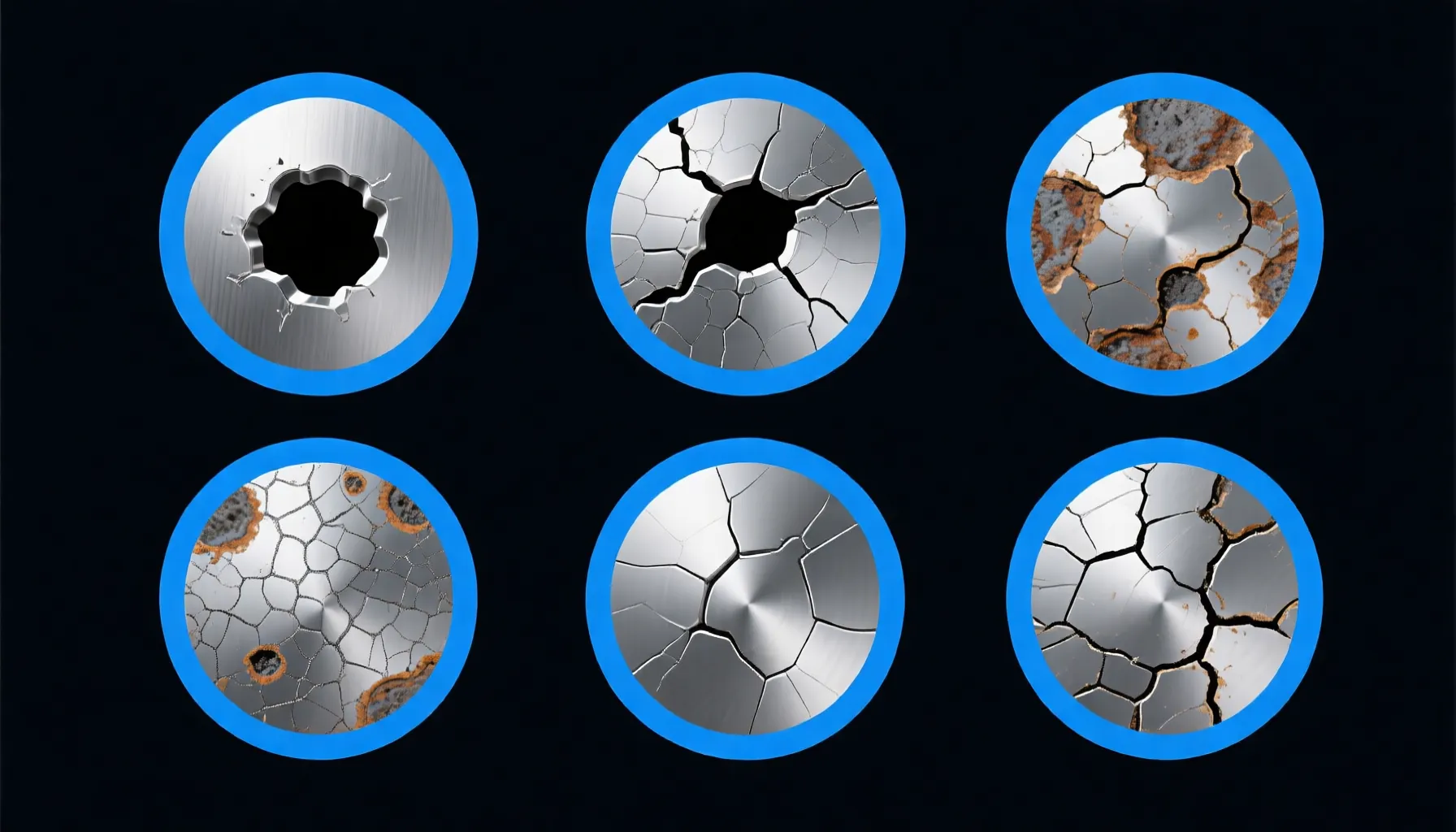
Corrosion in chemical plants is rarely a single mechanism. A pipe spool carrying hot chloride-laden condensate may undergo pitting at inclusions, crevice corrosion under gasket surfaces, and chloride SCC at weld stress zones — all simultaneously. Understanding each mechanism is the foundation of effective prevention.
| Corrosion Type | Cause | Prevention | Best Grades |
|---|---|---|---|
| Uniform (General) | Even material dissolution across exposed surface, typical in reducing acids. Rate expressed in mm/year | Select grade per iso-corrosion data. Add corrosion allowance. Monitor at CMLs. Clad or line if rate exceeds 0.5 mm/year | 904L, Alloy 625, C276 |
| Pitting | Localized attack initiated by chloride ions breaking passive film at inclusions or surface defects | Specify PREN ≥ 35. Control surface finish ≤0.5 µm Ra. Post-fabrication passivation. Eliminate iron contamination | 2205, 2507, Alloy 625 |
| Crevice Corrosion | Oxygen-depletion cell forms in tight gaps (gaskets, deposits, bolted joints). Crevice becomes anodic | Eliminate crevices: full-penetration welds, continuous seal welds, avoid threaded connections in wetted service. Select compressible gaskets | 2205, 2507, 6% Mo superaustenitic |
| Stress Corrosion Cracking (SCC) | SCC definition: Cracking under combined tensile stress and corrosive environment, well below yield strength. For austenitic SS, requires Cl⁻ + temperature >60°C + tensile stress. Cracks are typically transgranular, branched | Avoid austenitic grades when chlorides exceed 200-500 ppm above 60°C. Use duplex or ferritic (effectively immune). Control hydrotest water to <50 ppm Cl⁻ | 2205, 2507, Alloy 625 |
| Intergranular Corrosion (IGC) | IGC definition: Preferential grain-boundary attack from chromium carbide (Cr₂₃C₆) precipitation during welding or cooling through 450-850°C sensitization range | Use L-grade (≤0.03%C) exclusively for welded equipment. For thick sections, perform ASTM A262 practice testing. Stabilized grades (321, 347) as alternative | 304L, 316L, 321, 347, 2205 |
| Galvanic Corrosion | Dissimilar metals electrically connected in a conductive electrolyte. Less noble metal corrodes preferentially | Minimize dissimilar metals in wetted zones. Ensure anode area >> cathode area. Isolate flanges with non-conductive gaskets. Stay within 0.25V on galvanic series | Match or isolate materials |
Key Definitions
Passivation — Chemical treatment of stainless steel surfaces to remove free iron and promote the protective chromium oxide (Cr₂O₃) passive film. In fabrication, post-weld passivation (typically 20-25% HNO₃ at 50°C for 30 minutes) is mandatory before hydrostatic testing. Properly passivated surfaces resist corrosion initiation by orders of magnitude versus as-welded surfaces.
PREN (Pitting Resistance Equivalent Number) — Calculated as PREN = %Cr + 3.3 × %Mo + 16 × %N. The coefficients reflect the contributions of chromium (passive film), molybdenum (pit inhibitor), and nitrogen (film stabilizer). PREN ≥ 35 is the widely accepted minimum for chloride-bearing chemical service.
For detailed material property data, consult our comprehensive materials reference. Our in-house processing capabilities — plasma cutting, heavy plate rolling, mechanized GTAW welding, and automated passivation — ensure every chemical-service fabrication is built under one quality system.
Welding for Chemical Service — Beyond Structural Requirements
A structurally sound weld that passes radiography can still fail in chemical service if the root is oxidized, the HAZ is sensitized, or weld metal composition does not match the base metal’s corrosion resistance.
Full penetration with back purge. All pressure-boundary and wetted-surface welds on chemical processing equipment must be full-penetration joints — partial-penetration welds create crevices that become corrosion initiation sites. For single-sided butt welds, argon back-purging is mandatory, with purge oxygen maintained below 0.5% (50 ppm target). This prevents chromium oxidation (“sugaring”) that depletes the root of corrosion resistance.
Interpass temperature control. For austenitic grades (304L, 316L, 904L), interpass must not exceed 150°C to minimize sensitization. For duplex grades (2205, 2507), the limit is equally strict — typically 150°C max, with heat input ranges specified in the WPS to maintain 35-65% ferrite. Zeming’s WPS library covers all standard and specialty chemical-service grades.
Post-weld passivation and PMI. All finished welds undergo chemical passivation to remove heat tint and restore the passive oxide layer. Every pressure-boundary weld then receives PMI (Positive Material Identification) using XRF or OES. A single 304 filler rod used on a 316L weld can cause premature failure in sulfuric acid service — PMI catches this before the equipment leaves the shop. Zeming performs 100% PMI on all chemical-service pressure welds.
Design Codes for Chemical Equipment — Which Standard Applies
Chemical processing equipment is governed by multiple international codes. Selecting the correct standard is a regulatory requirement in most jurisdictions and a prerequisite for plant operating permits.
| Code | Scope | When It Applies |
|---|---|---|
| ASME VIII Div.1 | Pressure vessels above 15 psig | Default for reactors, separators, accumulators in North America, Middle East, and international projects. U-stamp mandatory above 6″ diameter and 15 psig |
| PED 2014/68/EU | Pressure equipment above 0.5 bar, EU market | Mandatory for EU/EEA market. CE marking required. Category II-IV vessels need Notified Body involvement |
| GB 150 / GB 151 | Pressure vessels and heat exchangers, China | Mandatory for equipment in Chinese facilities. Zeming’s dual-code qualification covers both ASME and GB standards |
| API 650 / API 620 | Welded chemical/oil storage tanks | Large field-erected tanks. API 650 permits lap-welded bottoms; Zeming recommends butt-welded bottoms where crevice corrosion risk exists |
| ASME B31.3 | Process piping | All pipe spools within plant battery limits. Specifies corrosion allowance, NDE per fluid service category, and test procedures |
| NACE MR0175 | Sour service materials (H₂S environments) | Applicable when H₂S exceeds 0.05 psia. Specifies hardness limits (316L ≤ HRC 22), cracking resistance, and qualified material conditions |
For projects crossing jurisdictions (e.g., a PED vessel with ASME B31.3 piping), Zeming maintains a code cross-reference matrix identifying conflicts and governing requirements. External references: ASME BPVC and NACE MR0175 / ISO 15156 provide the complete normative text.
Quality Assurance for Chemical Fabrications — The Documentation Package
In chemical equipment procurement, documentation carries equal weight to hardware. A vessel without traceable material certificates and NDE records cannot enter code-compliant service.
Material traceability. Every pressure-boundary component must be traceable to a certified mill test report per EN 10204 Type 3.1 (3.2 for PED Category III/IV). Zeming assigns unique heat numbers to each incoming lot; this number transfers to every cut piece and inspection record, ensuring unbroken traceability from mill to finished chemical processing equipment.
NDE scope. Typical requirements: 100% RT or UT on all Category A and B pressure-boundary butt welds; 100% PT on fillet welds, reinforcement pads, and attachment removal sites; PMI on all pressure-boundary welds; and ferrite measurement for duplex fabrications per ASTM E562.
Hydrostatic testing. Every pressure-containing fabrication undergoes hydrostatic testing at code-specified pressure (typically 1.3 × design pressure × stress ratio for ASME VIII). Test water chloride content must be limited to ≤50 ppm to prevent SCC, and the vessel thoroughly drained and dried immediately. The hydrotest certificate records pressure, hold duration, temperature, and water quality.
Final documentation includes: MTRs with heat number traceability map, PMI reports, NDE records, WPS/PQR/WPQ documents, hydrostatic test certificate, passivation record, dimensional as-built report, and the Manufacturer’s Data Report (U-stamp or Declaration of Conformity). Delivered in bound hard copy plus searchable PDF.
Frequently Asked Questions
What stainless steel grade is best for sulfuric acid service?
Material selection depends on concentration and temperature. 316L handles dilute acid at ambient temperatures. 904L offers superior resistance across wider ranges due to its high nickel, molybdenum, and copper content. For concentrated acid above 90% at elevated temperatures, Alloy 625 or silicon-containing grades may be required. Always consult iso-corrosion curves for your specific operating point.
Can 304 stainless steel be used in chemical processing?
304 works for specific non-chloride environments: nitric acid, many organic acids at ambient temperatures, and caustic soda below 50°C. It is unsuitable for chlorides, hot sulfuric acid, HCl at any concentration, and seawater-cooled exchangers. For general chemical service, 316L is the minimum recommended grade.
What is PREN and why does it matter?
PREN (Pitting Resistance Equivalent Number) = %Cr + 3.3×%Mo + 16×%N quantifies resistance to chloride pitting. Typical values: 304L ≈ 18-20, 316L ≈ 24-26, 2205 ≈ 34-36, Alloy 625 ≈ 48-52. Specifiers typically require PREN ≥ 35 for chemical equipment exposed to chlorides.
What documentation is required for fabrication?
A complete package includes: MTRs with EN 10204 3.1 traceability, PMI reports for all pressure-boundary welds, NDE records (RT/UT for full-penetration welds, PT for fillet welds), hydrostatic test certificates, passivation records, dimensional inspection reports, and WPS/PQR/WPQ qualification documents. ASME VIII vessels require the U-stamp Manufacturer’s Data Report.
Specifying Chemical Processing Equipment: From Grade Selection to Verified Fabrication
Successful stainless steel chemical processing equipment starts with rigorous material selection, proceeds through code-compliant design and qualified welding, and culminates in fully documented fabrication. The upfront engineering investment — defining the operating envelope, cross-referencing iso-corrosion data, and specifying the appropriate NDE scope — pays back over decades of reliable operation.
Zeming Steel brings qualified dual-code (ASME + PED + GB) fabrication capability, an extensive WPS library covering all grades discussed here, 100% PMI on chemical-service welds, and documentation packages that meet the most demanding owner-engineer requirements. Our in-house capabilities — plasma cutting, heavy plate rolling, mechanized GTAW, and automated passivation — keep the entire fabrication sequence under one quality system, eliminating multi-vendor coordination risk.
Next steps: Contact our technical team with your process data sheet or equipment specification. We respond with a material recommendation report, preliminary GA drawing, and firm quotation within 5 working days for standard chemical processing equipment. For complex fabrications, we offer a collaborative design review at no cost. Reach us at [email protected] or via the inquiry form on our chemical industry solutions page.