
By Chen Ming, Senior Fabrication Engineer · Updated September 14, 2026 · 8 min read
Most failed orders for recessed stainless steel manhole covers come down to three numbers: clear opening, overall frame size, and tray depth. Clear opening is the void you actually access. Overall size is the outer edge of the frame cast into the slab. Tray depth must equal your paving plus bedding build-up. Match those three, pick the EN 124 load class for the real traffic, and choose 316 wherever chlorides are present. Everything else is detail.
I run covers, grates and trays through our shop floor every week, and the same three mistakes arrive in contractor RFQs over and over. This guide is the checklist I wish every inquiry came with: how to read the spec, how to choose a load class, which grade to pick, and how to verify fabrication quality without crossing an ocean.
1. The Spec Trap Nobody Explains
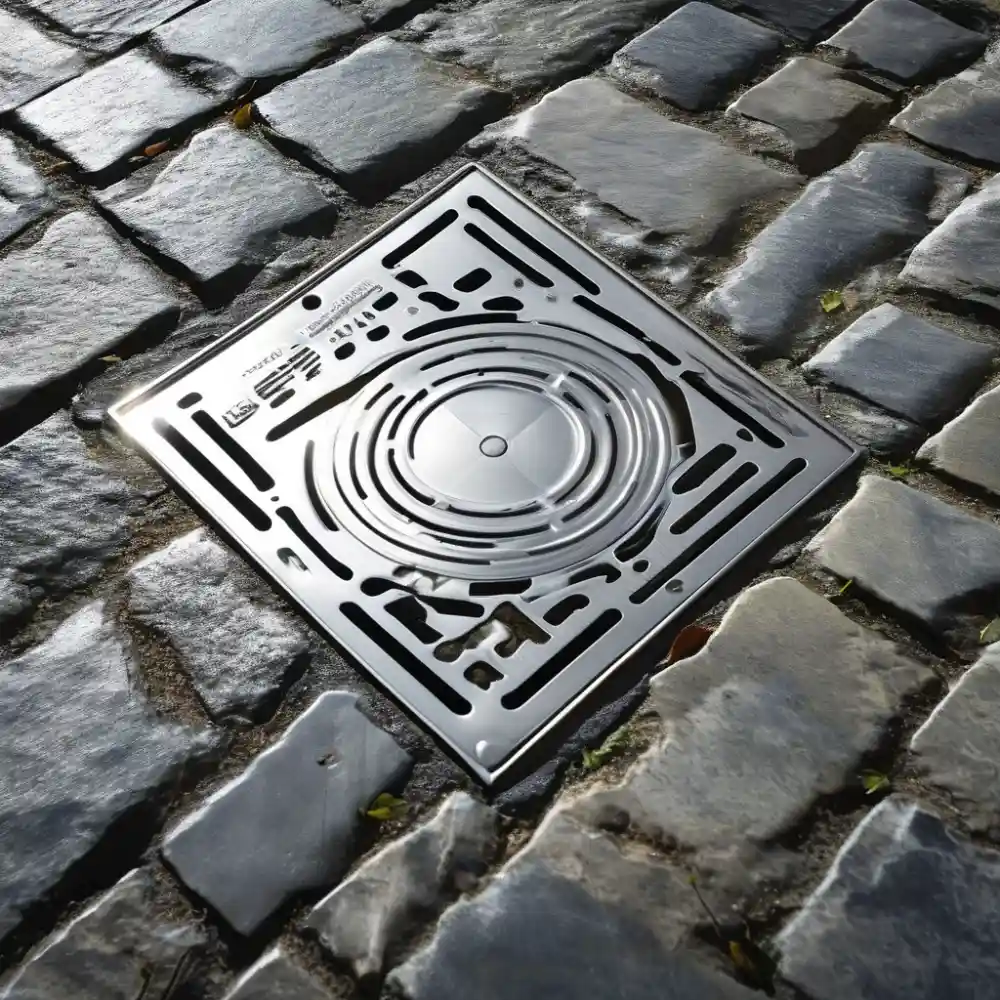
Send a note that says “600×600 stainless recessed cover” and the first question back should be: which 600×600? A cover with a 600×600 mm clear opening ships with a frame closer to 710×710 mm overall, roughly 55 mm of flange on each side. If the slab void was drawn at 600 mm, the frame will not fit, and someone ends up cutting cured concrete with a saw.
Tray depth is the second half of the trap. The tray must equal the infill exactly: 30 mm stone on a 20 mm mortar bed calls for a 50 mm tray. A shallow tray leaves the paving proud of the frame, so it rocks under foot traffic. A deep tray invites the site crew to overfill it with mortar, adding weight nobody planned to lift.
The weight is real. A 600×600 mm tray in 3 mm stainless carrying 30 mm granite picks up roughly 30 kg of stone alone, and the opened cover can top 50 kg. Specify two lifting keys, and on anything larger than this, consider hinges or assisted lifting.
The same tray logic applies to recessed stainless steel tree grates and the rest of a project’s site furnishings. One rule covers all of it: coordinate the clear opening, build the rebate to the overall size, and confirm tray depth against the paving spec, on the drawing, before the order.
| Clear opening | Typical overall frame | Common tray depths | Typical use |
|---|---|---|---|
| 450 × 450 mm | ~560 × 560 mm | 50–75 mm | Valve and inspection points in paving |
| 600 × 450 mm | ~710 × 560 mm | 50–75 mm | Utility runs under paving |
| 600 × 600 mm | ~710 × 710 mm | 50–100 mm | Standard plaza access |
| 750 × 750 mm | ~860 × 860 mm | 75–100 mm | Manhole and chamber access |
| 900 × 600 mm | ~1010 × 710 mm | 75–100 mm | Duct banks and twin-cable access |
Overall frame assumes roughly 55 mm of flange per side; confirm the actual figure on your supplier’s drawing, because frame width is where slab voids get cut wrong.
2. EN 124 Load Class Decision Guide
EN 124 is the European standard for access covers and gully tops, and the class number is the test load in kilonewtons. EN 124-1 defines the classes and the test method; covers made of steel or aluminum fall under EN 124-5. The standard is maintained by CEN, and it is adopted in the UK as BS EN 124 through BSI.
| Class | Test load | Where it is used | Governing documents |
|---|---|---|---|
| A15 | 15 kN (≈1.5 t) | Pedestrian zones, landscaping, no vehicles | EN 124-1 / EN 124-5 |
| B125 | 125 kN (≈12.5 t) | Car parks, driveways, kerb-side parking | EN 124-1 / EN 124-5 |
| C250 | 250 kN (≈25 t) | Kerb edges, slow heavy vehicles, loading bays | EN 124-1 / EN 124-5 |
| D400 | 400 kN (≈40 t) | Roadways, carriageways, frequent HGV traffic | EN 124-1 / EN 124-5 |
| E600 | 600 kN (≈60 t) | Ports, docks, reach-stackers, high wheel loads | EN 124-1 / EN 124-5 |
| F900 | 900 kN (≈90 t) | Airfield pavements, extreme wheel loads | EN 124-1 / EN 124-5 |
Pick by the heaviest vehicle that will realistically cross the cover:
- Foot traffic only → A15, but check whether maintenance or refuse vehicles ever enter the zone. That quietly upgrades you to B125.
- Cars and light vans parking or maneuvering → B125.
- HGVs parked, crawling, or crossing kerbs → C250.
- Roads and carriageways with running traffic → D400.
- Dock equipment, reach stackers, repeated high wheel loads → E600 or F900.
Two cautions. First, the class assumes correct bedding and fixing; a D400 cover set in a weak recess fails early anyway. Second, in UK projects, recessed covers that take an infill are often specified to FACTA guidance rather than EN 124, because the paving infill changes how load transfers through the cover.
Whichever route the spec takes, ask the supplier for a type-test certificate covering the exact configuration you are buying, tray, infill and clear opening included. “Equivalent to D400” is not a certificate.
3. 304 vs 316 for Covers
304 is the workhorse for inland covers and frames. 316 is the choice the moment chlorides enter the picture. The practical limits we spec against: 304 suits environments up to roughly 200 ppm chlorides; 316, with 2–3% molybdenum, tolerates up to about 1000 ppm.
Covers sit flat and collect water, so chlorides concentrate in the recess instead of washing off. That makes the exposure harsher than a vertical railing on the same street.
| Environment | Recommended grade | Chloride exposure | Material standard |
|---|---|---|---|
| Inland plazas, roof terraces | 304 (UNS S30400) | ≤200 ppm | ASTM A240 |
| Coastal splash, seafront spray | 316 (UNS S31600) | Up to ~1000 ppm | ASTM A240 |
| Chlorinated pool surrounds | 316 (UNS S31600) | Intermittent chlorides | ASTM A240 |
| Food plant floors | 316 (UNS S31600) | Chlorinated cleaning agents | ASTM A240 |
| De-icing salt zones | 316 (UNS S31600) | Concentrated salt brine | ASTM A240 |
Thickness follows load class more than grade: 3–4 mm lids and trays for pedestrian covers, 5–6 mm and stiffer frames as you approach D400. Our stainless steel sheet and plate buyer’s guide covers how thickness, flatness and finish interact, and the full 304 vs 316L comparison walks through the cost trade-offs.
One shop-floor note: keep grades consistent. Frame, tray, bolts and hinges should come from the same grade family, and tooling should be stainless-dedicated. Carbon steel contamination left on 304 rusts first, and the cover gets blamed for it.
4. Sealing & Security Options
Sealing is what keeps a recessed cover from becoming a smell vent or a flood path. EPDM is the default gasket material, water and weather resistant, serviceable from about -40°C to +120°C. NBR takes over where oils and fuels are present, serviceable to roughly +100°C.
A single gasket gives an odor and air barrier, enough for drains near buildings. A dual-gasket setup creates two seal lines against water and gas for tank areas, flood-prone zones and basements. Either way, the frame should have a compression stop so bolt-tightening cannot crush the gasket flat.
Security matters because recessed covers sit flush and invite prying. Locking bolts in A2 or A4 stainless stop casual lifting; tamper-resistant hinges keep the lid captive during frequent access; and every infilled cover needs lifting keys, two per cover, because a stone-filled lid is not something fingers get under.
| Option | Purpose | Specify when |
|---|---|---|
| Single EPDM gasket | Odor and air barrier | Drainage near buildings, hospitality areas |
| Dual gasket | Two seal lines against water and gas | Flood zones, tanks, basements |
| NBR gasket | Oil and fuel resistance | Fuel stations, plant rooms, garages |
| Locking bolts (A2/A4) | Theft and unauthorized-entry protection | Public realm, utility assets |
| Tamper-resistant hinges | Captive lid during frequent access | Maintenance routes, high footfall |
| Lifting keys (×2) | Safe lifting of infilled lids | Every recessed cover |
5. Verifying Fabrication Quality When Ordering from China
Distance is not the risk; unverifiable process is. Here is what to demand from any supplier, it is the same bar we hold our own line to.

- Laser-cut edges. Fiber laser cutting leaves clean profiles with tight tolerances; plasma or sheared edges show up as uneven corner gaps. Our fiber laser cutting guide explains what a clean cut edge looks like.
- Weld quality. Corners should be full-penetration, with TIG on visible edges. Ask for close-up photos of real welds on real covers, uniform bead, no undercut, no spatter.
- Pickling and passivation. Welding burns off the passive chromium layer; pickling and passivation restore it. A cover shipped with weld scale will streak rust within a season. The surface finishing guide covers the full sequence.
- Dimensional QC. Frame diagonals, flatness and tray depth checked per cover, with a report you can file. We hold frame diagonals to ±2 mm and log every finished cover.
- Documentation. An MTC per EN 10204 3.1 with heat numbers that match the plate marks, PMI available on request, and third-party inspection welcomed before packing. Here is how to verify a material test report when one lands in your inbox.

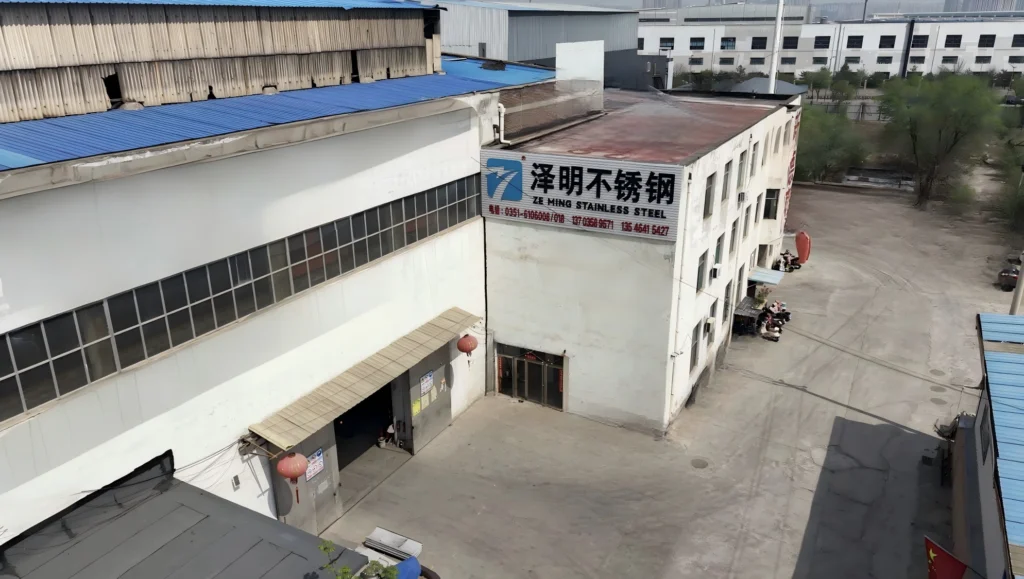
On commercial terms: small-batch orders are welcome, from single specials to repeat frame programs. Samples are available before bulk, lead times run 15–30 days from drawing approval, and export packing follows ISPM-15. Terms are FOB, CIF or EXW via Tianjin port.
The signals that separate fabricators from stock-photo traders:
- Walks you through the workshop on a video call, versus sending stock photos.
- Marks up your drawing with tolerances and tray depth, versus sending a catalog.
- Shares in-process photos at cutting, welding and passivation, versus glamour shots only.
- Provides an EN 10204 3.1 certificate with matching heat numbers, versus “we will check.”
- Asks about your paving build-up before quoting tray depth, versus quoting a standard size.
- Welcomes third-party inspection, versus making excuses.
Frequently Asked Questions
What is the difference between clear opening and overall size on a recessed cover?
The clear opening is the free access area once the cover is lifted, say 600×600 mm. The overall size is the frame’s outer edge including flanges, typically 55 mm more per side, so about 710×710 mm for the same cover. Designers coordinate clear openings; contractors build the rebate to overall size. Confirm both before ordering so the frame fits the slab void.
Which EN 124 load class do I need for a car park?
Most car parks take B125 (125 kN test load), which covers cars and light vans. Where delivery trucks or refuse vehicles enter, move up to C250 or D400 depending on frequency and speed. Recessed infill covers are often specified to FACTA guidance in UK projects. Either way, ask the supplier for a load test certificate for the exact cover and infill you are buying.
How deep should the recessed tray be for 30 mm porcelain pavers?
Match the tray to the full build-up: 30 mm pavers plus roughly 20 mm of bedding mortar calls for a 50 mm tray. A shallow tray leaves paving proud of the frame and rocking; an oversized tray invites site crews to overfill with mortar, adding weight. Send your paving spec and floor build-up to the fabricator and have the depth confirmed on the drawing.
Why does 316 outperform 304 near pools and coastlines?
Chlorides attack the passive film on stainless steel and cause pitting. Grade 304 handles up to about 200 ppm chlorides; 316, with 2–3% molybdenum, tolerates roughly 1000 ppm. Pool surrounds see chlorinated splash, coastal sites see salt spray, and de-icing salts concentrate in recesses, all 316 territory. Inland pedestrian zones with no salt exposure work fine on 304.
How do I verify a Chinese fabricator’s quality before shipment?
Ask for laser-cut edge photos, close-ups of welds, and pickling and passivation records. Require an EN 10204 3.1 mill certificate with heat numbers matching the plates, and welcome third-party inspection before loading. Request a dimensional QC report covering diagonals, flatness and tray depth. Fabricators produce these in days; stock-photo traders stall.
Ready to spec it correctly? Send us your five numbers, clear opening, overall frame, tray depth, load class and grade, and our engineers return a marked-up drawing with tolerances plus a quote. Every order ships with a dimensional QC report and weld photos per cover, backed by an EN 10204 3.1 mill certificate. Small batches welcome, 15–30 day lead times, FOB/CIF/EXW via Tianjin port. Get your drawing checked and quoted →