
2205 vs 2507 Duplex Stainless Steel: When Super Duplex Is Worth the Premium
The short answer: 2205 is the workhorse duplex grade that handles most chloride service; 2507 (super duplex) is the upgrade you pay for when the chlorides are warmer, stronger, or both. If your process involves sea water above room temperature, concentrated brines, sour oil & gas streams, or aggressive acid-chloride chemistry, 2507’s extra corrosion margin justifies its price. For general chemical processing, desalination pretreatment, and structural work in marine air, 2205 delivers most of the performance for less money.
This guide compares the chemistry, corrosion resistance, strength, weldability, and real cost difference between 2205 vs 2507 duplex stainless steel, then gives you an application-by-application framework for choosing. For background on the standard grade, see our 2205 duplex fabrication guide, and for welding process options, our stainless welding guide.
First: What Makes Duplex Different
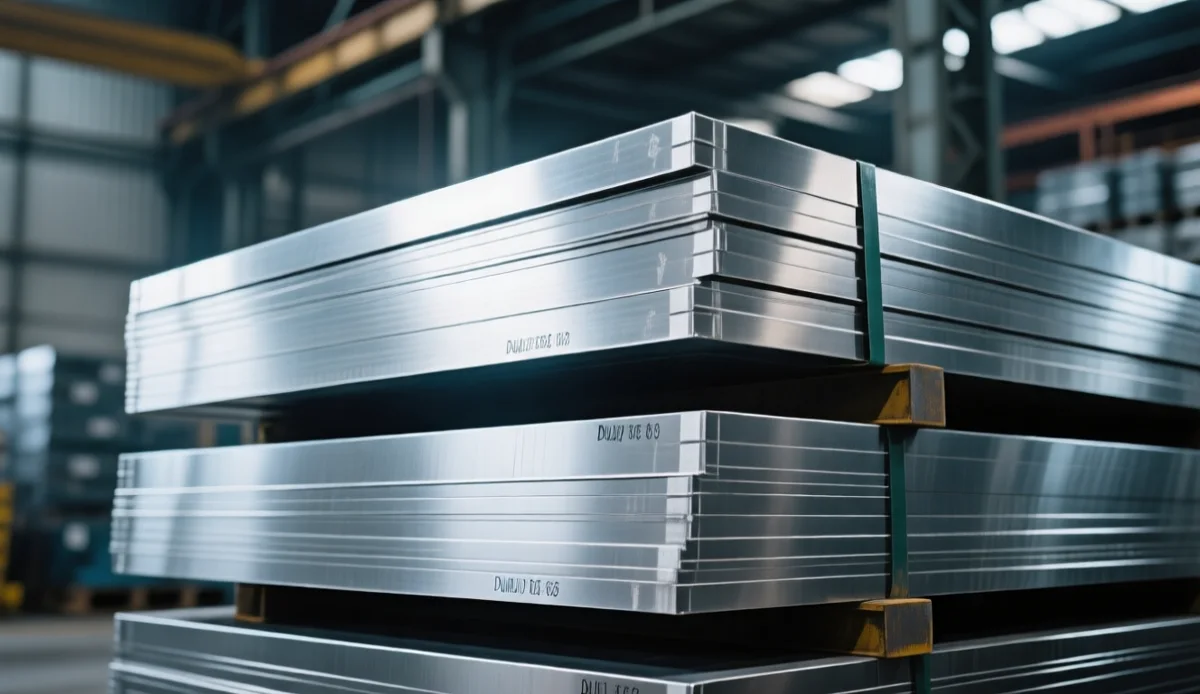
Duplex stainless steels get their name from their microstructure — roughly half ferrite, half austenite — which combines the strengths of both families. From the ferrite side they take high strength and strong resistance to chloride stress corrosion cracking; from the austenite side, ductility and toughness. The result is a material with about twice the yield strength of 304 or 316L and far better behaviour in chloride environments.
Both 2205 and 2507 are duplex grades. The difference is how much alloying they carry: 2205 is “standard duplex” (lean-to-standard alloying), while 2507 is “super duplex” — more chromium, more nickel, more molybdenum, more nitrogen. The extra alloying buys more corrosion resistance and more strength, at a higher price and with stricter fabrication rules.
Chemical Composition Compared
The chemistry below is why the 2205 vs 2507 question is really a question about alloying depth.
| Element | 2205 (S32205 / 1.4462) | 2507 (S32750 / 1.4410) | Why it matters |
|---|---|---|---|
| Chromium (Cr) | 22.0–23.0% | 24.0–26.0% | Base corrosion + pitting resistance |
| Nickel (Ni) | 4.5–6.5% | 6.0–8.0% | Austenite balance, toughness |
| Molybdenum (Mo) | 3.0–3.5% | 3.0–5.0% | The big driver of pitting resistance |
| Nitrogen (N) | 0.14–0.20% | 0.24–0.32% | Strength + pitting resistance |
| Carbon (C) | 0.03% max | 0.03% max | Kept low in both grades |
The standard shorthand for comparing pitting resistance is the PREN (Pitting Resistance Equivalent Number): %Cr + 3.3×%Mo + 16×%N. 2205 lands around PREN 35; 2507 reaches PREN 42+. In practical terms that gap means 2507 tolerates higher chloride concentrations and higher temperatures before pitting or crevice corrosion starts. As a rough benchmark, in sea water service (about 19,000 ppm chloride), 2205 is generally comfortable up to around 30–40°C, while 2507 stays reliable well above that, including in warm, stagnant, or low-oxygen sea water where 2205 becomes risky.
Corrosion Resistance: Where 2507 Earns Its Name
Both grades are dramatically better than 304/316L in chloride environments — that is the whole reason duplex exists. Against common corrosion mechanisms:
- Chloride stress corrosion cracking (CSCC) — both are highly resistant, unlike 304/316L above about 60°C in chloride service. Duplex is often chosen specifically to eliminate this failure mode.
- Pitting and crevice corrosion — 2507 clearly superior. Its higher critical pitting temperature (CPT) means it holds up in hotter, more concentrated chloride solutions where 2205 can begin to pit.
- General corrosion in acids — 2507’s extra molybdenum and nitrogen help in sulfuric and organic acids, especially where chlorides contaminate the acid.
How each environment typically maps to a grade:
- Cold sea water / marine atmosphere — 2205 handles both well; 2507 is overkill unless stagnant or warm.
- Warm sea water (above ~40°C), brackish estuary water, tidal zones — 2507 territory. Warmth is what defeats 2205 first.
- Desalination: intake and pretreatment — 2205 common; RO high-pressure stages, hot brine sections — 2507 increasingly specified.
- Chemical processing with chlorides or acid-chloride mixes — depends on concentration and temperature; 2507 when both are elevated.
- Oil & gas, sour service (H₂S + CO₂ + chlorides) — 2507 is a standard super duplex choice for downhole, subsea, and process piping in aggressive wells.
Mechanical Properties: Both Are Strong, 2507 Stronger Still
Duplex grades carry roughly double the yield strength of standard austenitics, which lets engineers use thinner walls for the same pressure rating — a real saving on large piping and vessel projects. 2507 adds about 20% more yield strength on top of 2205.
| Property | 2205 | 2507 |
|---|---|---|
| Yield strength (min) | ~450 MPa | ~550 MPa |
| Tensile strength (min) | ~620 MPa | ~795 MPa |
| Elongation | ~25% | ~15–25% |
| PREN (typical) | ~35 | ~42+ |
| Max continuous service temp | ~250–300°C | ~250–300°C |
Note the temperature ceiling: like all duplex grades, both are limited to roughly 300°C continuous service. Above that, the microstructure embrittles (the “475°C embrittlement” problem), and strength and toughness degrade. If your service is hot and corrosive, duplex is the wrong family — look at high-nickel alloys or super austenitics instead. For cryogenic service, duplex loses toughness below about -50°C, so super austenitics or nickel alloys take over there too.
Welding and Fabrication: 2507 Is Less Forgiving
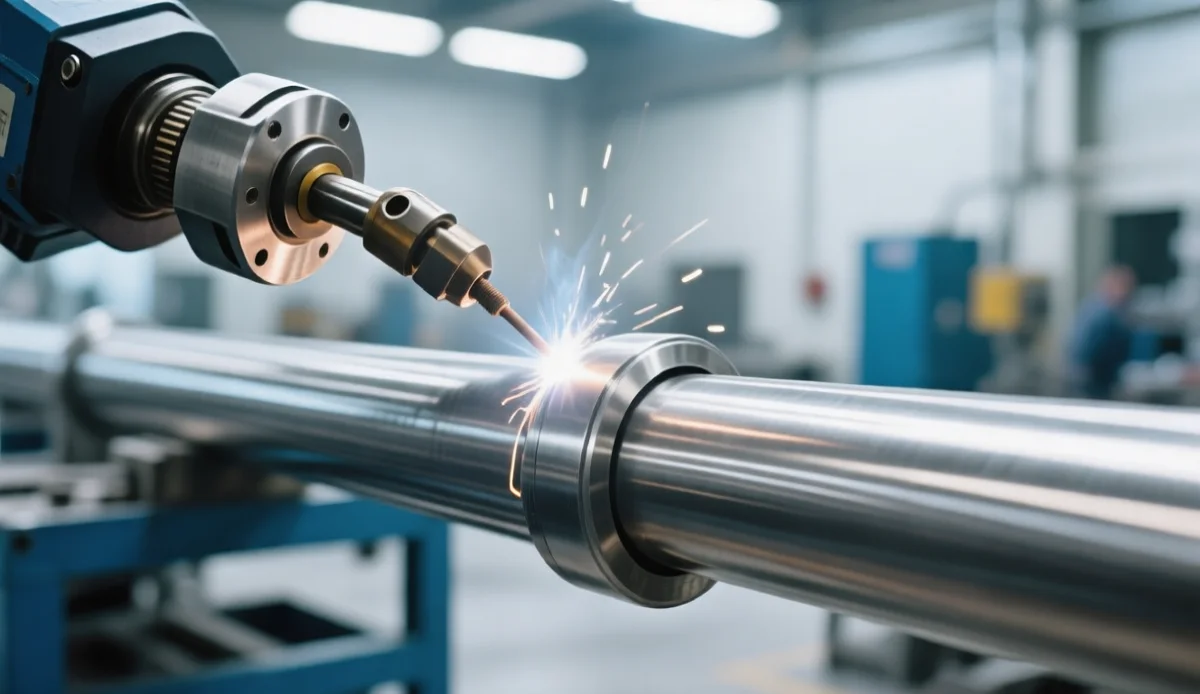
Both grades weld, but duplex welding is a controlled process, and super duplex is the stricter of the two. The weld must solidify with the right ferrite/austenite balance (roughly 35–65% ferrite). Too much ferrite and the weld is brittle and corrosion-weak; too much austenite and you lose the strength and cracking resistance.
- Heat input control — both need heat input kept in a window (commonly 0.5–2.5 kJ/mm) and interpass temperature below about 100–150°C. 2507, with its higher alloy content, is more sensitive to getting this wrong.
- Filler metals — 2205 typically uses 2209 filler; 2507 uses 2594 super duplex filler. Matching filler keeps the weld zone at super duplex corrosion levels.
- No post-weld heat treatment — PWHT is not used for duplex and can actually harm the microstructure.
- Forming and machining — both need more force than 304/316L (remember, roughly double the yield strength) and springback is greater. 2507 is the stiffer of the two to work with.
Procurement note: because weld quality determines whether you actually get the corrosion performance you paid for, ask your fabricator for their duplex welding procedure (WPS) and heat-input records before awarding a super duplex job. Our MTR verification guide covers the certification side of the same question.
Cost: What Super Duplex Actually Costs
2507 is typically 20–40% more expensive than 2205, driven by its higher nickel and molybdenum content (both expensive metals). On top of the material premium, super duplex is less widely stocked, so lead times can be longer and minimum order quantities higher — thin sheet and small fittings are the hardest forms to source.
A worked example. Consider 10 km of sea-water intake piping. If the water is cool and flowing, 2205 at, say, $X per tonne does the job with an excellent service life — specifying 2507 might add 25–30% to the material bill for protection the service never demands. Now take a warm, stagnant sea-water cooling loop in a Gulf-region plant: water above 40°C, low flow sections, crevice-prone flanges. Here 2205 carries a genuine pitting risk, and a single leak in a critical cooling line costs far more in downtime and repair than the super duplex premium. The premium was the cheap option. Rule: pay for super duplex when temperature and chlorides together push 2205 to its edge — not before.
Application-by-Application Selection Guide
| Application | Recommended | Why |
|---|---|---|
| General chemical process piping | 2205 | Chloride resistance + strength at standard duplex cost |
| Desalination pretreatment / intake | 2205 | Cool sea water is within 2205’s comfort zone |
| RO high-pressure & brine stages | 2507 | Concentrated, sometimes warm chlorides |
| Offshore / subsea oil & gas | 2507 | Sour, high-chloride, zero-tolerance service |
| FGD scrubbers (flue gas desulfurization) | 2507 | Acidic chloride condensates |
| Marine structures, bridges, coastal facades | 2205 | Atmospheric sea salt well within capability |
| Warm sea-water cooling systems | 2507 | Heat + chlorides defeat 2205 |
| Pressure vessels in chloride service | 2205 / 2507 by chemistry | See our pressure vessel standards guide |
| Pulp & paper digesters, bleach plants | 2205 (2507 in hot bleach) | Chloride dioxide stages are aggressive |
Common Misconceptions About Super Duplex
“2507 is just better stainless — always safe to specify.” It is better at resisting pitting, but “better” ignores cost, availability, and weld discipline. Specifying 2507 where 2205 suffices adds 20–40% material cost and stricter fabrication requirements for zero benefit. Over-specification is a real budget leak on large projects.
“Duplex can’t be welded.” It welds fine — with the right procedure. The myth comes from welds made with austenitic habits (high heat input, wrong filler) producing brittle, corrosion-prone joints. Qualified duplex procedures and matching filler make both grades entirely weldable.
“PREN is the only number that matters.” PREN is a useful ranking number, but real performance also depends on temperature, crevice geometry, flow, and weld quality. A well-welded 2205 joint in cool sea water will outlast a poorly welded 2507 joint with an out-of-balance microstructure.
“Super duplex works at high temperature.” No duplex grade should run continuously above about 300°C. If your service is hot and corrosive, the answer is a different alloy family, not more duplex.
How to Verify You Got the Right Grade
With a 20–40% price gap, grade substitution (or innocent mix-ups) is a genuine risk on duplex orders. The protections:
- Mill test certificate (MTR) — check actual chemistry: 2507 should show 24–26% Cr, 6–8% Ni, 3–5% Mo, 0.24–0.32% N, and meet the PREN ≥ 40 requirement some specs state explicitly.
- PMI (portable XRF) — molybdenum content separates the grades quickly: ~3% vs up to 5%. Nitrogen is not visible to standard XRF, so rely on the MTR for that.
- Ferrite check on welds — for critical jobs, ferrite measurements on weld zones confirm the balance stayed in range.
We supply 2205 and 2507 material with full mill certification, and can walk through the chemistry of your specific service before you commit to a grade.
Frequently Asked Questions
The questions we hear most about 2205 vs 2507 duplex stainless steel, answered straight.
What is the main difference between 2205 and 2507?
2507 is super duplex: higher chromium, molybdenum, and nitrogen than 2205, giving it PREN 42+ versus about 35, roughly 20% higher strength, and meaningfully better resistance to pitting in warm or concentrated chloride service. It costs 20–40% more and demands stricter welding control.
Can I use 2205 in sea water?
Yes, in cool, flowing sea water and marine atmospheres — that is a standard 2205 application. In warm sea water (above roughly 40°C), stagnant conditions, or crevice-heavy designs, upgrade to 2507.
Is 2507 stronger than 2205?
Yes. Minimum yield strength is about 550 MPa for 2507 versus about 450 MPa for 2205, and both are roughly twice as strong as 304/316L. The extra strength can cut wall thickness on pressure-rated components.
What filler do I use for welding 2205 or 2507?
2209 filler for 2205, 2594 filler for 2507. Keep heat input in the qualified window (typically 0.5–2.5 kJ/mm), interpass temperature below 100–150°C, and no post-weld heat treatment.
When should I choose 2507 over 2205?
When chlorides and temperature combine: warm sea water, concentrated brines, sour oil & gas, acidic chloride chemistry, FGD scrubbers, high-pressure RO stages. If your service is cool and chlorides are moderate, 2205 is the economical choice.
Can duplex stainless replace 316L everywhere?
Not everywhere. Duplex wins on strength and chloride resistance, but austenitics like 316L are more formable, better at cryogenic temperatures, and simpler to weld. Duplex is the right call where chlorides, stress corrosion cracking, or strength govern the design.
What is the maximum service temperature for duplex grades?
About 250–300°C continuous for both 2205 and 2507. Above that, the ferrite phase embrittles (475°C embrittlement) and mechanical properties fall. For hotter corrosive service, consider super austenitic or nickel alloys instead.
Conclusion: Chlorides Set the Floor, Temperature Sets the Grade
The decision sequence is simple. First, if chlorides or sour service rule out 304/316L, duplex is the right family — you get double the strength and excellent cracking resistance either way. Second, look at chloride concentration and temperature together: cool-to-moderate chloride service points to 2205; warm sea water, hot brines, concentrated or acidic chlorides point to 2507. Verify the MTR and weld procedure on delivery, and you have a material that will outlast the plant around it. If you are weighing 2205 vs 2507 for a specific service, send us the chemistry and temperature and we will recommend the grade with full certification.
References: ASTM A240 / A240M — Standard Specification for Chromium and Chromium-Nickel Stainless Steel Plate, Sheet, and Strip (ASTM). 1 ASTM A790 / A790M — Seamless and Welded Ferritic/Austenitic Stainless Steel Tubing (ASTM). 2 Nickel Institute — duplex stainless steel selection, welding, and PREN guidance (nickelinstitute.org). 3