
Industrial Stainless Steel Storage Tanks: Complete Buyer’s Guide to Materials, Design & Fabrication Standards
Choosing the right stainless steel storage tank manufacturer is one of the most consequential procurement decisions an engineering team makes. A poorly specified tank — wrong material grade, insufficient wall thickness, or welds that fail under cyclic loading — can shut down an entire production line. This guide gives procurement engineers and project managers a structured framework for specifying industrial stainless steel storage tanks, covering tank types, alloy grades, design codes, critical parameters, surface finishes, welding and inspection protocols, and the documentation every qualified fabricator should deliver.
1. Tank Types & Configurations
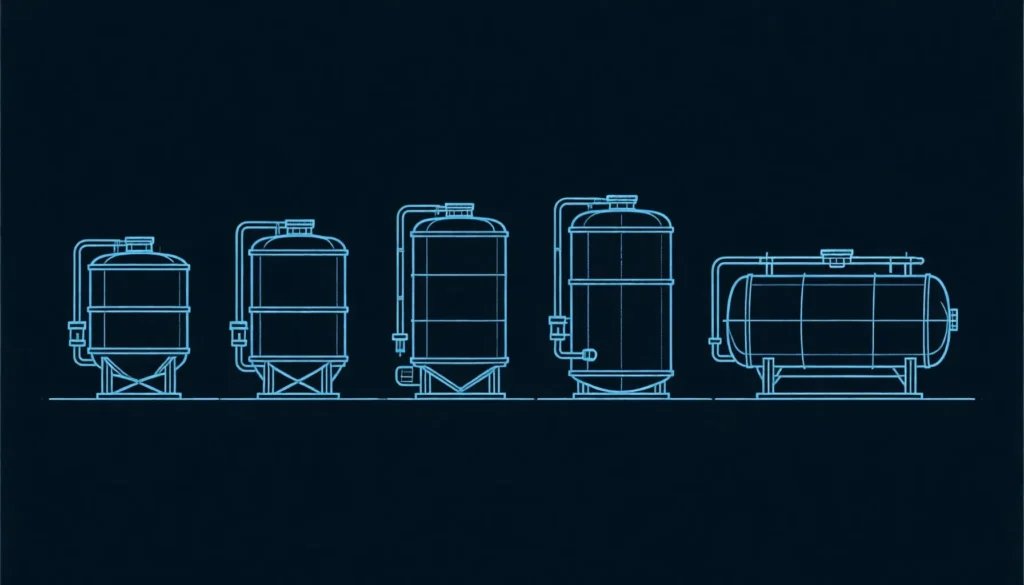
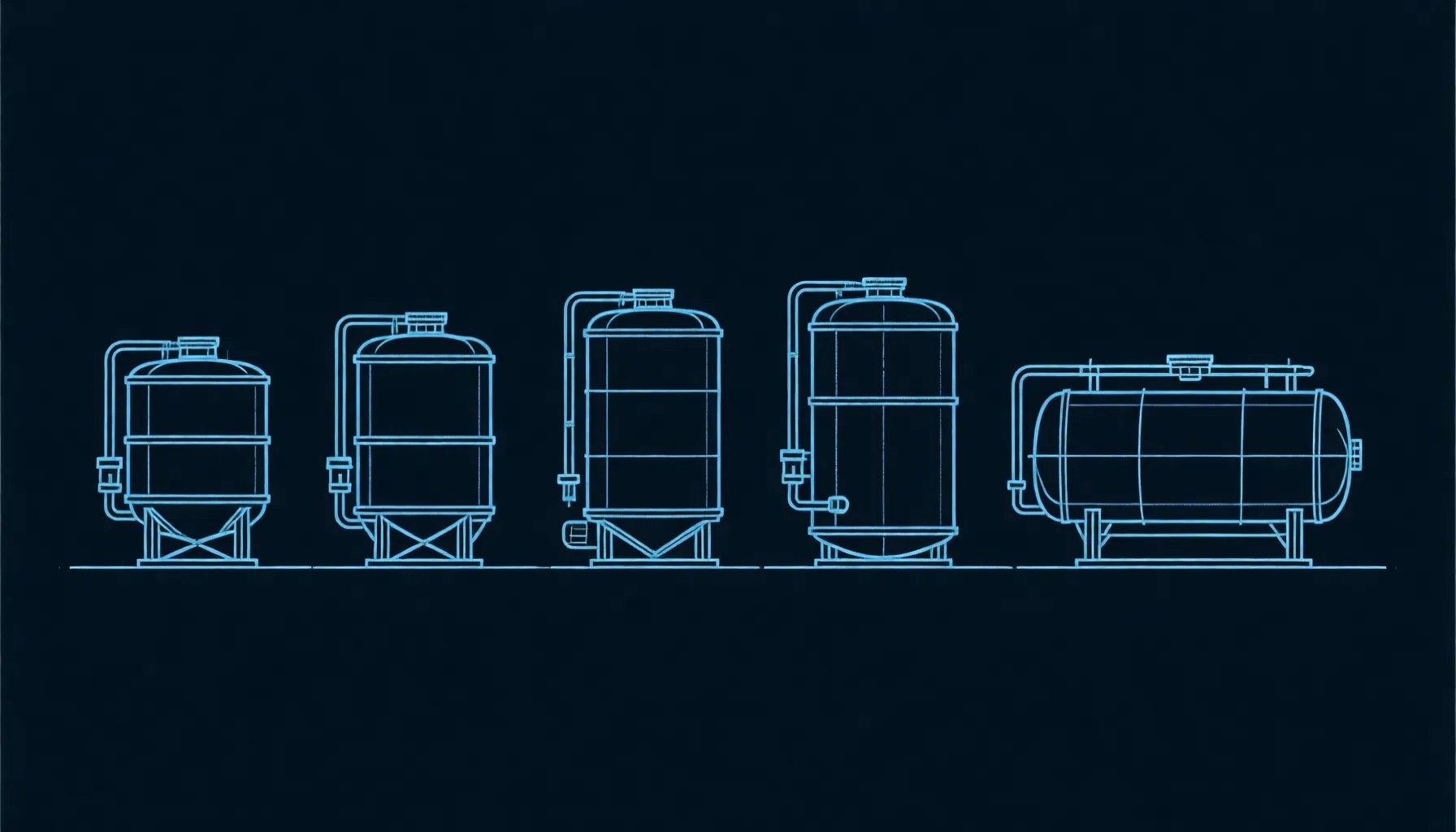
Industrial stainless steel storage tanks are not one-size-fits-all. Geometry, head type, and mounting orientation directly affect fluid dynamics, cleanability, and pressure-handling capability. Below are the six most common configurations and their typical applications.
1.1 Vertical Storage Tank
The workhorse of chemical processing, water treatment, and food plants. Vertical cylindrical tanks with flat or dished bottoms minimize floor space and suit atmospheric or low-pressure bulk liquid storage from 500 L to over 100,000 L.
1.2 Horizontal Pressure Vessel
Horizontal tanks with dished heads — curved end caps that distribute internal pressure evenly — are engineered for pressurized storage of LPG, ammonia, and compressed gases. Unlike atmospheric tanks, these are designed to a specific Maximum Allowable Working Pressure, typically 0.5–4.0 MPa.
1.3 Cone-Bottom Reactor Tank
A cone-bottom tank features a conical lower section (typically 15°–60° slope) that funnels settled solids and viscous fluids toward a central bottom outlet. Essential in pharmaceutical crystallization, brewery fermentation, and wastewater treatment where complete drainage is non-negotiable.
1.4 Sanitary / Hygienic Tank
Built to 3-A, EHEDG, or ASME BPE standards, sanitary tanks feature crevice-free interiors, electropolished surfaces (Ra ≤ 0.5 μm), and tri-clamp fittings throughout. Used in dairy, biotech, and injectable pharmaceutical production where CIP compatibility is mandatory.
1.5 Fuel & Water Storage Tank
Double-wall or single-wall tanks for diesel, gasoline, aviation fuel, and potable water. These include leak-detection interstices, overfill prevention valves, and UL-142 or EN 12285-1 certification. Our fuel and water tanks are built with full-penetration welds and tested to 1.5× design pressure.
1.6 Custom Process Vessel
When standard geometries do not match your process — jacketed heating/cooling, multi-compartment separation, or unusual nozzle orientations — a custom-engineered vessel is the answer. ZEMSS provides complete design-to-fabrication services including FEA stress analysis and ASME U-stamp certification.
| Type | Best For | Capacity | Pressure | Key Feature |
|---|---|---|---|---|
| Vertical Storage | Bulk liquid, water, chemicals | 500–100,000 L | Atm.–0.07 MPa | Small footprint, low cost/L |
| Horizontal Pressure | LPG, ammonia, refrigerant gas | 200–50,000 L | 0.5–4.0 MPa | Dished heads, ASME VIII |
| Cone-Bottom Reactor | Solid-liquid separation, fermentation | 100–20,000 L | Atm.–0.3 MPa | Complete drainage, no dead zones |
| Sanitary / Hygienic | Dairy, pharma, biotech | 50–15,000 L | Atm.–0.3 MPa | Electropolished Ra ≤ 0.5 μm |
| Fuel & Water Tank | Diesel, gasoline, potable water | 500–80,000 L | Atm.–0.1 MPa | Double-wall, leak detection |
| Custom Process Vessel | Jacketed, agitated, multi-compartment | 50–30,000 L | Atm.–1.6 MPa | FEA-verified, fully tailored |
2. Material Selection for Storage Tanks
Material choice is the single most important specification decision. The wrong grade leads to pitting corrosion, stress corrosion cracking, or premature wall thinning — failures that are expensive and often dangerous. ZEMSS sources all raw materials with full mill test reports (MTRs) traceable to heat number. See our material sourcing and inventory capabilities.
| Medium / Application | Grade | Reason |
|---|---|---|
| Potable water, ambient chemicals, general storage | 304 / 304L | Excellent general corrosion resistance; L-grade prevents intergranular corrosion in welded sections |
| Chloride media, coastal environments, food acids | 316L | 2–3% Mo provides superior pitting resistance (PREN ≥ 24); pharmaceutical & food-grade compliant |
| Seawater, chemical processing, pulp & paper | 2205 Duplex | PREN ≥ 34; nearly double the yield strength of 316L (450 vs 240 MPa); excellent SCC resistance |
| Hot concentrated acids, aggressive chemical reactors | 904L Super Austenitic | PREN ≥ 43; high Ni (24%) + Mo (4.5%) + Cu for reducing acid resistance |
2.1 Temperature Limits & Cost
304/304L serves from -196°C to 800°C and is the most cost-effective option (Tier 1, baseline cost index 1.0×). 316L adds chloride resistance at ~1.3–1.5× material cost (Tier 2). 2205 Duplex, with higher strength, often permits thinner walls — partially offsetting its 2.0–2.5× per-kg cost (Tier 3). 904L sits in Tier 4 (3.5–4.5×), reserved for aggressive chemical environments. Always consult your stainless steel storage tank manufacturer‘s engineering team: the optimal grade balances corrosion resistance, mechanical requirements, and lifecycle cost — not just upfront material price.
3. Design Standards & Codes
Reputable fabricators design and certify to internationally recognized codes. Which code applies depends on operating pressure, destination market, and insurance requirements.
3.1 ASME VIII Division 1
The dominant pressure vessel code in North America, the Middle East, and much of Asia. It governs vessels above 15 psi (0.103 MPa). ASME-certified fabricators hold a U-stamp; each vessel ships with a U-1 Manufacturer’s Data Report. Reference the ASME BPVC standards.
3.2 PED 2014/68/EU
Mandatory for pressure equipment in the European Union. Vessels are classified by hazard category (SEP, I–IV) based on volume × pressure and fluid group. Category II–IV vessels require Notified Body involvement and carry the CE mark. Read the official PED directive.
3.3 GB 150
China’s mandatory national standard for steel pressure vessels, analogous to ASME VIII. It covers material selection, design calculation, fabrication tolerances, and hydrostatic testing. For Chinese domestic market projects, GB 150 and SELO certification are non-negotiable. ZEMSS fabricates to GB 150 as standard and offers ASME/PED certification on request.
4. Critical Design Parameters
When you send an RFQ to a stainless steel storage tank manufacturer, the following parameters must be clearly specified. Ambiguity leads to rework, cost overruns, and delivery delays.
| Parameter | Typical Range | What to Specify |
|---|---|---|
| Capacity | 50–100,000 L | Working volume, not total geometric volume. Specify any freeboard requirement (typically 10–15% above max liquid level). |
| Diameter | Up to 4,000 mm | Inside diameter. For shipping, confirm OD fits ISO container or flatbed constraints. |
| Wall Thickness | 2–50 mm | Calculated per code based on MAWP, diameter, joint efficiency, and corrosion allowance (typically 0.5–3.0 mm). |
| Pressure Rating | Atmospheric to 1.6 MPa | Design pressure ≠ operating pressure — design includes safety margin. Hydrostatic test pressure is 1.3–1.5× design per code. |
| Design Temperature | -196 to +800°C | Specify both max and min. Minimum Design Metal Temperature (MDMT) is critical for low-temperature toughness. |
5. Nozzles, Fittings & Accessories
A tank shell without properly specified openings is just a closed cylinder. These components determine how the tank integrates with plant piping, instrumentation, and operations.
5.1 Manholes
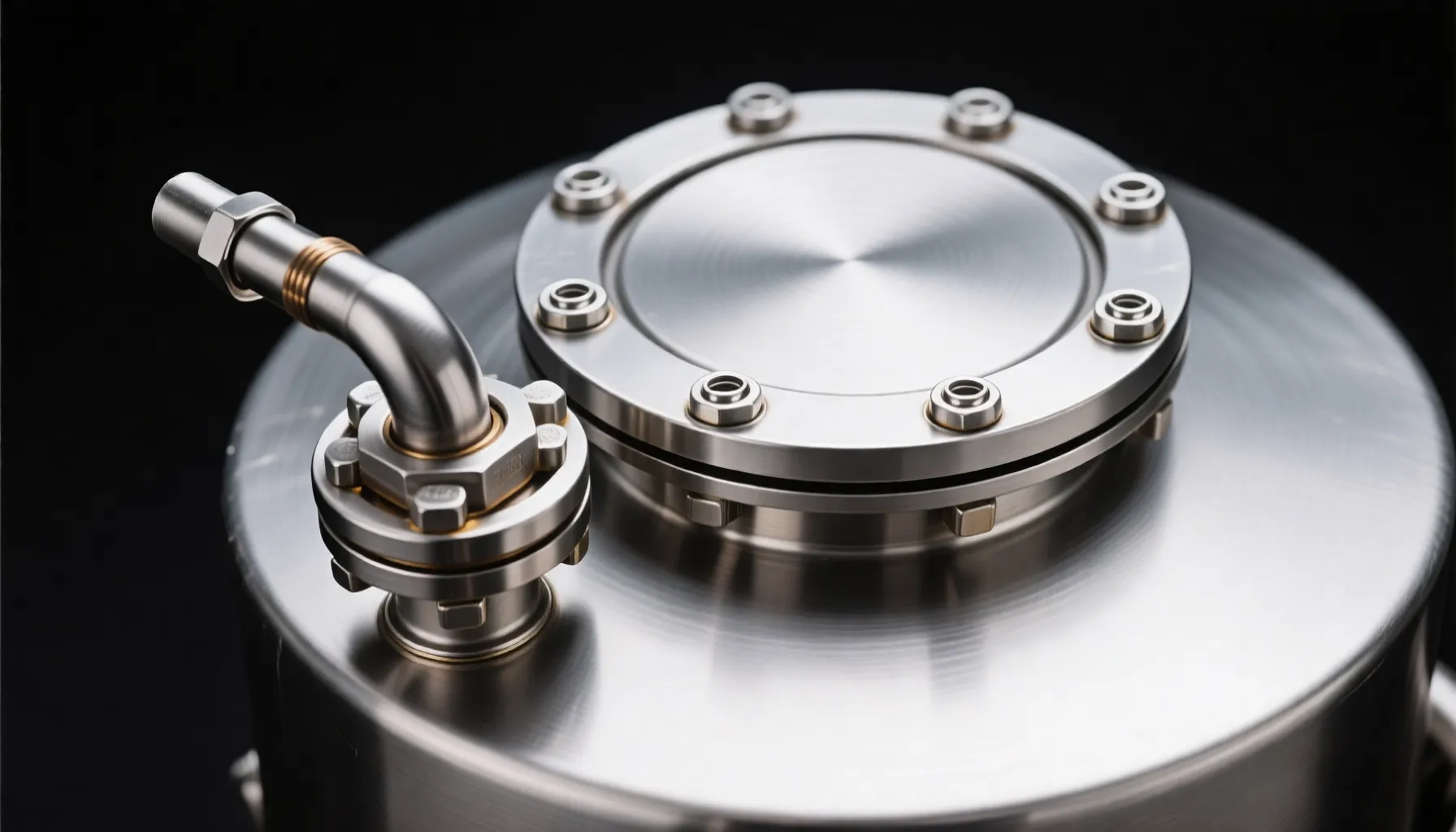
A manhole is a large access opening (typically DN 400–600 mm / 16″–24″) with a bolted or hinged cover and gasket, providing entry for internal inspection and maintenance. ASME VIII requires manholes on vessels ≥ 18″ ID unless alternative inspection openings are provided. Sanitary tanks use tri-clamp closures instead of bolted flanges to eliminate crevices.
5.2 Flanged & Threaded Nozzles
Nozzles are the inlet, outlet, vent, drain, and instrument connections. Nozzle schedule refers to the nozzle pipe wall thickness — common schedules are SCH 10S (light-wall), SCH 40S (standard), and SCH 80S (heavy-wall). Flanged nozzles (ANSI B16.5, EN 1092-1) enable bolted connection; threaded nozzles (NPT/BSPT) serve smaller instrument ports. A tank nozzle schedule drawing lists each nozzle by tag number, size, rating, projection, and service.
5.3 Sight Glasses, Level Gauges & Agitator Mounts
Sight glasses (DN 15–50 mm) provide visual confirmation of liquid level or phase separation. Magnetic and guided-wave radar gauges deliver continuous electronic measurement. Top-mounted agitator flanges (ANSI Class 150 or 300) must be reinforced to handle dynamic bending moment and torque loads from the mixer — the mounting pad is machined flat after welding for a leak-free seal.
5.4 Ladder & Platform
For tanks above approximately 2,000 mm height, a caged ladder with top platform and handrail is standard, providing safe access to manholes, level instruments, and pressure relief devices. Fabrication to OSHA 1910.27 or EN ISO 14122 ensures operator safety.
6. Surface Finish Requirements
Surface finish affects cleanability, corrosion resistance, and product purity. Selecting the wrong finish — e.g., as-welded for a pharmaceutical WFI tank — renders the vessel non-compliant. Our fabrication processes cover the full spectrum of mechanical and electrochemical finishing.
| Ra Value | Process | Cost Tier | Application |
|---|---|---|---|
| 3.2–6.3 μm | Pickle + passivate only | Baseline (1.0×) | Industrial chemical storage, fuel tanks, cooling water |
| 0.8–1.6 μm | 180–240 grit mechanical polish | 1.3–1.5× | Food & beverage, dairy, brewery fermenters |
| 0.4–0.8 μm | 320–400 grit + electropolish | 1.6–2.0× | High-purity chemical, cosmetic, nutraceutical |
| ≤ 0.5 μm | Full electropolish + boroscopic inspection | 2.0–3.0× | Pharma WFI/PW, biotech bioreactors — ASME BPE compliant |
Surface roughness directly correlates with bacterial adhesion and cleanability. A surface at Ra 3.2 μm retains product residue in microscopic valleys; Ra ≤ 0.5 μm is effectively smooth at the bacterial scale, enabling validated CIP cycles. Beyond hygiene, electropolishing removes the iron-rich outer layer, enriching the surface in chromium oxide and significantly improving passive-layer corrosion resistance — confirmed by ASTM A967 and ASTM B912.
7. Welding & Inspection
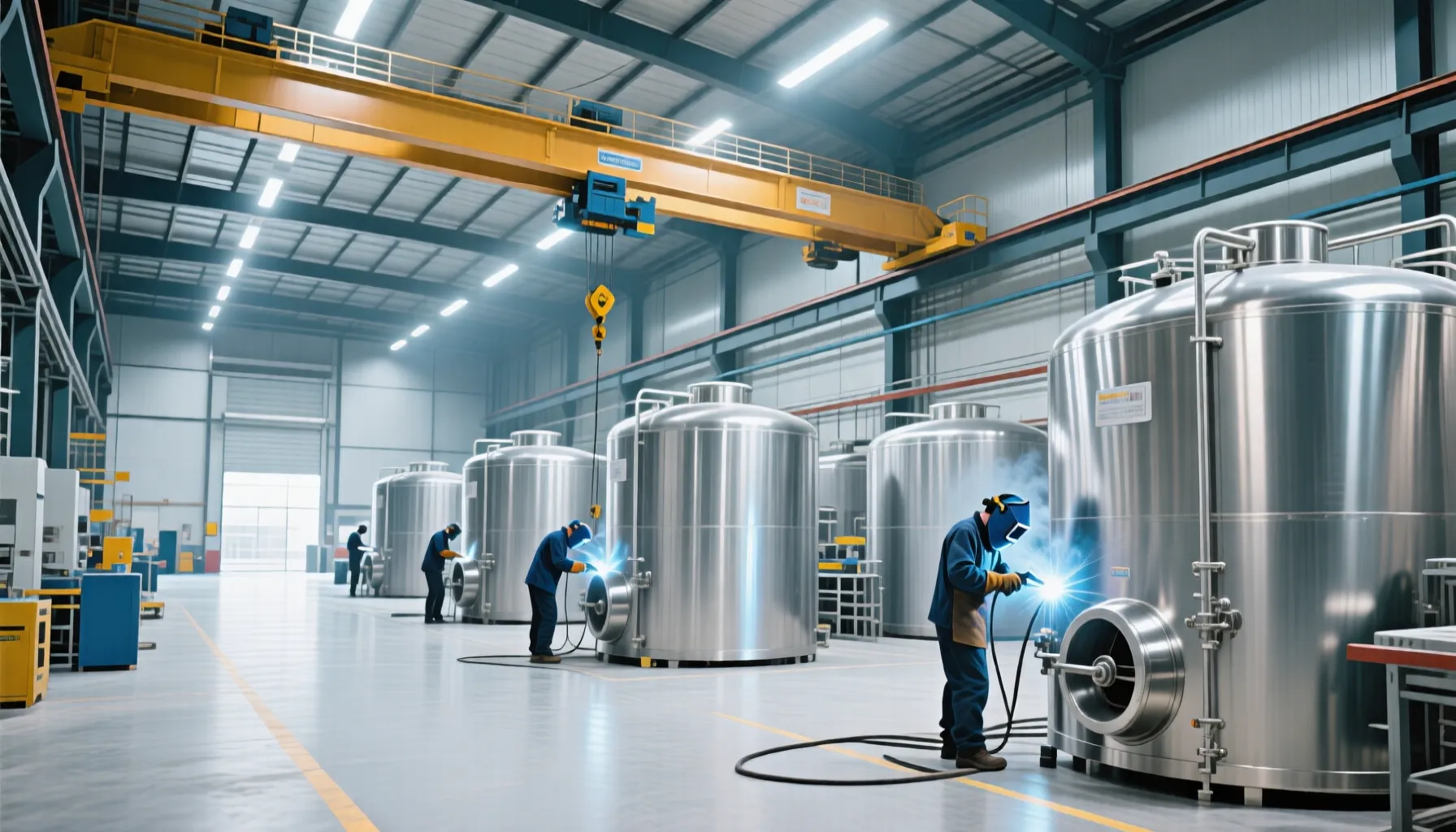
Weld integrity determines whether a tank lasts 20 years or fails its first hydrotest. A qualified stainless steel storage tank manufacturer brings certified procedures and multi-stage NDT to every vessel.
7.1 Welding Processes
TIG (GTAW) is used for root passes and small nozzles — it produces the cleanest weld with excellent back-bead control. MIG (GMAW) provides higher deposition rates for fill and cap passes on medium-to-thick shells. SAW (Submerged Arc Welding) handles longitudinal and circumferential seams on thick-walled vessels (≥ 8 mm) with deep penetration and high productivity.
7.2 Single-Side Welding, Double-Side Forming & Back Purging
When the interior is inaccessible for back-welding, single-side weld double-side forming is used: the welder deposits the root pass from outside while an argon back-purge prevents oxidation (sugaring) and ensures a smooth internal bead. Back purging floods the weld joint interior with argon during TIG root welding. Without it, chromium reacts with atmospheric oxygen at welding temperature, forming chromium carbide — which depletes the passive layer and creates corrosion initiation sites. ZEMSS uses oxygen analyzers to confirm purge gas purity ≤ 50 ppm O₂ before striking an arc.
7.3 NDT & Hydrostatic Testing
Dye Penetrant (DP) inspection detects surface-breaking defects on all welds — applied to 100% of exterior welds as standard. Radiographic Testing (RT) uses X-ray or gamma-ray to find internal volumetric defects in butt welds. RT coverage is code-specified: ASME VIII requires spot RT (10–25% of seams) for standard service and full RT (100%) for lethal service.
The hydrostatic test is the final verification: the completed vessel is filled with water, sealed, and pressurized to 1.3–1.5× design pressure (per code) for a minimum of 30 minutes. It confirms structural integrity, weld soundness, and gasket sealing under load. A passing test is documented in the pressure test certificate — a non-negotiable deliverable.
8. Documentation Package
A tank without documentation is a liability. Every vessel from a qualified stainless steel storage tank manufacturer should ship with a comprehensive documentation package — required by code, by insurance underwriters, and by any competent quality system.
| Document | Contents | Required By |
|---|---|---|
| Material Test Reports (MTRs) | Heat number, chemical composition, mechanical properties for every pressure-boundary plate and forging | ASME VIII, PED, GB 150, ISO 9001 |
| Dimensional Inspection Report | As-built shell ID, length/height, head dimensions, nozzle locations (angular + projection), straightness, ovality | All pressure vessel codes; client specification |
| Weld Inspection Record | Weld map linking each seam to WPS/PQR, welder ID, NDT method and results (DP/RT reports with acceptance criteria) | ASME VIII, PED, ISO 3834-2 |
| Pressure Test Certificate | Test date, medium, pressure, hold duration, gauge calibration cert, pass/fail result | Mandatory for all coded vessels |
| ISO / Factory Certification | Current ISO 9001:2015 certificate, welder qualification records (WPQ), welding procedure specifications (WPS) | Procurement requirements; regulatory compliance |
9. Frequently Asked Questions
Q1: What is the minimum order quantity for a custom stainless steel storage tank?
There is no fixed MOQ at ZEMSS. We manufacture single-unit prototypes through full-scale production tanks. However, per-unit cost decreases significantly for batches of 3–5+ identical vessels because engineering design and tooling setup are fixed costs. We always provide transparent pricing with engineering NRE separated from per-unit fabrication cost.
Q2: How long does tank fabrication take?
Standard vertical storage tanks (5,000–20,000 L, 304/316L, atmospheric) typically ship in 4–8 weeks from approved drawing and PO. Complex ASME-coded pressure vessels with exotic alloys or full RT may require 10–16 weeks. We stock 304/304L and 316L plate in common thicknesses (3–12 mm) to minimize material sourcing delays.
Q3: Can you fabricate to both ASME and PED standards simultaneously?
Yes. Many export projects require dual certification. ZEMSS holds welding qualifications and maintains a quality system compliant with ASME VIII Div.1 and PED 2014/68/EU Module H/H1. The documentation package includes both the ASME U-1 form (if U-stamp required) and the PED Declaration of Conformity with CE marking. A modest cost adder applies for additional engineering review and NoBo involvement.
Q4: What is the difference between hydrostatic and pneumatic testing?
A hydrostatic test uses water as the medium and is standard for all coded vessels — water stores minimal energy, and failure causes pressure drop without explosion. A pneumatic test uses compressed air/nitrogen and stores enormous potential energy. It is only permitted when water is incompatible with the process, requires larger exclusion zones, and must be specifically justified per ASME VIII UG-100. ZEMSS performs hydrostatic testing as standard; pneumatic testing only by written agreement with enhanced safety protocols.
10. Partner with an Experienced Manufacturer
Specifying a stainless steel storage tank is a multi-disciplinary exercise: materials engineering, code compliance, welding metallurgy, surface science, and NDT inspection all converge in a single fabricated product. A stainless steel storage tank manufacturer that shortcuts any of these disciplines delivers a vessel that looks fine on delivery but fails prematurely in service — and the cost of a process shutdown dwarfs any upfront fabrication savings.
ZEMSS brings over 15 years of industrial tank fabrication experience to every project. We hold ISO 9001:2015 certification, maintain a qualified welding team with procedures qualified to ASME IX and ISO 15614, and ship every vessel with a complete, traceable documentation package.
Ready to specify your next tank? Contact our engineering team with your process requirements, and we will return a technical proposal with material recommendations, code compliance plan, and a firm quotation within 48 hours. Browse our standard tank product range for reference specifications.