
304L vs 316L Stainless Steel: Choosing Between the Two Low-Carbon Grades
When both grades on your drawing carry the “L” suffix, the decision changes. Choosing between 304L vs 316L stainless steel is simpler — and more precise — than the classic 304-versus-316 debate, because 304L and 316L share the same low-carbon chemistry and the same excellent weldability. That leaves exactly one variable that matters: molybdenum. This guide draws on two decades of hands-on fabrication to show you when the molybdenum premium is worth paying and when it is money left on the table.
Comparing the standard, non-L grade instead? See our dedicated 304 vs 316L stainless steel comparison guide, where the carbon difference and weld sensitization play a much larger role.
Chemical Composition: Molybdenum Is the Only Real Variable
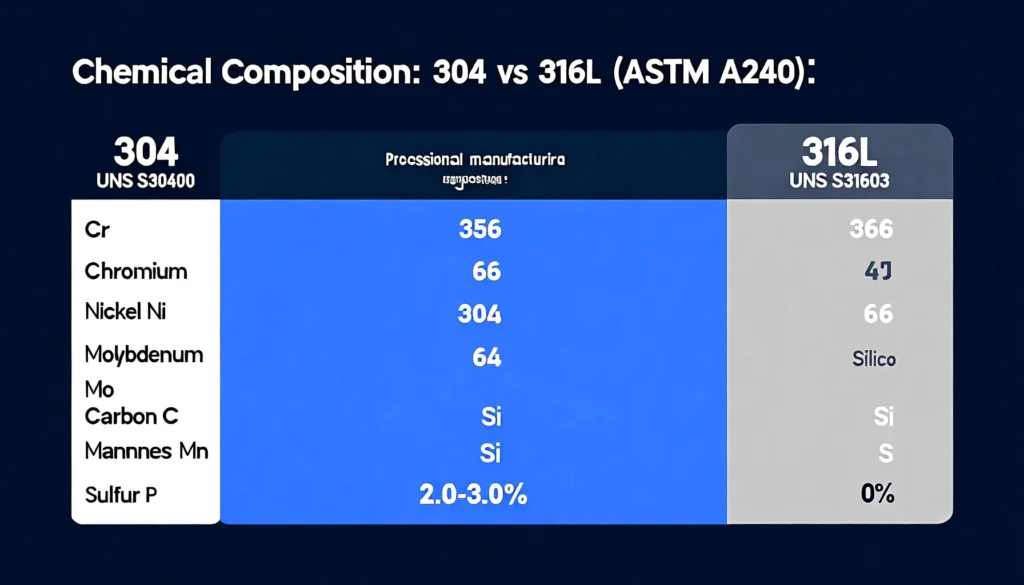
Both 304L and 316L are low-carbon austenitic stainless steels with carbon capped at ≤ 0.03%. That shared low-carbon chemistry means both grades resist weld sensitization equally well — so unlike the 304-vs-316 comparison, carbon is not a differentiator here. The metallurgical difference comes down to a single element: molybdenum (Mo). 316L contains 2.0–3.0% molybdenum; 304L contains none.
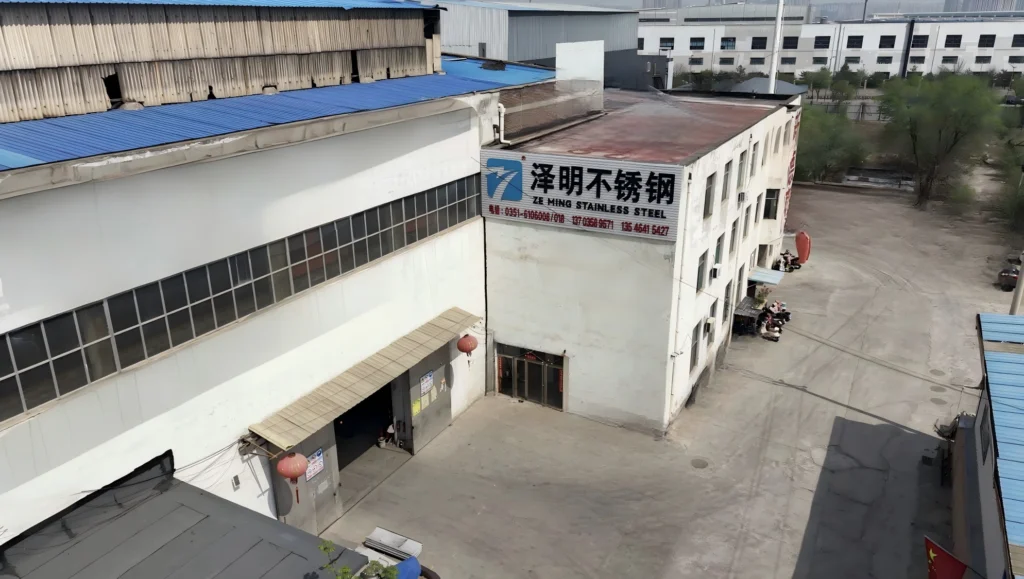
This is not a theoretical distinction. At our 12,000 m² fabrication facility in Taiyuan, we process both grades daily — and in the shop the two are indistinguishable to weld and form. The difference only reveals itself in service, in corrosive environments. Below are the exact chemical specifications per ASTM A240 and EN 10088-2:
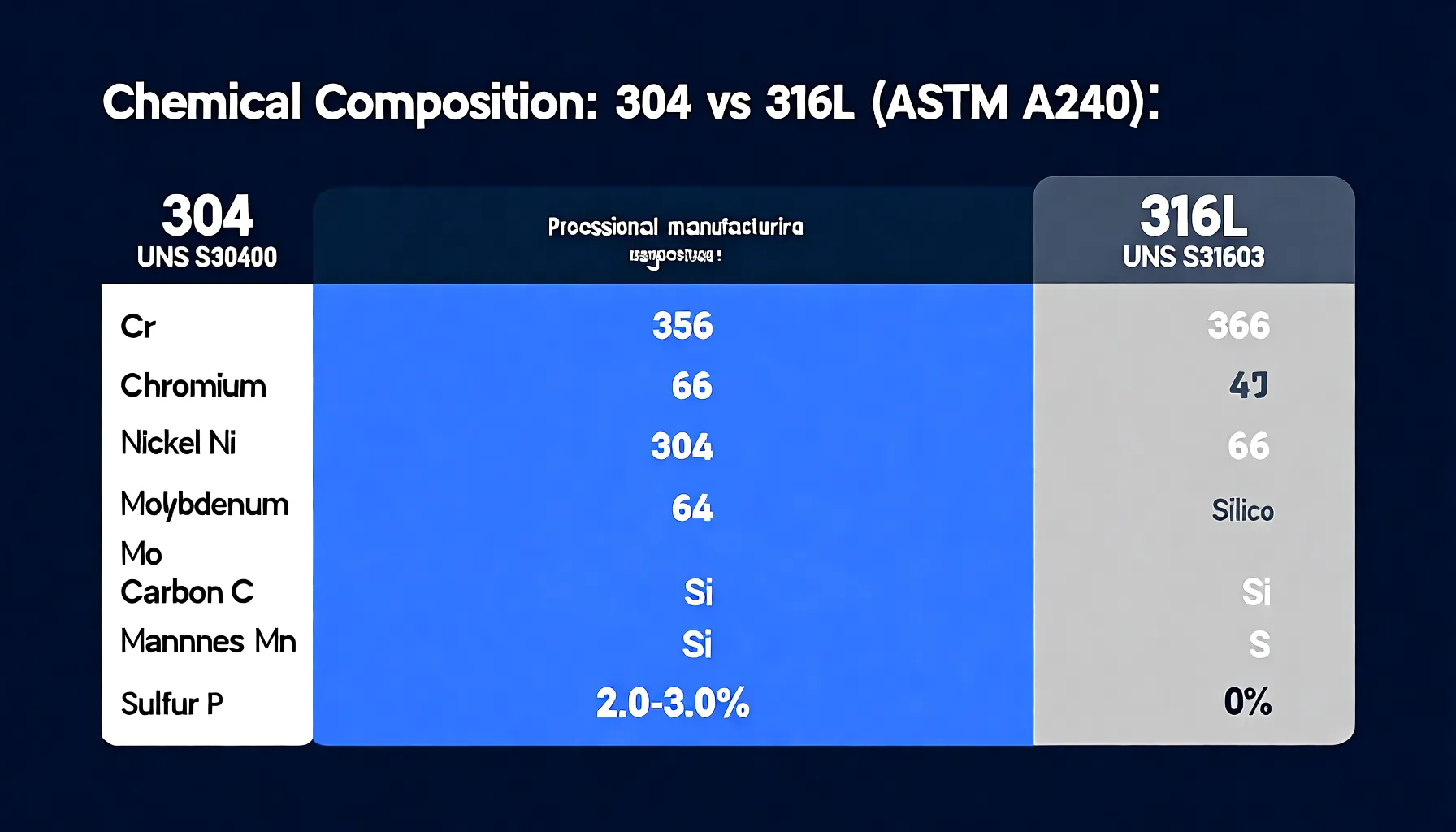
Because both grades carry the low-carbon “L” designation (C ≤ 0.03%), both prevent chromium carbide precipitation at grain boundaries during welding — the phenomenon known as sensitization. This is why our custom-fabricated tanks and pressure vessels specify L-grades as standard: they can be welded in thick sections and put into corrosive service without a post-weld solution anneal.
Key takeaway: 304L and 316L are metallurgically identical except for molybdenum. If your application never sees chlorides, that molybdenum is a cost you do not need. If it does, it is the difference between a vessel that lasts 20 years and one that pits within months.1
Corrosion Resistance: PREN Values and Real-World Performance
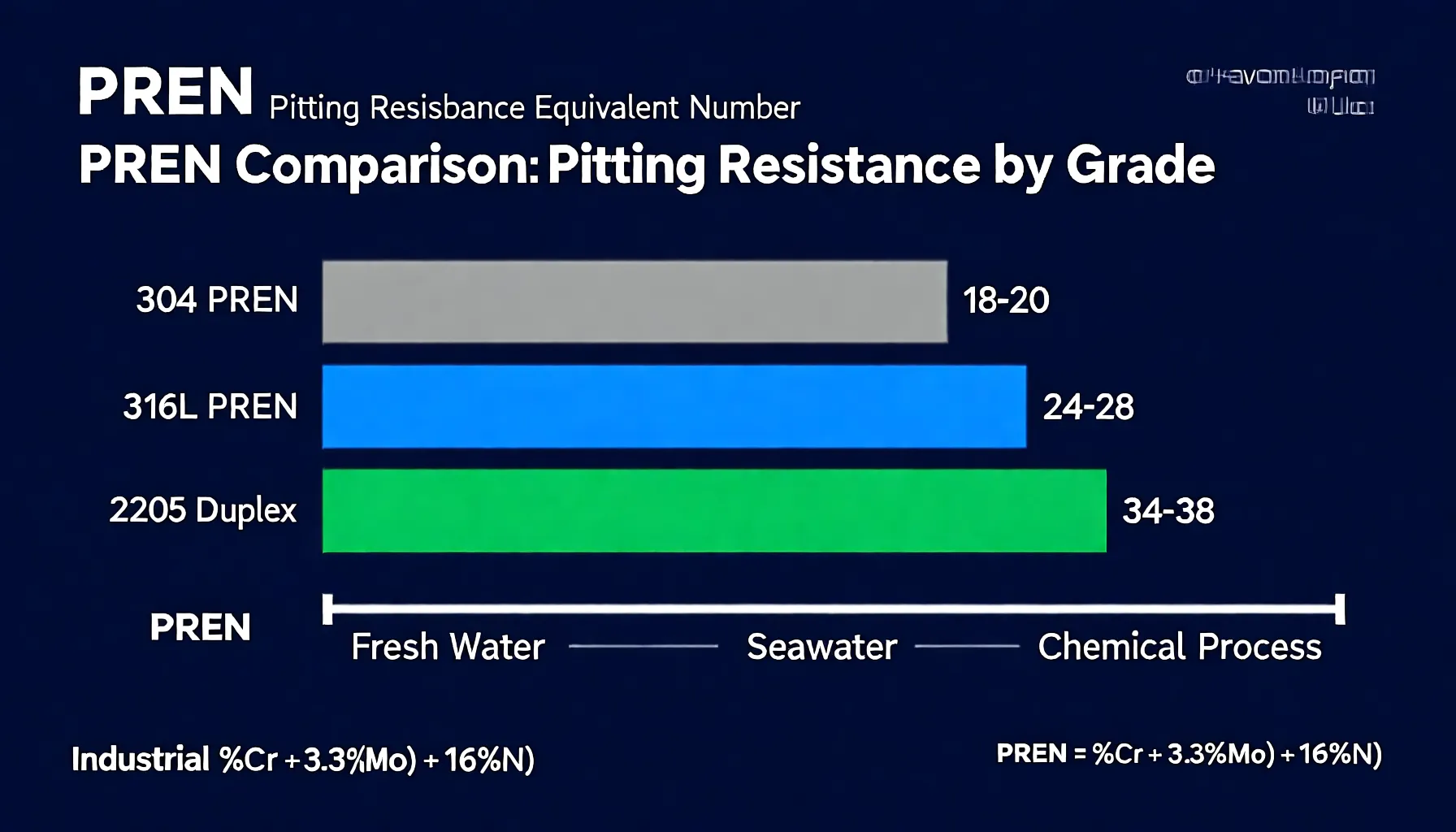
The industry-standard metric for comparing stainless steel corrosion resistance is the Pitting Resistance Equivalent Number (PREN), calculated from chromium, molybdenum, and nitrogen content. Because 304L and 316L have nearly identical chromium, the entire PREN gap comes from molybdenum:
| Environment | 304L Performance | 316L Performance | Recommendation |
|---|---|---|---|
| Fresh water / indoor | ✅ Excellent | ✅ Excellent | 304L sufficient |
| Urban atmosphere | ✅ Good | ✅ Excellent | 304L sufficient |
| Coastal / marine atmosphere (≤1 km) | ⚠️ Marginal — tea staining common | ✅ Good — minimal staining | 316L minimum |
| Seawater immersion | ❌ Unsuitable — rapid pitting | ⚠️ Marginal — crevice corrosion risk | 2205 or 2507 duplex |
| Chlorinated water (≤200 ppm Cl⁻) | ❌ Pitting within weeks | ✅ Good at ambient temp | 316L required |
| Food acids (citric, acetic) | ⚠️ Marginal at elevated temp | ✅ Good up to 60°C | 316L for heated processes |
| Chemical — dilute H₂SO₄ | ❌ Rapid attack | ⚠️ Marginal — depends on concentration | 904L or alloy |
| Caustic (NaOH) — all concentrations | ✅ Good ≤ 100°C | ✅ Good ≤ 100°C | Either; 304L OK |
This table is based on 20 years of fabrication experience at our Taiyuan facility, where we have processed both grades for applications ranging from food-grade storage tanks to chemical reactor vessels. The data aligns with published corrosion studies,2 but reflects real-world outcomes observed in fabricated equipment — which are often more conservative than laboratory coupon tests.
Mechanical Properties & Welding Behaviour
Strength and Ductility at Room Temperature
| Property | 304L (UNS S30403) | 316L (UNS S31603) | Notes |
|---|---|---|---|
| Tensile Strength (Rm) | ≥ 485 MPa | ≥ 485 MPa | Effectively identical |
| Yield Strength (Rp0.2) | ≥ 170 MPa | ≥ 170 MPa | Identical — both L-grades |
| Elongation (A50) | ≥ 40% | ≥ 40% | Comparable ductility |
| Hardness (HB) | ≤ 201 | ≤ 217 | Both easily machinable |
| Density | 7.93 g/cm³ | 7.98 g/cm³ | Negligible difference |
| Thermal Conductivity | 16.2 W/m·K @ 100°C | 16.3 W/m·K @ 100°C | Effectively identical |
Here is the point most selection guides miss: 304L and 316L are mechanically near-identical. Both L-grades sit at the same ≥ 170 MPa yield strength — the low-carbon chemistry that gives them their weldability also trims a little strength versus the standard grades. (If you specifically need the ~20% higher yield of standard 304, that is a different trade-off — covered in our 304 vs 316L guide.) Between 304L and 316L, mechanics almost never drive the decision. It is corrosion versus cost, full stop.
Welding: Nearly Identical, With One Exception
Because both grades are low-carbon, they weld with the same freedom from sensitization — a genuine advantage over the standard grades. Both run well with TIG, MIG, and SAW. The practical differences are narrow:
- Filler metal selection: Weld 304L to itself with ER308L filler; weld 316L to itself — or join 304L to 316L — with ER316L filler. This keeps the weld deposit’s molybdenum content matched to the more corrosion-resistant base metal. Using ER308L on a 316L joint creates a weld zone with lower PREN than the surrounding material — a hidden corrosion risk.
- No sensitization worry either way: Unlike the standard grades, neither 304L nor 316L requires a post-weld solution anneal to restore corrosion resistance in normal sections. Both tolerate interpass temperatures up to ~150°C on corrosion-critical welds without risking grain-boundary carbide formation.
- Back purge requirement: For 316L pipe and tube welds in corrosive service, argon back purging is mandatory to prevent root oxidation (sugaring). We recommend it universally for full-penetration welds on both grades.
Cost Comparison: The Real Price of Molybdenum
As of Q2 2026, the price premium for 316L over 304L is approximately 40–60% on a per-kilogram basis, depending on product form and market conditions. This premium is almost entirely the molybdenum alloy cost — molybdenum is a relatively scarce and expensive element, and its price volatility directly drives 316L pricing.
However, comparing material cost alone is misleading. A lifecycle cost analysis tells a different story:
| Cost Element | 304L Tank | 316L Tank | Difference |
|---|---|---|---|
| Material cost (3,500 kg shell) | $12,600 | $19,600 | +$7,000 |
| Fabrication labor (unchanged) | $8,000 | $8,000 | $0 |
| Surface treatment / passivation | $1,500 | $1,500 | $0 |
| Inspection & documentation | $2,000 | $2,000 | $0 |
| Total initial cost | $24,100 | $31,100 | +29% |
| 10-year maintenance (coating/repair) | $8,000–15,000 | $1,000–2,000 | −$7,000 to −$13,000 |
| Unplanned downtime risk | Medium–High | Low | — |
The 316L tank costs about 29% more upfront — but in a chloride-containing environment, the 304L tank may need recoating, weld repair, or complete replacement within 5–7 years. The 316L tank, properly fabricated, will serve its full design life with minimal intervention. For any application involving even occasional chloride exposure, 316L is usually the cheaper option over a 10-year horizon.
Industry-by-Industry Selection Guide
| Industry | Recommended Grade | Rationale |
|---|---|---|
| Architecture & construction (interior) | 304L | No corrosive exposure; cost-optimized |
| Architecture & construction (coastal/exterior) | 316L | Salt spray and acid rain resistance required |
| Food processing (dry goods, bakery, grain) | 304L | Minimal corrosion risk; food-safe at ambient temp |
| Food processing (dairy, beverage, acidic foods) | 316L | CIP chemicals and product acids attack 304L over time |
| Pharmaceutical & biotech | 316L | GMP requires electropolished 316L with full traceability |
| Chemical processing | 316L minimum | Unless medium is confirmed non-corrosive; often upgrading to 2205 or 904L |
| Water treatment (fresh water) | 304L | Standard for municipal water equipment |
| Water treatment (desalination, RO, brine) | 316L or 2205 | High chloride environment — 304L fails rapidly |
| Oil & gas (topsides) | 316L | Salt-laden atmosphere; 304L unacceptable |
| Machinery & OEM (indoor, general) | 304L | Cost-sensitive; adequate for most indoor applications |
| Machinery & OEM (washdown, hygienic) | 316L | Frequent chemical cleaning demands molybdenum-bearing grade |
Production & Supply Considerations for Procurement Teams
For buyers sourcing stainless steel fabrications from China, three practical points when specifying between 304L and 316L:
- Material availability: Both grades are widely stocked. Our Taiyuan facility maintains 1,000+ tonnes of combined stainless steel inventory — including 304/304L and 316/316L in plate, pipe, and profile forms, spanning thicknesses from 0.5 mm to 100 mm. 304L typically ships same-day; 316L may require 1–2 days for non-stock dimensions above 50 mm thickness.
- Documentation requirements: For 316L fabrications intended for pressure equipment or corrosive service, always request EN 10204 Type 3.1 material certification with full chemical analysis. Verify that the Mo content is between 2.0–3.0% — values below 2.0% indicate non-conforming material. Every 316L shipment includes a traceable mill test report (MTR) with heat number cross-referencing.
- PMI verification: For critical applications, specify Positive Material Identification (PMI) testing on finished fabrications. A handheld XRF or OES analyzer confirms the presence of molybdenum in every weld and base-metal component in under 30 seconds per point — the fastest way to tell 304L and 316L apart, since they look identical. This is standard practice for pharmaceutical and chemical-industry fabrications, and is included in our quality control workflow at no additional charge for 316L orders.
Frequently Asked Questions
What is the main difference between 304L and 316L stainless steel?
The single difference is molybdenum — 316L contains 2.0–3.0% Mo, 304L has none. Both are low-carbon (C ≤ 0.03%) grades with the same weldability and the same resistance to weld sensitization, so the molybdenum in 316L is what gives it significantly better resistance to pitting and crevice corrosion in chloride-rich environments such as seawater, coastal air, and halide chemical processes.
Is 316L always better than 304L?
No. 316L costs 40–60% more, and the two are mechanically identical. For indoor applications, fresh water, general (non-acidic) food contact, and most architectural uses, 304L is the cost-optimal choice. Reserve 316L for environments with chlorides, acids, or regulatory requirements mandating the higher grade.
Are 304L and 316L the same strength?
Essentially yes. Both are low-carbon L-grades with a minimum yield strength of ≥ 170 MPa and tensile strength ≥ 485 MPa (ASTM A240) — the difference is negligible. If you need higher mechanical strength, look at standard 304 or a duplex grade such as 2205, not 316L.
Can 304L and 316L be welded together?
Yes — use ER316L filler metal. This ensures the weld zone has at least the corrosion resistance of the 316L side. Standard stainless TIG/MIG practices apply: proper shielding-gas coverage, interpass temperature control, and post-weld passivation. Because both are low-carbon grades, no post-weld solution anneal is required.
How much more expensive is 316L than 304L?
As of mid-2026, 316L plate and pipe costs 40–60% more than 304L per kilogram, depending on product form and thickness. The premium is driven almost entirely by molybdenum alloy cost.
Conclusion: A Simple Decision Framework
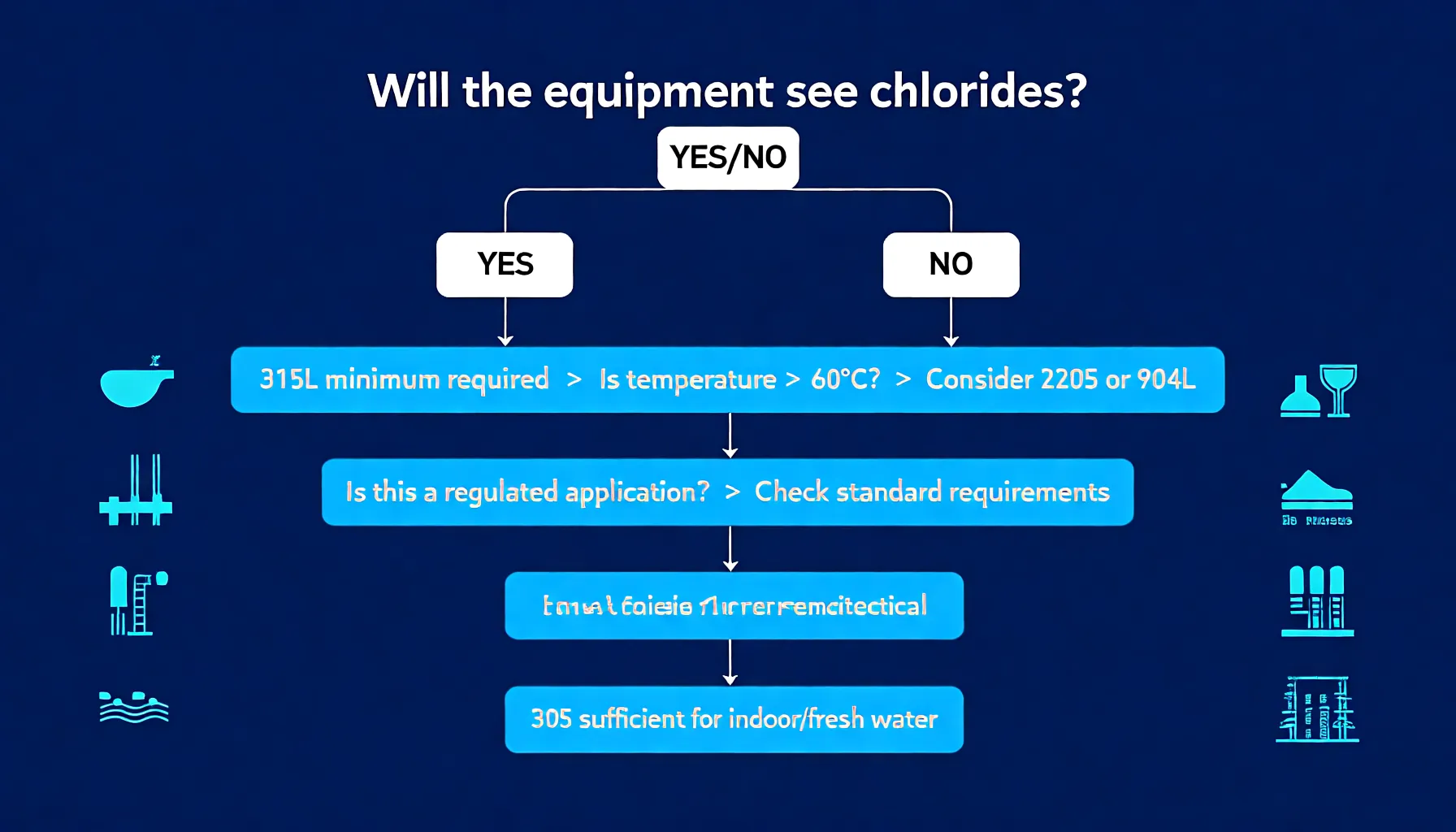
After 20 years of fabricating both grades for customers across 30+ countries, our engineering team uses a two-question framework whenever the choice is specifically 304L versus 316L:
- Will the equipment see chlorides? (Seawater, coastal air, road salt, chlorinated water, CIP chemicals, food acids) → If yes, 316L. If no, 304L — you gain nothing from the molybdenum premium.
- Is the application regulated? (Pharmaceutical GMP, food-safety codes, pressure-equipment directives) → If yes, check the standard — it may mandate 316L regardless of environment.
Because 304L and 316L are mechanically and metallurgically identical apart from molybdenum, the decision is refreshingly clear: pay for molybdenum only when chlorides are in the picture. If you are unsure about your service environment, contact our engineering team with your process parameters — we respond within 2 business hours.
Published: July 2026 | Author: ZEMSS Engineering Team | Last reviewed: July 2026
References: 1 ASME Boiler and Pressure Vessel Code, Section II, Part D. 2 Nickel Institute Publication No. 11024 — “Guidelines for the Welded Fabrication of Nickel-Containing Stainless Steels for Corrosion-Resistant Services.”
Pingback: Custom Stainless Steel Gutters: Spec Guide — ZEMSS