
Large-Format CNC Bending of Stainless Steel: How 1000-Ton Press Brakes Deliver Repeatable Accuracy
By Chen Ming, Senior Fabrication Engineer | June 13, 2026 | 8 min read
Bending a 12-meter-long, 10mm-thick 304 stainless steel plate to a consistent 90° angle along its entire length is not simply a matter of having a big machine. When evaluating CNC stainless steel bending capabilities,. It’s a systems problem involving tonnage distribution, crowning compensation, springback prediction, and material handling logistics that most general fabrication shops never have to solve. We run four CNC press brakes at Zeming, including a 1,000-ton, 12-meter system — and this guide covers what 20 years of large-format CNC bending of stainless steel has taught us about getting it right the first time. See: industry press brake guidelines.
Cnc Stainless Steel Bending: 1. Why Large-Format Bending Is Fundamentally Different
Furthermore, Most press brake work fits comfortably within 3-meter bed lengths and 200-ton capacity. But structural components for pressure vessels, industrial tanks, architectural cladding, and environmental equipment housings routinely require large-format CNC bending in the 6–12 meter range. At these dimensions, three problems emerge that don’t exist at smaller scales:
- Bed deflection. A press brake ram and bed are not infinitely stiff. Over 12 meters, even a heavily reinforced structure deflects measurably under load — producing a deeper bend angle at the center than at the ends unless actively compensated.
- Material flatness variation. A 12-meter stainless plate is never perfectly flat. Variations in incoming flatness of even 2–3mm across the length create inconsistent tool engagement and angle variation along the bend line.
- Handling and positioning. A 12m × 2m × 10mm 304 plate weighs approximately 1,900 kg. Supporting, positioning, and rotating that piece through a bend sequence requires overhead crane coordination, roller supports, and often a two-operator team.
2. Tonnage Calculation — Don’t Guess, Calculate
The fundamental press brake tonnage formula for air bending is:
F = (1.42 × L × T² × UTS) / (V × 1000)

Where:
  F = Required force (tons)
  L = Bend length (mm)
  T = Material thickness (mm)
  UTS = Ultimate tensile strength (MPa)
  V = Die opening (mm), typically 8× T for stainless steel
2.1 Stainless Steel Demands More Force
| Material | Thickness | UTS (MPa) | Required Tons (per meter) |
|---|---|---|---|
| Mild steel (A36) | 6 mm | 400 | ~32 tons/m |
| 304 stainless | 6 mm | 620 | ~50 tons/m |
| 304 stainless | 10 mm | 620 | ~138 tons/m |
| 304 stainless | 20 mm | 620 | ~550 tons/m |
| 316L stainless | 10 mm | 585 | ~130 tons/m |
| Duplex 2205 | 10 mm | 800 | ~178 tons/m |
Key takeaway: stainless steel requires approximately 50% more tonnage than carbon steel at equivalent thickness. For duplex grades like 2205, the requirement jumps to roughly 2.2× that of carbon steel.
3. Springback — Stainless Steel’s Signature Challenge
Springback is the elastic recovery that occurs after the press brake ram retracts. Because of stainless steel’s high yield strength and pronounced work-hardening behavior, springback in CNC stainless steel bending is significantly more aggressive than in carbon steel.
3.1 Typical Springback Angles (Air Bending, 90° Target)
| Grade | 2 mm | 4 mm | 6 mm | 10 mm | 16 mm |
|---|---|---|---|---|---|
| 304 / 304L | 2–4° | 3–5° | 4–6° | 5–8° | 7–10° |
| 316L | 2–3° | 3–5° | 4–6° | 5–7° | 6–9° |
| Duplex 2205 | 4–6° | 5–8° | 7–10° | 9–13° | 12–16° |
3.2 Three Methods of Springback Compensation
- Over-bending. The simplest approach: program the CNC to bend beyond the target angle by the predicted springback amount. Modern CNC controls store material-specific springback tables and apply corrections automatically based on grade, thickness, and die setup.
- Bottom bending (coining). The punch penetrates to within one material thickness of the die bottom, plastically deforming the entire bend zone. This virtually eliminates springback but requires 3–5× more tonnage than air bending and is only practical for material ≤ 6mm on most machines.
- Adaptive angle measurement. Laser angle sensors mounted on the press brake measure the actual bend angle in real time during the bending cycle. The CNC controller compares measured vs. target angle and adjusts ram depth on the fly. For large-format work where material properties may vary across a single plate, this is the gold standard.
4. Tooling and Crowning — Precision at Scale
Without active crowning compensation, a press brake naturally produces a “boat” shape — the center of the bend is deeper (more acute) than the ends because the ram and bed deflect most at mid-span. Three compensation strategies are used in precision stainless steel bending:
- Mechanical crowning. Wedge mechanisms built into the lower die rail adjust upward to counteract ram deflection. Operator-adjusted on older machines, CNC-controlled on modern ones.
- Hydraulic crowning. Multiple hydraulic cylinders along the bed apply compensating force independently. The most accurate method — each cylinder is mapped to a specific bed segment and adjusted in real time based on tonnage feedback.
- Segmented tooling with shimming. On very long bends where crowning alone isn’t sufficient, the upper punch is assembled from shorter segments with precision shims to micro-adjust the effective ram depth at specific positions.
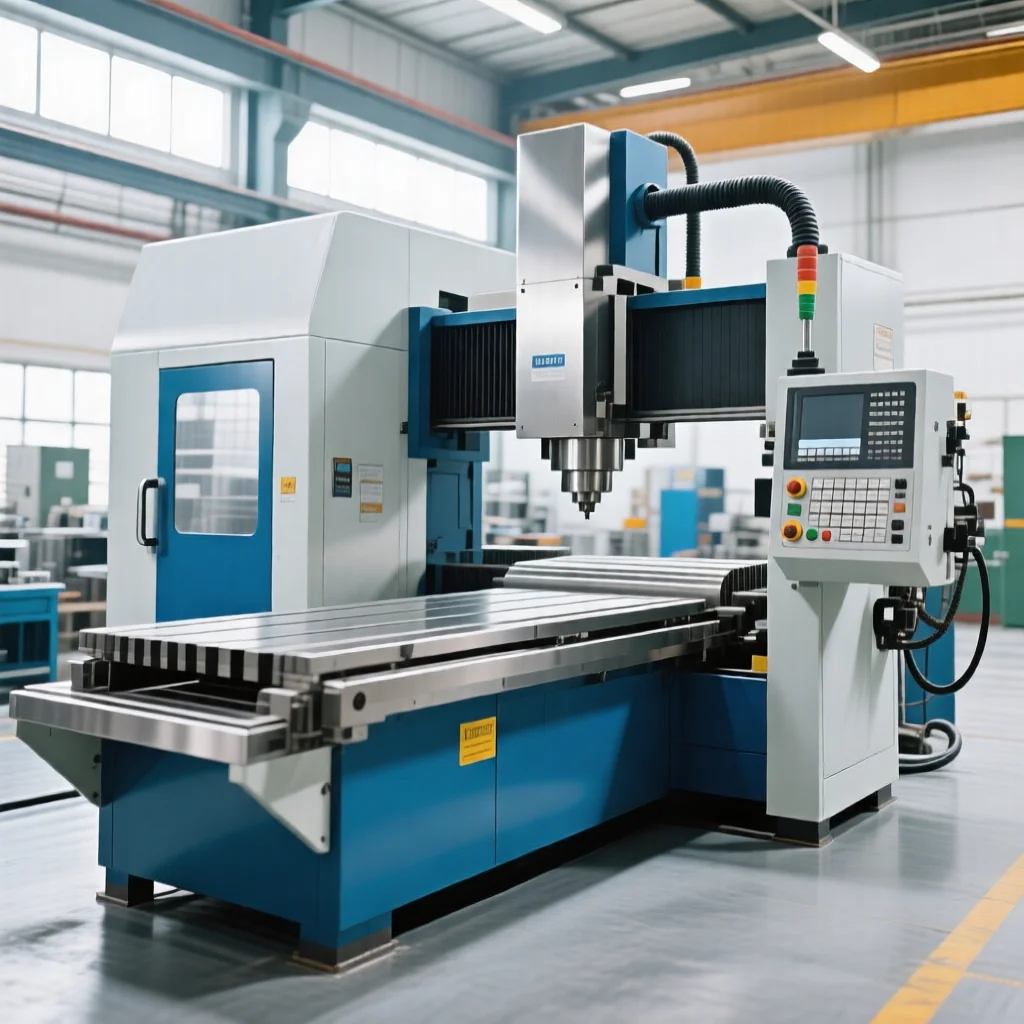
Therefore, At Zeming, our 12-meter, 1,000-ton press brake uses hydraulic crowning with automatic feedback — the system measures tonnage distribution along the bed and adjusts each cylinder independently to hold ±0.5° angle consistency across the full 12 meters.
5. Minimum Bend Radius and Cracking Prevention
Stainless steel’s work-hardening behavior means the outside surface of a bend can crack if the radius is too tight — even if the material is technically ductile enough. This is particularly critical for CNC bending of 316L and duplex stainless steel where cracking can compromise pressure containment or corrosion resistance.
| Grade | t ≤ 3mm | 3mm < t ≤ 6mm | t > 6mm |
|---|---|---|---|
| 304 / 304L (annealed) | 1.0 × t | 1.0–1.5 × t | 1.5 × t |
| 316L (annealed) | 1.0 × t | 1.5 × t | 1.5–2.0 × t |
| Duplex 2205 | 1.5 × t | 2.0 × t | 2.0–2.5 × t |
| 310S (heat-resistant) | 1.0 × t | 1.5 × t | 1.5–2.0 × t |
Bending transverse to the rolling direction reduces cracking risk. If your part design permits, orient the bend line perpendicular to the grain direction.
6. Bend Allowance and Blank Development
Consequently, Getting the flat blank dimensions right before bending determines whether your finished part measures correctly. The bend allowance (BA) — the arc length of the neutral axis through the bend — depends on the K-factor, which represents the position of the neutral axis as a fraction of material thickness.
For stainless steel air bending:
- K-factor ≈ 0.40–0.45 for 304/304L (neutral axis shifts outward due to work hardening)
- K-factor ≈ 0.38–0.42 for 316L
- K-factor ≈ 0.35–0.40 for 2205 duplex
Bend Allowance (BA) = (π/180) × (R + K × T) × A

Where:
  R = Inside bend radius (mm)
  K = K-factor
  T = Material thickness (mm)
  A = Bend angle (degrees)
7. Frequently Asked Questions
Q: What is the maximum bending length for stainless steel plate?
Industrial CNC press brakes can bend stainless steel plates up to 12 meters in a single stroke. At Zeming, our CNC bending capabilities cover up to 12m × 1,000 tons — handling everything from thin architectural panels to thick structural components. Beyond 12 meters, segmented bending with indexed repositioning can extend the effective length, though with some loss of dimensional consistency.
Q: How do you compensate for springback in stainless steel bending?
Importantly, We use a combination of CNC-programmed over-bending (2–8° depending on grade and thickness), real-time laser angle measurement feedback, and hydraulic crowning. For high-volume production runs, we typically bend a test coupon first, measure actual springback, and adjust the CNC program before running the full batch. See: ISO 7438 bend test standard.
Q: What tonnage press brake do I need for my stainless steel project?
Stainless steel requires ~50% more tonnage than carbon steel. For a 3-meter bend in 6mm 304 stainless, you need approximately 150 tons. For 10mm over 3 meters, roughly 420 tons. Provide us your material grade, thickness, bend length, and angle and our engineering team will confirm the appropriate machine — often within the same day.
Q: Does bending weaken stainless steel? Does it need post-bend heat treatment?
In contrast, Cold bending does work-harden the bend zone, increasing yield strength while reducing ductility locally. For most structural applications, no post-bend heat treatment is needed. However, for pressure vessel components or service in chloride-rich environments (marine, chemical), solution annealing after bending may be specified to relieve residual stress and restore full corrosion resistance. This is evaluated case-by-case based on the relevant code (ASME Section VIII, EN 13445).
8. Getting ±0.5° Accuracy on Your Next Project
Large-format CNC bending of stainless steel at production volumes requires the right machine, the right tooling, and the right engineering team. The key variables are tonnage capacity, crowning compensation, springback prediction, and incoming material quality — and all four must work together to deliver consistent results.
If you’re sourcing CNC stainless steel bending, we recommend asking potential suppliers:
- “What is your maximum bending length and tonnage?”
- “How do you compensate for crowning deflection?” — Look for “hydraulic crowning” or “automatic crowning system” in the answer.
- “Can you provide first-article angle verification across the full bend length?”
Ready to bend? Send us your drawings for a same-day feasibility review and quote. Explore our full stainless steel fabrication services — laser cutting services, TIG/MIG precision welding, and surface finishing.
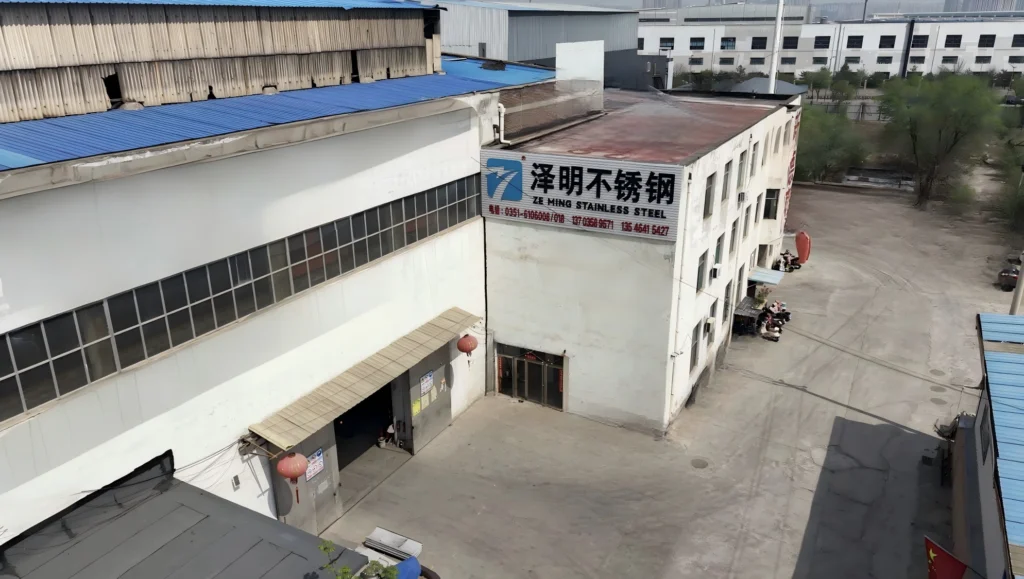
About the Author: Chen Ming is a Senior Fabrication Engineer at Shanxi Zeming Environmental Technology Co., Ltd., with 20+ years of experience in stainless steel CNC forming, laser cutting, and precision welding. He oversees process engineering for Zeming’s 12,000 m² facility in Taiyuan, China.