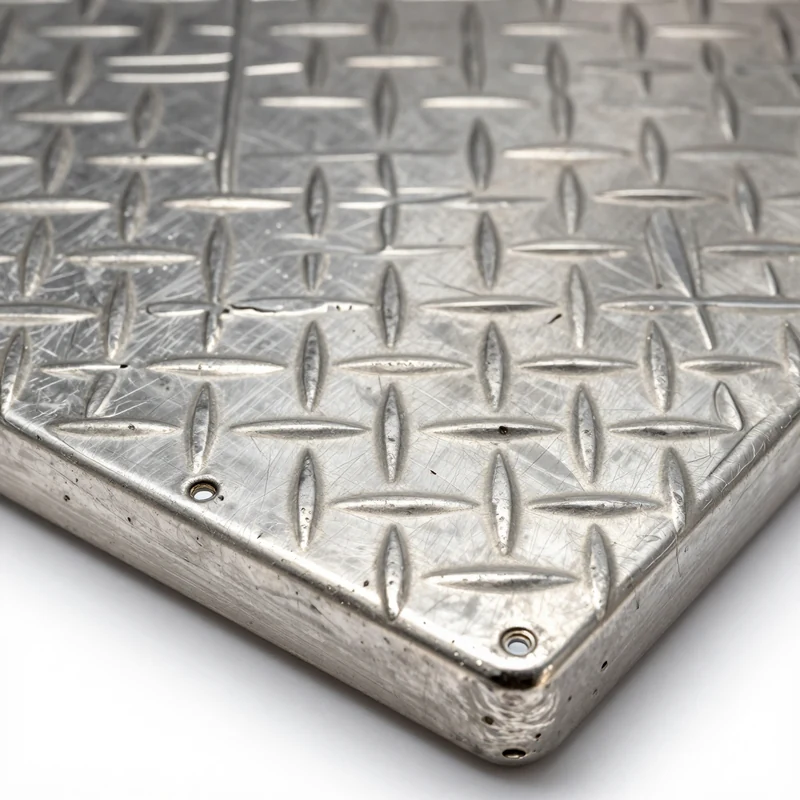
Anti-slip checkered stainless steel plate from ZEMSS combines the corrosion resistance of 304 and 316L with raised slip-resistant patterns for floors, stairs, platforms and ramps — where carbon-steel tread plate would rust, stain or fail hygiene inspection. Supplied under the GB standard system from major Chinese mills with full mill documentation, and cut to size from our Taiyuan facility.
Product Specifications
| Parameter | Specification |
|---|---|
| Base grades | 304 · 316L (201 on request for budget indoor use) |
| Standards | Pattern plate per GB/T 3277 practice · base material per GB/T 4237, ASTM A240 equivalent |
| Pattern types | Teardrop (lentil) · 5-bar · custom patterns on request |
| Base thickness | 2.0 – 8.0 mm (pattern raised above base) |
| Sheet/plate sizes | 1,000 / 1,219 / 1,500 mm widths standard · cut-to-size available |
| Surface | Hot-rolled pattern + pickled (standard) · polished finish for architectural use |
| Certification | Mill test certificate, EN 10204 3.1 type, heat-number traceable |
International Grade Equivalents
Plate is supplied to Chinese GB standards — the table maps our grades to international designations for your specifications:
| Grade we quote | GB designation | UNS | ASTM / AISI | EN number | JIS |
|---|---|---|---|---|---|
| 304 | 06Cr19Ni10 | S30400 | 304 | 1.4301 | SUS304 |
| 316L | 022Cr17Ni12Mo2 | S31603 | 316L | 1.4404 | SUS316L |
Pattern Types & Slip Performance
| Pattern | Characteristics | Typical slip class (DIN 51130 method) | Best for |
|---|---|---|---|
| Teardrop (lentil) | Single-direction raised lugs; good drainage; most common | R10 – R11 typical* | Platforms, stairs, general industrial floors |
| 5-bar | Multi-direction grip; aggressive traction | R11 – R12 typical* | Ramps, wet processing areas, vehicle floors |
*Indicative classes by pattern geometry — confirm by DIN 51130 testing where your specification requires a certified R rating.
Available Sizes & Cutting
| Item | Range |
|---|---|
| Base thickness | 2.0 · 2.5 · 3.0 · 4.0 · 5.0 · 6.0 · 8.0 mm |
| Standard widths | 1,000 / 1,219 / 1,500 mm |
| Standard lengths | 2,000 / 2,438 / 3,000 / 6,000 mm |
| Cutting service | Cut-to-size, strips, circles and shaped blanks from our Taiyuan facility |
Surface Finish Options
| Finish | Description | Best for |
|---|---|---|
| Hot-rolled + pickled | Standard industrial finish, scale removed | Industrial floors, platforms, hidden structure |
| Polished pattern face | Pattern face polished for appearance and cleanability | Architectural stairs, food plants, public areas |
Grade Selection Guide: What We Recommend
| Grade | Key characteristics | Choose it when |
|---|---|---|
| 304 | Best cost-performance; good atmospheric and food-contact resistance | Indoor platforms, dry-process floors, stairs, general tread |
| 316L | Molybdenum-alloyed; resists chlorides, acids and washdown chemicals | Food and beverage plants, coastal walkways, chemical areas, outdoor ramps |
| 201 | Budget austenitic with lower nickel; indoor-only corrosion budget | Cost-driven indoor tread where moisture and chlorides are controlled |
Typical Applications
- Industrial working platforms, mezzanines and catwalks
- Stair treads and stair nosings in plants and public buildings
- Ramps and inclined walkways, including wheelchair-slope surfaces
- Food and beverage processing floors (hygiene + corrosion resistance)
- Vehicle and trailer floors, loading ramps
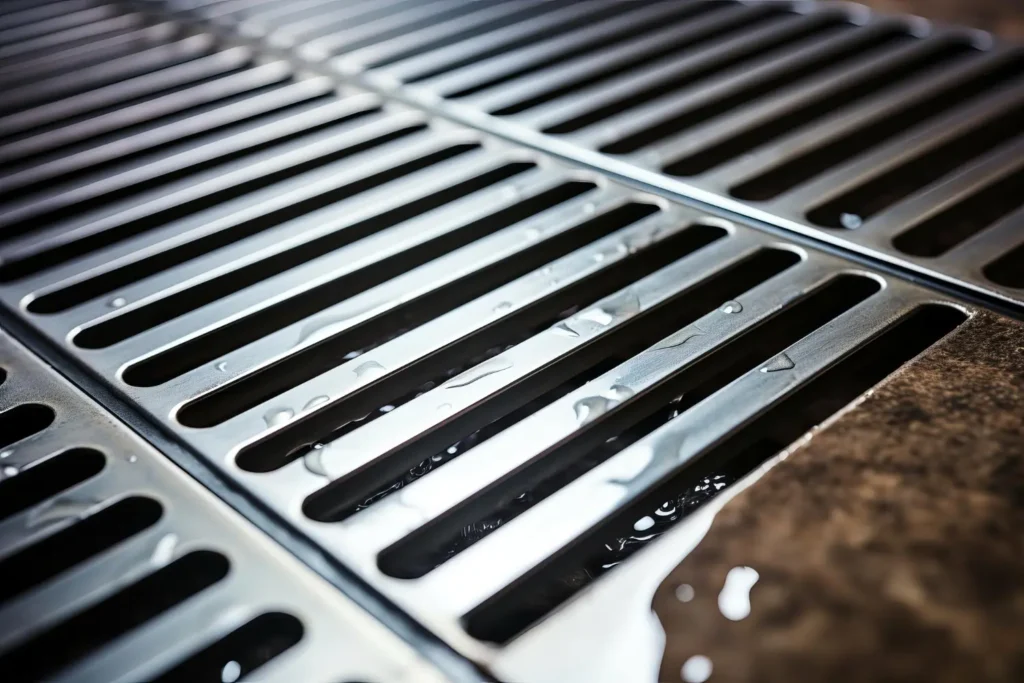
- Drainage covers and trench grating surrounds
Why Stainless Checkered Plate Instead of Carbon Steel Tread?
- No rust, no staining: no paint maintenance cycle, no rust runoff onto products below
- Hygiene-compliant: survives washdown regimes in food and pharma plants where painted steel fails inspection
- Life-cycle cost: higher first cost, near-zero maintenance — typically cheaper over 10 years in corrosive or washdown environments
- Clean appearance: architectural stairs and public areas keep their look
FAQ
Which pattern should I choose?
Teardrop for general platforms and stairs (good drainage, most economical); 5-bar where grip matters most — ramps, wet areas, vehicle floors. If your spec requires a certified slip class, order a DIN 51130 test on the actual pattern.
What thickness do I need for a platform floor?
3–4 mm base for light pedestrian platforms on close support spacing; 5–6 mm for general industrial floors; heavier spans and vehicle loads need engineering calculation — send your support spacing and load, and we will advise.
Can you cut plates to my sizes?
Yes — cut-to-size sheets, strips, circles and shaped blanks from our Taiyuan facility, with deburred edges.
304 or 316L for outdoor use?
Inland sheltered outdoor: 304 is usually sufficient. Coastal, de-icing salt or chemical splash exposure: 316L.
Do plates ship with certificates?
Yes — every delivery carries the mill test certificate (EN 10204 3.1 type) with heat-number traceability.
How to Order
Send pattern type, base thickness, grade, sizes and quantity — you receive a line-item quotation within two working days with stock confirmation and cutting options. Mill certificates travel with every delivery. Request a quote or browse our full product range.