
This comprehensive stainless steel angle bar selection guide will help you understand the different grades, sizes, and applications of this versatile structural material. Stainless steel angle bar is one of the most common structural sections in fabrication and construction — yet procurement mistakes are surprisingly frequent. The wrong grade, an overspecified leg thickness, or forgetting to confirm the standard can delay a project by weeks.
This guide covers everything an engineer or buyer needs to specify stainless steel angle bar correctly: grade selection (304, 316L, 2205 duplex), equal vs unequal leg, size ranges, manufacturing standards, and sourcing best practices. By the end, you’ll have a clear specification checklist to send to your supplier.
Table of Contents
- What Is Stainless Steel Angle Bar?
- Grade Selection: 304 vs 316L vs 2205
- Equal vs Unequal Leg: When to Use Each
- Size Ranges, Thickness & Length
- Manufacturing Standards (ASTM A276, EN 10088-3, JIS)
- Secondary Processing: Cut, Drill, Weld
- Specification Checklist for Buyers
- What to Look for in a Supplier
What Is Stainless Steel Angle Bar?
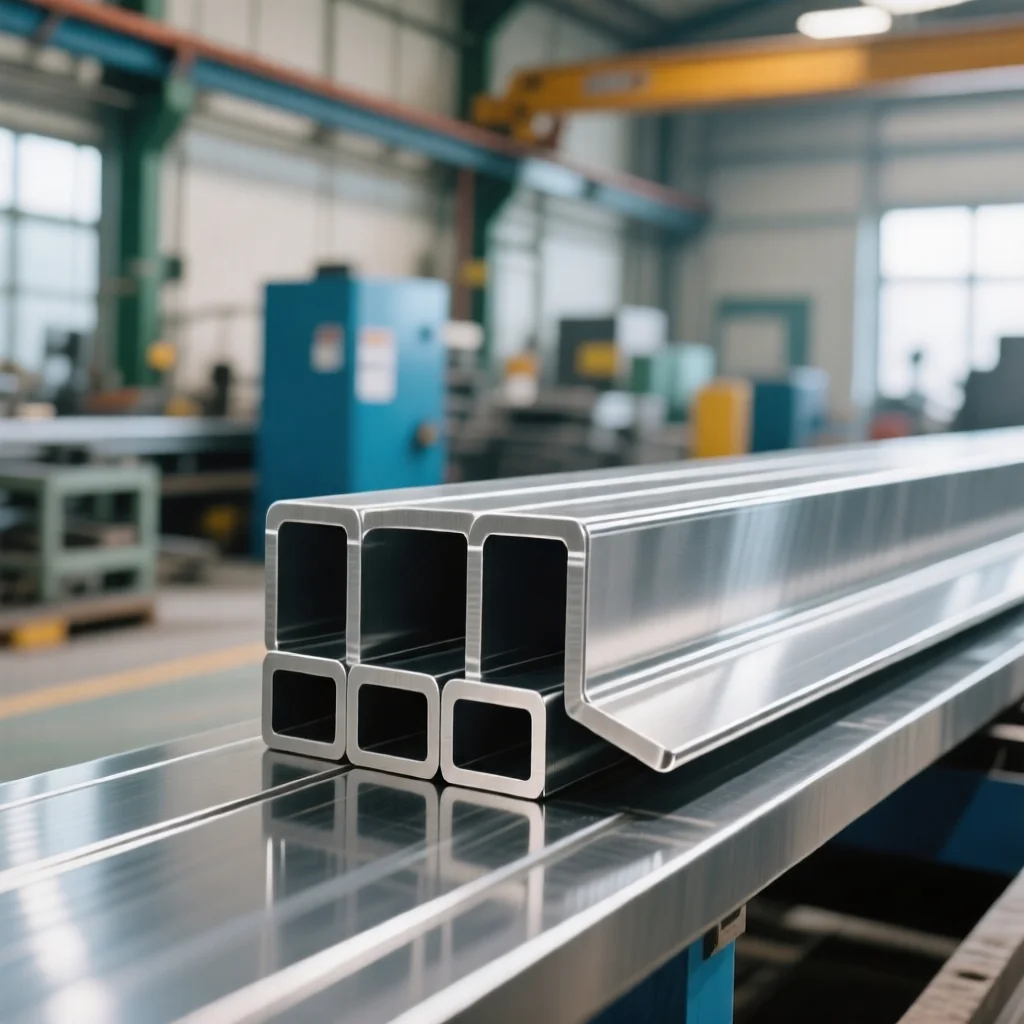
An angle bar (also called angle iron or L-section) is a structural steel profile with two perpendicular legs forming a 90° corner. Stainless steel angle bars are the corrosion-resistant alternative to carbon steel angles — they carry the same structural function but without the need for paint, coating, or galvanising.
The L-shaped cross-section provides efficient resistance to bending and torsion in two planes simultaneously, making angle bar the go-to section for:
- Equipment frames and machine bases
- Support brackets and stiffeners
- Pipe rack and cable tray framing in chemical plants
- Hygienic shelving and walkway stringers in food processing and pharmaceutical environments
- Structural trim, lintel reinforcement, and curtain wall sub-frames in architecture
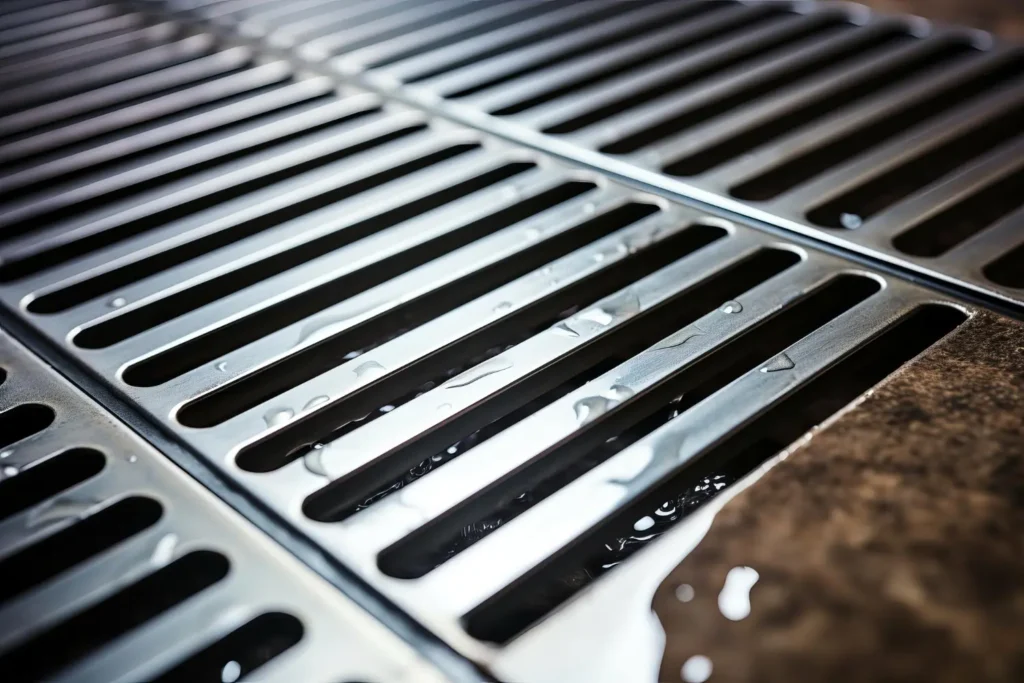
- Grating support frames and mounting brackets for urban infrastructure
Once you’ve confirmed angle bar is the right section for your application, the next decision is grade. Browse our full material range →
Related reading: 304 vs 316L Stainless Steel: Which Grade for Your Application? — a deeper look at grade composition, PREN numbers, and cost trade-offs.
Grade Selection: 304, 316L, or 2205?
The three grades commonly specified for stainless steel angle bar each serve a distinct set of conditions. Choosing the right one upfront avoids overpaying for unnecessary corrosion resistance — or worse, ordering material that won’t last.
304 — The Workhorse
304 is the most widely used austenitic stainless steel. For indoor structural applications — machine frames, equipment supports, food plant structure — it’s the most cost-effective choice. It welds easily, machines cleanly, and handles typical atmospheric exposure without issue.
- Best for: Indoor structural frames, brackets, equipment bases, general fabrication
- Not for: Coastal environments, chloride exposure, prolonged acid contact
- Budget level: Lowest cost among the three grades
316L — Chloride and Acid Resistance
316L adds 2–3% molybdenum to the alloy, which significantly improves resistance to chlorides (salt spray, de-icing salts, coastal air) and acidic environments. If your structure is within a few kilometres of the coast, exposed to cleaning chemicals, or inside a chemical processing facility, 316L is the minimum grade to specify.
- Best for: Coastal structures, chemical plant framing, pharmaceutical equipment supports
- Not for: Budget-sensitive indoor applications where 304 suffices
- Budget level: ~30–50% premium vs 304
2205 Duplex — High Strength, Maximum Corrosion Resistance
2205 duplex combines austenitic and ferritic microstructures to deliver roughly twice the yield strength of 316L with superior pitting resistance (higher PREN). This means you can specify a thinner, lighter section and still meet the same structural load — a real advantage in offshore platforms, desalination plants, and coastal infrastructure where both weight and corrosion matter.
- Best for: Offshore structural members, desalination, chemical infrastructure, high-load coastal applications
- Not for: General indoor fabrication — overkill unless strength-to-weight is critical
- Budget level: Higher material cost, but thinner sections can offset overall spend
Need help with material selection? Compare stainless steel grades here →
Equal vs Unequal Leg: When to Use Each
Angle bar comes in two leg configurations. The choice depends on how load is applied to each leg of the section.
| Type | Description | Typical Use Case |
|---|---|---|
| Equal leg | Both legs have the same length (e.g., 50×50mm) | Symmetric loading — frame corners, bracing, posts where both legs share load equally |
| Unequal leg | One leg is longer than the other (e.g., 75×50mm) | Asymmetric loading — cantilevered brackets, shelf supports, stiffeners where one leg takes more bending moment |
In practice, equal leg angles are more common and available in a wider range of stock sizes. Unequal leg angles are specified when the geometry genuinely saves material or weight — for example, a bracket where one leg is bolted to a wall and the other supports a horizontal load.
If you’re unsure which leg configuration your application requires, provide a sketch to your supplier. A mill with in-house fabrication capability can also mitre, notch, and weld equal-leg sections into custom bracket assemblies that replicate the load distribution of an unequal section.
Size Ranges, Thickness & Length
Stainless steel angle bar is produced across a range of leg sizes and thicknesses. The table below shows typical stock availability. Custom sizes and closer tolerances are available on enquiry.
| Parameter | Typical Range |
|---|---|
| Equal leg size | 25×25mm to 150×150mm |
| Unequal leg size | 40×25mm to 200×100mm |
| Thickness | 3mm to 15mm (depending on section size) |
| Standard length | 6,000mm (6 metres) |
| Custom length | Cut-to-length from stock — specify your required length |
When specifying leg dimensions and thickness, use the format Leg × Leg × Thickness (e.g., 50×50×5mm equal angle, 304). This is the standard notation your supplier will expect.
For structural applications where the angle bar will be welded to stainless steel plate or combined with channel bar sections, confirm that the thickness of all connecting sections is compatible with your welding procedure.
Manufacturing Standards
Stainless steel angle bar is manufactured to one of the following international standards. When raising a purchase order, specify the standard you require — this determines the production process, tolerances, and test requirements.
| Standard | Scope | Commonly Used In |
|---|---|---|
| ASTM A276 | Stainless steel bars and shapes — hot-finished or cold-finished | North America, international projects referencing ASTM |
| EN 10088-3 | Stainless steels — technical delivery conditions for semi-finished products, bars, rods, and sections | Europe, Middle East, projects referencing EN standards |
| JIS G4303 | Stainless steel bars — Japanese Industrial Standard | Asia-Pacific, projects referencing JIS |
Which standard should you specify? If your project has an existing engineering specification, match it. If you’re sourcing without a pre-existing standard, ASTM A276 is the most widely recognised for international procurement and is accepted by the majority of third-party inspectors.
Confusion between standards is a common cause of RFQ delays. If you’re unsure which standard applies to your project, contact our engineering team with your project location and end-use — we’ll advise.
Secondary Processing: Cut, Drill, Notch & Weld
One of the biggest time-savers in angle bar procurement is sourcing from a supplier that offers in-house secondary processing. Instead of buying raw bars and sending them to a separate fabricator, you receive ready-to-install components.
The following fabrication operations are commonly applied to stainless steel angle bar:
- Cut-to-length — Precision saw cutting to specified lengths, ±0.5mm tolerance
- Drilling & tapping — Bolt holes, clearance holes, threaded holes at specified positions
- Notching & mitring — End preparation for welded frame corners
- Welded frame assembly — Complete fabricated frames, supports, and brackets shipped ready to install
Combining material supply and fabrication in a single purchase order reduces logistics cost, lead time, and the risk of miscommunication between separate suppliers. Learn more about our ISO-certified facility →
Specification Checklist for Buyers
Copy this checklist into your next RFQ to ensure your supplier has everything needed to quote accurately:
- Grade: 304, 316L, 2205 duplex, or other (specify)
- Leg configuration: Equal or unequal leg
- Dimensions: Leg × Leg × Thickness (mm) — e.g., 50×50×5mm
- Standard: ASTM A276, EN 10088-3, or JIS G4303
- Length per bar: Standard 6,000mm or custom cut-to-length
- Quantity: Number of bars (or total kg)
- Surface condition: Pickled & annealed (No.1) or 2B
- Secondary processing: Cut, drill, notch, weld — attach a drawing or sketch
- Documentation: Mill test report (MTR) required? Third-party inspection?
- Delivery terms: FOB port or EXW — specify destination
Providing all ten items in your initial enquiry typically cuts the quotation turnaround from days to hours. Submit your specification for a quote →
What to Look for in a Stainless Steel Angle Bar Supplier
Not all angle bar suppliers operate the same way. Here are four criteria to evaluate before placing an order:
1. Mill Traceability
Every bar should be traceable back to its heat number and mill certificate. A supplier that can’t provide a material test report (MTR) as standard is a red flag — without it, you can’t verify the grade or confirm mechanical properties. At ZEMSS, MTRs are included with every order at no extra charge.
2. ISO Certification
Look for ISO 9001 at minimum. A supplier with ISO 14001 (environmental) and ISO 45001 (occupational health & safety) demonstrates a level of operational maturity that directly affects product consistency and on-time delivery. ZEMSS holds all three certifications →
3. Minimum Order Quantity (MOQ)
Many mills impose high MOQs — 500 kg, 1 ton, or more — with surcharges below the threshold. This is a serious barrier if you’re prototyping, building one-off equipment, or need a small batch. Ask upfront whether there’s a minimum surcharge. ZEMSS accepts orders from 1 bar or 20 kg with no minimum penalty.
4. Lead Time Clarity
Stock sizes should ship within 5–10 working days. Custom dimensions and secondary processing add to the lead time — a good supplier will tell you exactly how much. Vague answers like “soon” or “we’ll check” suggest poor inventory management. Expect a specific date.
For a full overview of available grades and material specifications, browse our materials page →
Frequently Asked Questions
What’s the difference between angle bar and angle iron?
“Angle iron” is the traditional term from the carbon steel era. “Angle bar” is the more accurate term for stainless steel sections. They refer to the same L-shaped profile — but if you search for “stainless steel angle iron”, most suppliers will understand what you mean.
Can I get angle bar cut to a specific length?
Yes. Most suppliers offer cut-to-length service. Specify your required length when you send the RFQ. Standard stock length is 6,000mm — if your design uses 1,500mm pieces, ordering pre-cut bars eliminates a fabrication step and reduces scrap at your end.
Which grade is best for outdoor use?
304 is sufficient for inland outdoor applications where there’s no salt exposure. 316L is the minimum for coastal locations (within 5 km of the sea) or anywhere de-icing salts are used. 2205 duplex is recommended for offshore and heavy-industrial outdoor environments.
What’s the standard length of stainless steel angle bar?
Standard production length is 6,000mm (6 metres). Longer lengths (up to 12,000mm) may be available depending on section size and grade — enquire with your supplier.
Do I need a mill test report (MTR)?
If your angle bar is going into a structural application, pressure-containing assembly, or any project with third-party inspection — yes. Always request an MTR. It confirms chemical composition and mechanical properties against the specified standard. Reputable suppliers include it as standard.
Ready to specify your order? Request a quote → — we respond within 2 business hours during UTC+8 working hours.